Second messengers
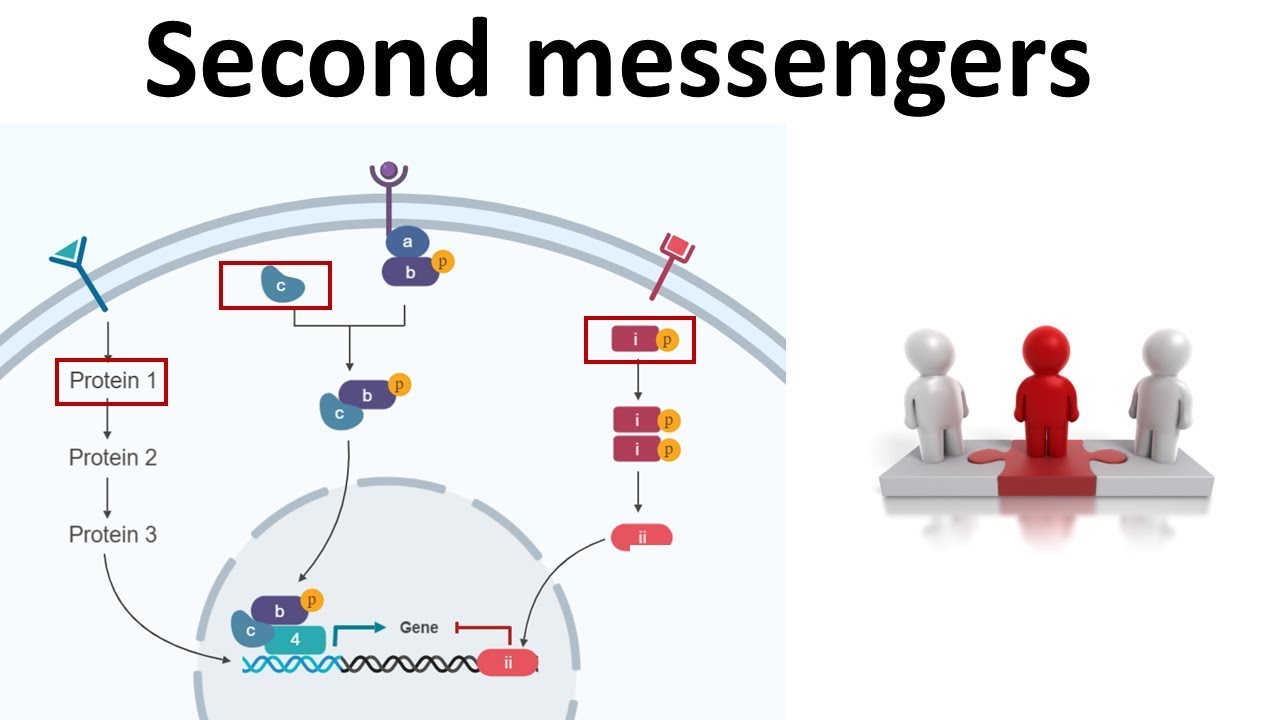
The secondary messenger system is a complex communication pathway within cells. It acts like a relay race, where an external signal received by the cell is passed on to internal targets to trigger specific responses. Here's a breakdown of the key players and how it works:
Components:
- First Messengers: These are signaling molecules like hormones, neurotransmitters, or growth factors that originate outside the cell. They bind to specific receptors on the cell surface.
- Cell Surface Receptors: These are protein molecules embedded in the cell membrane that can recognize and bind to specific first messengers. Binding triggers a conformational change in the receptor, activating it.
- G Proteins (Heterotrimeric G proteins): These are proteins located near cell surface receptors. They act as molecular switches and come in an inactive (GDP-bound) and active (GTP-bound) form.
- Second Messengers: These are small, non-protein molecules produced inside the cell in response to activated receptors. They act as the "runners" in the relay race, carrying the signal deeper into the cell. Some common second messengers include:
- Cyclic AMP (cAMP)
- Inositol trisphosphate (IP3)
- Diacylglycerol (DAG)
- Calcium (Ca²⁺)
- Effector Molecules: These are the final targets within the cell that are influenced by the second messenger. They can be enzymes, protein kinases, or ion channels that initiate specific cellular responses.
Steps in the Process:
- First Messenger Binding: A first messenger molecule binds to its specific receptor on the cell surface.
- G Protein Activation: This binding activates the G protein, causing it to exchange GDP for GTP, switching it to its active form.
- Second Messenger Production: The activated G protein can then interact with an enzyme, often phospholipase C (PLC) or adenylyl cyclase, leading to the production of a second messenger (e.g., IP3 or cAMP).
- Second Messenger Action: The second messenger diffuses through the cytoplasm and binds to specific effector molecules.
- Cellular Response: Binding of the second messenger to the effector molecule triggers a cellular response, such as enzyme activation, gene expression changes, or ion channel opening.
Advantages of the System:
- Amplification: The secondary messenger system allows for amplification of the initial signal. A single first messenger molecule can lead to the production of many second messenger molecules, which in turn can activate multiple effector molecules, resulting in a robust cellular response.
- Specificity: Different first messengers can activate different G proteins and second messenger pathways, leading to specific cellular responses depending on the signal received.
- Compartmentalization: Second messengers typically act within the cytoplasm, limiting their effects to a specific region of the cell. This helps maintain spatial control over cellular responses.
Examples of Secondary Messenger Systems:
- The cAMP pathway: This pathway is activated by hormones like glucagon and epinephrine. It uses cAMP as the second messenger to stimulate glycogen breakdown for energy production in cells.
- The IP3/DAG pathway: This pathway is activated by various stimuli like neurotransmitters. It uses IP3 and DAG as second messengers to trigger the release of calcium from the endoplasmic reticulum, which can influence muscle contraction, gene expression, and other cellular processes.