Corn / Maize
See also : Zea (genus)
Videos


How corn fights crop stress
The US National Plant Germplasm System Maize Collection — Status, Utilization and Possibilities
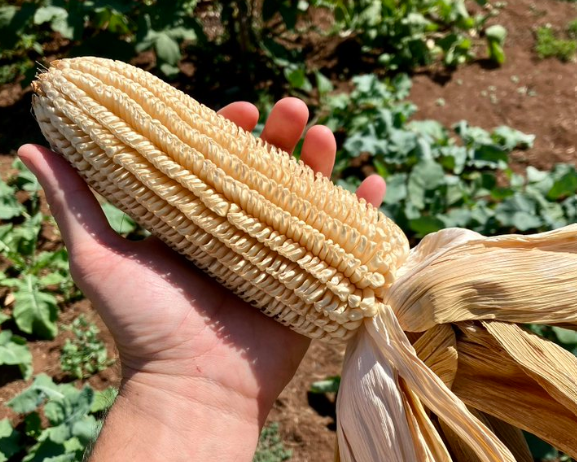
Cherokee “gourdseed” corn. This is apparently a pre-1800 variety preserved by the Qualls family of Virginia. This is one of the oldest types of corn grown in America.
Constituents
First domesticated by indigenous people of southern Mexico, Maize (aka Corn) forms large stalks which produce both male inflorescences and female—the characteristic “ears” of corn. One of the top staple foods now throughout the world, it is not only produced as food, but also a large number of byproducts such as corn syrup, ethanol, cornmeal, whiskey, plastics, adhesives, the list goes on.. There are also many varieties which are developed for special purposes, such as ones that are best for popcorn, for making into biofuel, and the sweet corns that are enjoyed raw or cooked. Here is a crazy fact: It used to be that the ancestors of modern corn had about 30% protein and only about 2% sugar. Today’s Super Sweet varietals can now have as much as 40% sugar and only 3% protein!
About half of the calories of the typical American now comes from only 4 plants, one of which is Corn. The problem is that we have bred corn and many other foods to be sweet and now almost devoid of fiber and the more medicinal (and bitter) phytochemicals that we need to keep healthy. The result has been a surge in type 2 diabetes and other “western” disease. So, in order to use this plant in a way that is much healthier for us and the planet, we should turn back to those heirloom varieties that naturally give us what are bodies really need. Many of these varieties are also more appropriate to various growing conditions we find around the world without relying on numerous petrochemical inputs. But beyond the corn kernels themselves, Corn offers other medicinal plant parts: the Corn silks are used to make a tea for diabetes, high blood pressure and maintaining urinary & kidney health and the corn cobs can also be a source of phytochemicals as purple corn is commonly used for making delicious high antioxidant beverages in Peru. (Source)
Articles/Studies
How 20 Million Genetic Markers Could Change the Way We Grow Corn
Bioaccumulation of chromium by Zea mays in wastewater-irrigated soil: An experimental study
2021 More Than One-Third of Corn Belt Farmland Has Completely Lost Its Carbon-Rich Topsoil
Food Yields and Nutrient Analyses of the Three Sisters: A Haudenosaunee Cropping System
Improving Hybrid Seed Production in Corn With Glyphosate-Mediated Male Sterility
Study rewrites the history of corn in corn country
Molecular Characterization of Maize Acetylcholinesterase. A Novel Enzyme Family in the Plant Kingdom