Nutmeg EO
Steam distilled, source is India, Eden Botanicals
Constituents of Nutmeg Oil
Monoterpene hydrocarbons 80%; including sabinene (39%), alpha-pinene (13%), beta-pinene (9%)
monoterpene alcohols (5%); including myristicin (2 to 5%), elemicin (1 to 2.5%)
phenyl propane derivatives (10 to 18%); including myristicin (2 to 5%), elemicin (1 to 2.5%)
Fatty oil (30 to 40%) in the nutmeg oil rendered through pressing
Effects
In animal experiments, the eugenol in the essential oil inhibits, dose-dependently, medicinally induce diarrhea and slows down the transport of active carbon in the gastrointestinal tract. An effect on prostaglandin sythesis and an antimicrobial effect have also been demonstrated.
There are several grades of dried nutmegs of East Indian origin (preferred for their higher aromatic value and richer body); these grades contain various percentages of essential oil, but those that are "broken and wormy … [are of] the quality most suitable for distillation because of the low content of fatty oil." "Most of the fixed (fatty) oil has been devoured by the worms, while the strongly aromatic volatile oil remains intact, thus there is a much better yield of volatile oil"; the fixed oil quite tenaciously retains the volatile oil in distillation and it is very difficult to remove the volatile oil from the fixed oil - so we can thank the worms for their cost-saving appetites! (Not to worry - the long, involved drying process of the kernels prior to distillation removes these little critters.)
Source: Eden Botanicals
Cautions
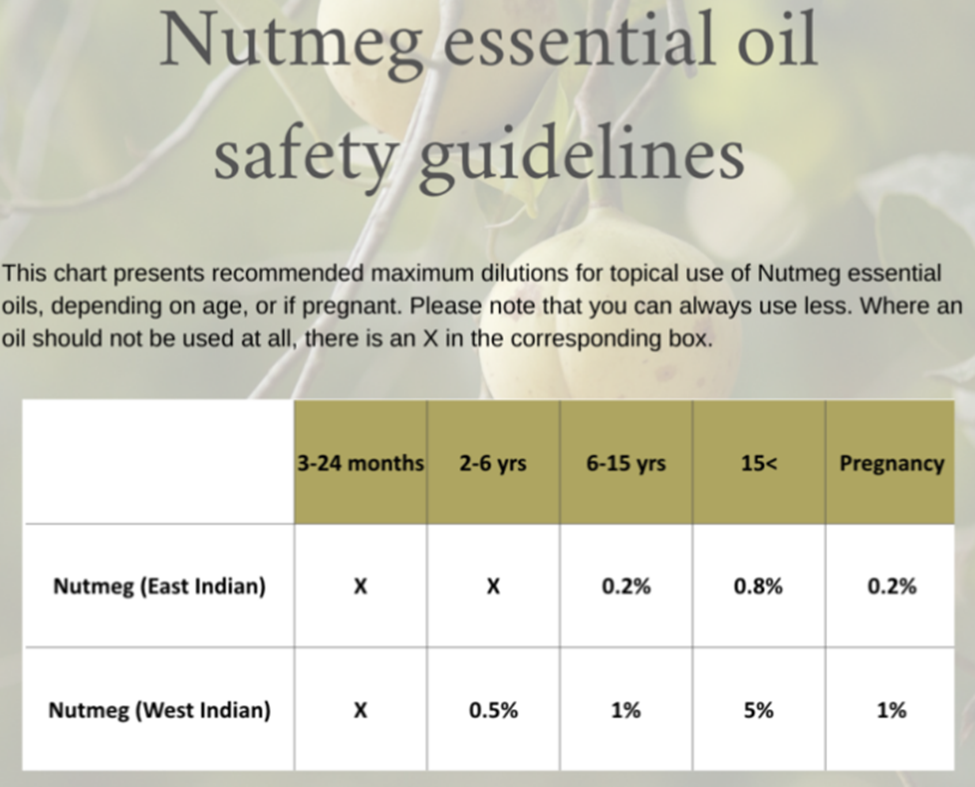
Please be aware that Nutmeg essential oil contains myristicin, a phenol constituent that when used in excess (for example, inhalation) can over-stimulate the heart and at worst cause deliriousness and convulsions or induce numbness.
There are two types of Nutmeg oil, East Indian and West Indian, and they contain quite different amounts of two substances (safrole and methyleugenol) that can cause liver tumors to form in rats when used as single chemicals. Neither type of Nutmeg oil has been tested for cancer-causing activity using a standard animal testing procedure. However, Nutmeg oils show antimutagenic activity, suggesting that the whole essential oil could even be anti-carcinogenic. This could be partly because Nutmeg oils also contain d-limonene, an antitumoral constituent. However, since we don’t know for sure the effect of whole Nutmeg oil on humans, some precaution is appropriate. The safety guidelines in Essential Oil Safety 2e take into account a significant body of toxicological research, including differences in metabolism between rodents and humans, and assumes the maximum concentrations of the two rodent carcinogens. It’s also worth noting that Nutmeg oil has GRAS status in the USA, meaning it is considered safe to use in food flavorings.