Molecular Dipoles
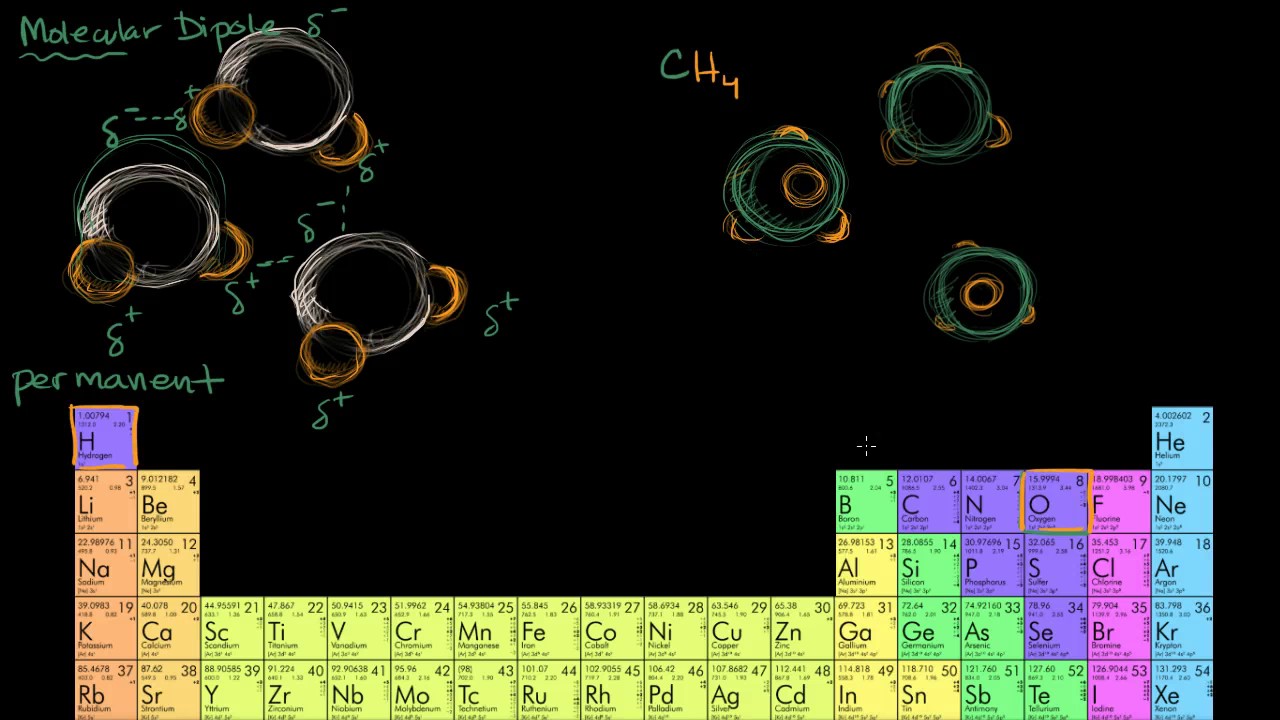
Molecular dipoles are a fundamental concept in chemistry and physics, playing a crucial role in understanding the behavior of molecules in various environments. A molecular dipole arises when there is an uneven distribution of electron density across a molecule, leading to a separation of positive and negative charges. This separation creates a dipole moment, a vector quantity that has both magnitude and direction. Understanding molecular dipoles is essential for predicting molecular interactions, reactivity, and properties such as solubility and boiling points.
Formation of Molecular Dipoles
Molecular dipoles are primarily formed due to differences in electronegativity between atoms within a molecule. Electronegativity is the tendency of an atom to attract electrons towards itself. When two atoms with different electronegativities form a covalent bond, the shared electrons are more attracted to the more electronegative atom. This results in a partial negative charge (δ-) on the more electronegative atom and a partial positive charge (δ+) on the less electronegative atom, creating a dipole.
Polar and Nonpolar Molecules
- Polar Molecules: These molecules have a net dipole moment due to the presence of polar bonds that do not cancel each other out. Water (H₂O) is a classic example of a polar molecule. The oxygen atom is more electronegative than the hydrogen atoms, resulting in a bent shape with a net dipole moment.
- Nonpolar Molecules: These molecules either have no polar bonds or have polar bonds that are symmetrically arranged, causing the dipoles to cancel out. Carbon dioxide (CO₂) is an example of a nonpolar molecule despite having polar bonds, as the linear shape causes the dipoles to cancel.
Measuring Dipole Moments
The dipole moment (μ) is a quantitative measure of the polarity of a molecule. It is calculated as the product of the charge difference and the distance between the charges:
[ \mu = q \times d ]
where ( q ) is the magnitude of the charge and ( d ) is the distance between the charges. Dipole moments are typically measured in Debye units (D), where 1 D = ( 3.34 \times 10{-30} ) C·m.
Factors Affecting Dipole Moments
Several factors influence the magnitude and direction of a molecular dipole moment:
- Electronegativity Difference: Greater differences in electronegativity between bonded atoms result in larger dipole moments.
- Molecular Geometry: The shape of a molecule determines how individual bond dipoles combine. Symmetrical molecules may have zero net dipole moments even if they contain polar bonds.
- Bond Length: Longer bond lengths can increase the dipole moment if the charge separation is significant.
Applications of Molecular Dipoles
Molecular dipoles have numerous applications in science and technology:
- Solubility: Polar molecules tend to dissolve in polar solvents (like water), while nonpolar molecules dissolve in nonpolar solvents (like hexane). This principle is crucial in fields such as pharmaceuticals and environmental science.
- Intermolecular Forces: Dipole-dipole interactions are a type of intermolecular force that occurs between polar molecules. These forces influence boiling and melting points, viscosity, and other physical properties.
- Spectroscopy: Techniques like infrared (IR) spectroscopy rely on molecular dipoles to provide information about molecular structure and dynamics. Changes in dipole moments during molecular vibrations are detected and analyzed.
- Chemical Reactivity: The presence of a dipole can affect a molecule's reactivity, particularly in reactions involving nucleophiles and electrophiles. Polar molecules often participate in specific types of chemical reactions due to their charge distribution.
Examples of Molecular Dipoles
Water (H₂O)
Water is a quintessential example of a polar molecule. The bent shape and the difference in electronegativity between oxygen and hydrogen result in a significant dipole moment. This polarity is responsible for water's unique properties, such as its high boiling point and ability to dissolve many substances.
Ammonia (NH₃)
Ammonia is another polar molecule with a trigonal pyramidal shape. The nitrogen atom is more electronegative than the hydrogen atoms, creating a net dipole moment. This polarity contributes to ammonia's solubility in water and its role as a base in chemical reactions.
Carbon Tetrachloride (CCl₄)
Carbon tetrachloride is an example of a nonpolar molecule. Despite having polar C-Cl bonds, the tetrahedral symmetry of the molecule causes the dipoles to cancel out, resulting in no net dipole moment. This nonpolarity makes CCl₄ an effective solvent for nonpolar substances.