Threadleaf Bladderpod
See also: Edible Bladderpods
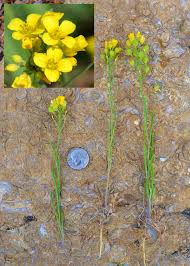
Threadleaf Bladderpod, scientifically known as Lesquerella angustifolia, is aplant species that belongs to the Brassicaceae family. This perennial herbaceous plant is native to North America, particularly found in the southwestern United States and northern Mexico. Threadleaf Bladderpod is renowned for its delicate appearance, vibrant yellow flowers, and its ecological significance in its natural habitat.
Physical Characteristics
One of the distinctive features of Threadleaf Bladderpod is its thread-like leaves, which give the plant its common name. The narrow, linear leaves are arranged in a basal rosette, creating an elegant and graceful appearance. The plant typically grows to a height of around 12 to 24 inches, with slender stems that bear clusters of bright yellow flowers. These flowers, which bloom in the spring, are not only visually appealing but also play a crucial role in the plant's reproductive cycle.
Habitat and Distribution
Threadleaf Bladderpod thrives in arid and semi-arid environments, often found in rocky slopes, desert grasslands, and sandy soils. Its distribution ranges from Arizona, New Mexico, and Texas in the United States to parts of northern Mexico. This plant has adapted to survive in harsh conditions, demonstrating resilience in the face of drought and extreme temperatures. Its ability to thrive in such challenging environments makes it a valuable component of the local ecosystem.
Ecological Importance
As a native plant species, Threadleaf Bladderpod plays a vital role in its ecosystem. It serves as a food source for various pollinators, including bees, butterflies, and other insects. The bright yellow flowers attract these pollinators, facilitating the process of pollination and contributing to the biodiversity of the region. Additionally, the plant's seeds are an important food source for birds and small mammals, further highlighting its ecological significance.
Conservation Status
Despite its ecological importance, Threadleaf Bladderpod faces threats to its survival, primarily due to habitat loss and fragmentation. Human activities such as urban development, agriculture, and mining have encroached upon its natural habitat, leading to a decline in population numbers. As a result, Threadleaf Bladderpod is classified as a species of conservation concern in certain regions. Efforts are being made to protect and conserve this plant species through habitat restoration, seed banking, and conservation initiatives.
Cultural Significance
In addition to its ecological value, Threadleaf Bladderpod holds cultural significance for indigenous communities in the southwestern United States. Some Native American tribes have traditional uses for the plant, utilizing it for medicinal purposes or in ceremonial practices. The plant's presence in the local flora has contributed to its cultural heritage and connection to the land.