Latent Class Analysis
Introduction to latent class / profile analysis
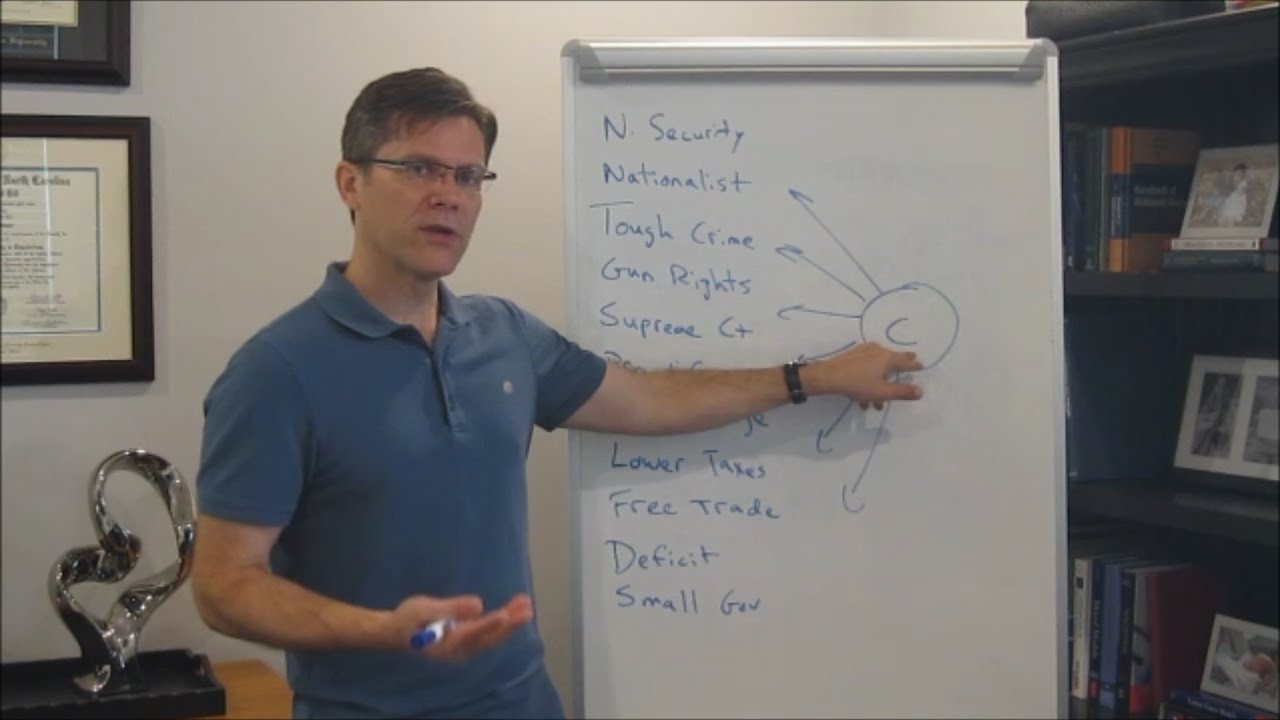
What is Latent Class Analysis? by Tarani Chandola
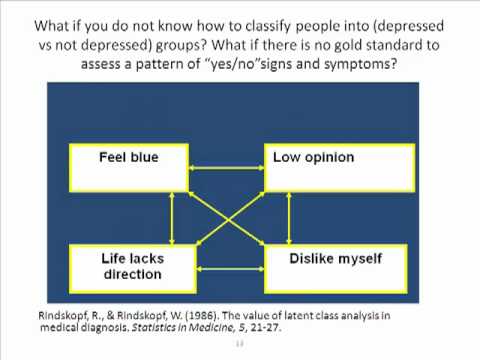
Latent Class Analysis (LCA) is a statistical method used to identify unobserved subgroups within a population. This technique is particularly useful in fields such as psychology, sociology, and marketing, where researchers aim to uncover hidden patterns in categorical data. By grouping individuals into classes based on their responses to observed variables, LCA provides insights into the underlying structure of complex datasets.
Key Concepts of Latent Class Analysis
Latent Variables
At the core of LCA are latent variables, which are not directly observed but inferred from other variables that are observed. These latent variables represent the unobserved subgroups or classes within the data. The goal of LCA is to estimate the probability of membership in each latent class for every individual in the dataset.
Observed Variables
Observed variables are the data points collected from individuals, such as survey responses or behavioral indicators. In LCA, these variables are typically categorical, meaning they represent distinct categories or groups rather than continuous values.
Class Membership
Class membership refers to the probability that an individual belongs to a particular latent class. LCA assigns each individual to the class for which they have the highest probability of membership, allowing researchers to categorize individuals based on their observed characteristics.
Steps in Conducting Latent Class Analysis
- Data Collection: Gather categorical data from a sample population. This data serves as the observed variables for the analysis.
- Model Specification: Define the number of latent classes to be identified. This step often involves theoretical considerations and exploratory analysis to determine the appropriate number of classes.
- Parameter Estimation: Use statistical software to estimate the parameters of the LCA model. This includes the probabilities of class membership and the probabilities of observed variable responses within each class.
- Model Evaluation: Assess the fit of the model using criteria such as the Akaike Information Criterion (AIC) or the Bayesian Information Criterion (BIC). These metrics help determine the model's adequacy in representing the data.
- Interpretation: Analyze the results to understand the characteristics of each latent class and their implications for the research question.
Applications of Latent Class Analysis
LCA is a versatile tool with applications across various domains:
- Psychology: Identifying distinct personality types or mental health profiles based on survey responses.
- Sociology: Uncovering social groups or cultural patterns within a population.
- Marketing: Segmenting consumers into target groups based on purchasing behavior or preferences.
- Education: Classifying students into learning styles or achievement levels.
Advantages of Latent Class Analysis
- Flexibility: LCA can handle complex datasets with multiple categorical variables, making it suitable for a wide range of research questions.
- Interpretability: The results of LCA are often more interpretable than those of other clustering methods, as they provide clear class membership probabilities.
- Model-Based Approach: Unlike traditional clustering methods, LCA is a model-based approach that provides statistical measures of fit and allows for hypothesis testing.
Challenges and Considerations
While LCA offers many benefits, researchers must be mindful of certain challenges:
- Model Selection: Choosing the correct number of latent classes is crucial and can be subjective. Researchers often rely on statistical criteria and theoretical justification to make this decision.
- Sample Size: LCA requires a sufficiently large sample size to produce reliable results. Small samples may lead to unstable estimates and unreliable class assignments.
- Complexity: The interpretation of LCA results can be complex, especially when dealing with a large number of classes or variables.
Software for Latent Class Analysis
Several statistical software packages offer tools for conducting LCA, including:
- Mplus: A comprehensive software package for structural equation modeling, including LCA.
- Latent GOLD: A specialized software for latent class and finite mixture modeling.
- R: The
poLCApackage in R provides functions for performing LCA in a flexible and customizable environment.