Guinea Grass
Botanical Overview
Botanical name: Megathyrsus maximus (syn. Panicum maximum)
Common names: Guinea grass, Signal grass
Family: Poaceae (Grass family)
Origin: Tropical Africa; now pantropical in cultivation and often naturalized in tropical and subtropical regions.
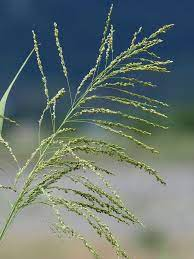
Perennial, tufted, robust grass, often 1–3 m tall. Forms large clumps with long, linear leaves and open, branched panicles. Widely used as a forage grass and often found along roadsides, in disturbed ground, pastures, and plantation margins.
Constituents
- Reference: Listing on Duke's Database
Key reported phytochemical/constituent classes (from Duke’s and related sources):
- Carbohydrates & fibers: abundant structural carbohydrates typical of grasses (cellulose, hemicellulose, lignin).
- Proteins & amino acids: moderate crude protein content (varies with stage of growth).
- Minerals: often contains appreciable levels of Ca, Mg, K, and trace elements—important for fodder value.
- Phenolic compounds: simple phenolics and flavonoids (contributing to antioxidant capacity).
- Silica: as in most grasses, present in cell walls, influencing roughage quality.
Therapeutically, the main importance of these constituents is in nutritive and fodder applications, with only minor direct medicinal use.
Traditional & Folk Uses
Although Megathyrsus maximus is primarily an agricultural plant, some local medicinal and practical uses are reported (often at a folk level rather than in formal pharmacopoeias):
Minor medicinal uses (reported in ethnobotanical sources)
- Topical applications
- Crushed fresh leaves sometimes used as a poultice for minor skin irritations or small wounds (cooling, protective effect).
- Internal uses (local/folk)
- Simple infusions or decoctions of the aerial parts occasionally taken as a mild remedy for fever or general weakness (nutritive/tonic rationale more than strong pharmacologic action).
- In some areas, young shoots are included in traditional “green mixes” for post‑partum or convalescent broths, again primarily as a nutritive addition.
Strength of evidence: mostly anecdotal/folk; not well‑studied clinically.
Nutritional Uses
Edibility:
- Seed – cooked.
Small, and very fiddly to collect in quantity; typically used:
- As a famine or emergency food rather than a staple.
- Mixed with other grains or ground into coarse meal when sufficient quantity is available.
- Leaves / aerial parts:
- Not commonly eaten by humans as a regular vegetable due to fibrous texture.
- Primary importance is as fodder for ruminants (cattle, sheep, goats) and sometimes for horses.
Fodder/Nutritional profile (for animals)
- High biomass producer – one of the most important cultivated fodder grasses in lowland tropical America.
- Uses:
- Fresh pasture grazing
- Cut-and-carry green fodder
- Hay and silage (varies with cultivar and management)
- Benefits:
- Good palatability when young.
- Reasonable crude protein when harvested at appropriate stage.
- Provides both energy (carbohydrates) and roughage.
Therapeutic angle: For herbivorous livestock, it supports general vitality, weight gain, milk production, and resilience, which indirectly supports human nutrition and livelihood in pastoral/agro‑pastoral systems.
Other Practical Uses
- Biomass for alcohol production:
Can be cultivated as a biomass crop and fermented to produce alcohol (biofuel or industrial alcohol).
- Soil & land use:
- Used in erosion control and as ground cover in some tropical systems.
- Contributes to soil organic matter via root mass and fallen leaves.
- Material uses (local):
- Dry stems/leaves sometimes used for mulch, rough thatch, or bedding.
Identification & Field Notes
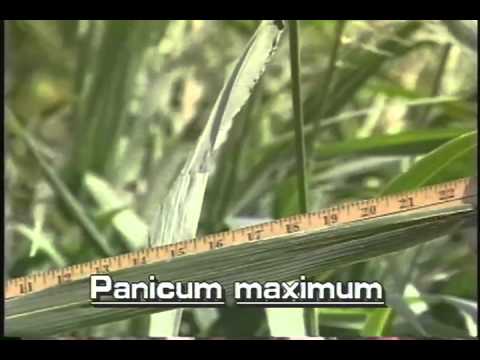
Key ID features (see video above for visuals):
- Tall, tufted perennial grass forming dense clumps up to ~3 m.
- Leaves:
- Long, flat, linear blades, often 30–60 cm or more.
- Prominent midrib; blades can be slightly drooping.
- Inflorescence:
- Large, open, many-branched panicle, often purplish or greenish.
- Numerous small spikelets.
Habitat:
- Prefers warm, frost‑free climates.
- Found in:
- Pastures and rangeland
- Roadsides and disturbed ground
- Plantation understories and margins
Safety & Cautions
- Human consumption:
- Seeds are edible but very minor; no major toxicity reported in normal food‑level use.
- As with any wild grass, risk of contamination (dust, fungi, agrochemicals) should be considered.
- Livestock:
- Generally safe and widely used as forage when managed appropriately.
- As with other high‑biomass tropical grasses, quality declines when over‑mature (more fiber, less protein); very coarse material may contribute to poor digestibility if not balanced with other feeds.
- Ecological caution:
- In some regions considered invasive, able to outcompete native vegetation and alter fire regimes due to high biomass.
Therapeutic Summary
- Primary role:
- Nutritive and fodder plant; supports animal health, which indirectly supports human well‑being and food systems.
- Direct medicinal role:
- Minor, mostly folk/traditional uses (simple tonics, poultices, “green” remedies).
- Not a major medicinal herb in comparison to other species; more important as agricultural support species in medicinal or mixed farming systems.