Protein Folding

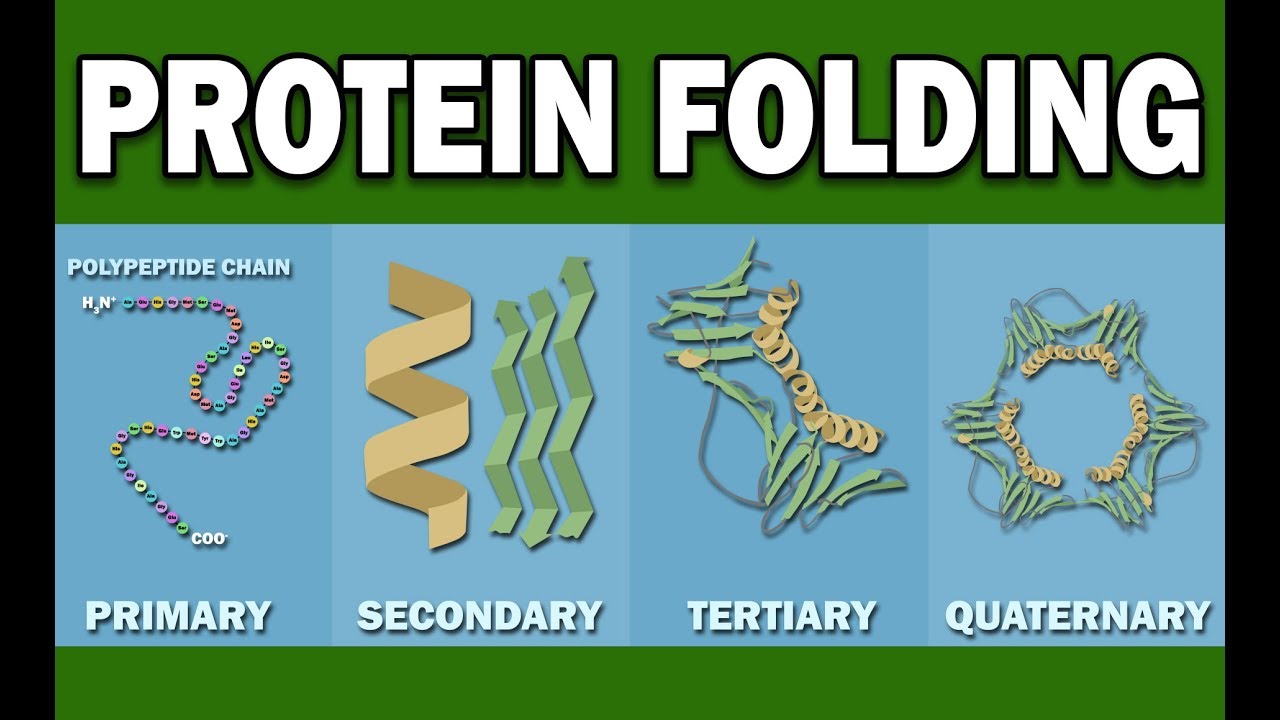

Protein folding is a fundamental biological process that transforms a linear chain of amino acids into a three-dimensional structure, which is essential for the protein's function. This process is crucial for the proper functioning of cells and, by extension, the entire organism. Misfolding of proteins can lead to various diseases, making the study of protein folding vital for medical research and biotechnology.
The Basics of Protein Folding
Proteins are composed of amino acids linked together in a specific sequence, determined by the genetic code. This sequence is known as the primary structure. The process of protein folding involves the transformation of this linear sequence into a specific three-dimensional shape, which is the protein's native conformation. The native conformation is the most stable state of the protein and is necessary for its biological activity.
Levels of Protein Structure
- Primary Structure: The linear sequence of amino acids in a polypeptide chain.
- Secondary Structure: Localized conformations of the polypeptide chain, such as alpha helices and beta sheets, stabilized by hydrogen bonds.
- Tertiary Structure: The overall three-dimensional shape of a single polypeptide chain, formed by interactions between secondary structures.
- Quaternary Structure: The assembly of multiple polypeptide chains into a functional protein complex.
Mechanisms of Protein Folding
Protein folding is a highly complex process that occurs spontaneously under physiological conditions. It is driven by various interactions, including hydrogen bonds, hydrophobic interactions, van der Waals forces, and disulfide bonds. The folding process is often assisted by molecular chaperones, which help prevent misfolding and aggregation.
Folding Pathways
Proteins fold through a series of intermediate states, often referred to as folding pathways. These pathways are not linear but rather involve multiple routes that a protein can take to reach its native conformation. The energy landscape of protein folding is often described as a "funnel," where the native state is at the bottom, representing the lowest energy state.
Importance of Protein Folding
Proper protein folding is essential for the biological function of proteins. Misfolded proteins can lead to a loss of function or gain of toxic function, contributing to various diseases. Understanding protein folding is crucial for:
- Disease Research: Misfolded proteins are implicated in diseases such as Alzheimer's, Parkinson's, and cystic fibrosis.
- Drug Design: Knowledge of protein structures aids in the design of drugs that can interact specifically with target proteins.
- Biotechnology: Protein engineering relies on understanding folding to design proteins with novel functions.
Challenges in Protein Folding Research
Despite significant advances, protein folding remains a challenging area of research due to the complexity of the process and the vast diversity of protein structures. Some of the key challenges include:
- Predicting Protein Structures: Accurately predicting the three-dimensional structure of a protein from its amino acid sequence is a major challenge. Computational methods, such as those used in the AlphaFold project, are making significant progress in this area.
- Understanding Folding Dynamics: The transient nature of folding intermediates makes it difficult to study the dynamics of the folding process.
- Misfolding and Aggregation: Understanding the mechanisms that lead to misfolding and aggregation is crucial for developing therapies for related diseases.
Recent Advances
Recent advances in computational biology and biophysics have significantly enhanced our understanding of protein folding. Techniques such as cryo-electron microscopy, nuclear magnetic resonance spectroscopy, and X-ray crystallography have provided detailed insights into protein structures. Additionally, machine learning algorithms are being developed to predict protein structures with high accuracy.