Walking
Return to Exercise Menu
See also: Walking Sticks
VIDEOS:

Is Walking Actually Better than Running for Fat Loss (running vs walking vs HIIT)

Walk This Way
Two Mile "Walk at Home" Workout
The Better Walking Trilogy
Improve Walking with Less Arthritic Pain with 7 At Home Exercises & Therapist Tip, "Walk On!"
Are 10 minute walks worth it?
Exercise for Foot and Ankle Relief for Walking & Hopping - Sock Roll Lesson #1
BareFoot Walking: Feldenkrais Practices to Move Like a Deer
Weight Loss
Longer Life Within Walking Distance
Favorite Lesson for Walking and Relieving Knee and Hip Pain (Balance Practice with Ball)
Do This Before Walking
Deer Walking - Barefoot Practice with Feldenkrais Method
Health Benefits of Walking
Cardiovascular Health
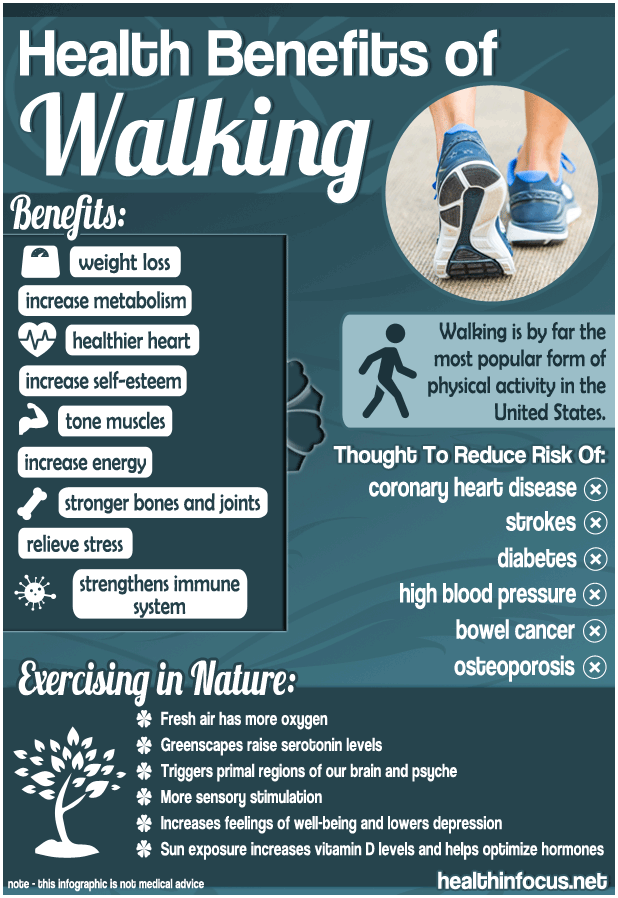
Walking is an excellent way to improve cardiovascular health. Regular walking helps to strengthen the heart, improve circulation, and reduce the risk of heart disease. It can lower blood pressure and cholesterol levels, which are critical factors in maintaining a healthy heart. Engaging in brisk walking for at least 30 minutes a day can significantly enhance heart health.
Weight Management
Walking is an effective exercise for weight management. It helps to burn calories, which can aid in weight loss or maintenance. The number of calories burned depends on factors such as walking speed, distance, and individual body weight. Incorporating walking into a daily routine can help achieve and maintain a healthy weight.
Mental Health
The mental health benefits of walking are profound. Walking releases endorphins, which are natural mood lifters. It can help reduce symptoms of anxiety and depression, improve mood, and enhance overall mental well-being. Walking in natural environments, such as parks or trails, can further boost mental health by reducing stress and promoting relaxation
This Easy Daily Habit Could Hold Back Alzheimer’s for Years
Walking reduces Alzheimer's progression. A new study found that walking just a few thousand steps daily can significantly delay Alzheimer’s symptoms. Participants who were more active showed slower accumulation of harmful tau proteins and preserved cognitive function for years longer. Researchers believe these findings highlight how small lifestyle changes can help protect the brain, especially in those at risk [...]
Bone and Joint Health
Walking is a weight-bearing exercise, which means it helps to strengthen bones and improve bone density. This is particularly important for preventing osteoporosis and fractures. Walking also helps to maintain joint health by lubricating the joints and strengthening the muscles that support them, reducing the risk of arthritis and joint pain.
Enhanced Creativity and Cognitive Function
Walking has been shown to enhance creativity and cognitive function. It can stimulate creative thinking and problem-solving abilities. Studies suggest that walking, especially in natural settings, can improve attention, memory, and overall cognitive performance.
Tips for Incorporating Walking into Your Routine
- Set Realistic Goals: Start with achievable goals, such as walking for 10-15 minutes a day, and gradually increase the duration and intensity as your fitness level improves.
- Choose the Right Footwear: Invest in a good pair of walking shoes that provide adequate support and cushioning to prevent injuries.
- Find a Walking Buddy: Walking with a friend or family member can make the activity more enjoyable and help you stay motivated.
- Explore Different Routes: Vary your walking routes to keep the experience interesting and to explore new environments.
- Use Technology: Utilize fitness trackers or smartphone apps to monitor your progress and set new challenges.
- Incorporate Walking into Daily Activities: Take the stairs instead of the elevator, walk to nearby destinations instead of driving, or take a walk during lunch breaks.
Safety Considerations
- Stay Hydrated: Drink plenty of water before, during, and after walking, especially in hot weather.
- Be Visible: Wear bright or reflective clothing if walking in low-light conditions to ensure visibility to others.
- Listen to Your Body: Pay attention to any signs of discomfort or pain and adjust your walking routine accordingly.
- Be Aware of Your Surroundings: Stay alert to your environment, especially when walking in busy areas or near traffic.
Articles/Studies
- Can individuals' walking pace impact their heart failure risk? (https://www.sciencedaily.com/releases/2022/01/220120091157.htm) In a study of postmenopausal women, those who reported a faster walking pace had a lower risk of developing heart failure.
- Scientists reveal why walking gets so much harder with age. As we age, the body appears to sacrifice walking efficiency in exchange for stability. Older adults stiffen the ankle more with each step, which may help prevent falls but also forces the muscles to work harder while producing less forward motion. This leads to shorter strides, slower walking, and faster fatigue. Exercises targeting balance, coordination, and lower-leg strength could help preserve
- Don’t just walk up stairs, be eccentric!
- Insight Into How the Brain Multitasks While Walking
- You’re probably not carrying the right safety gear when you hike. A researcher asked hundreds of hikers and trail runners what they were carrying on their wilderness treks. Many were less prepared than they should be. With the arrival of warmer weather across the United States, outdoor enthusiasts are returning to America’s parks and forests to hike and run on the country’s beautiful, often remote, networks of trails.
- This Simple Daily Habit Could Add Up to 11 Years to Your Life
- Home-Based Walking Exercise Intervention in Peripheral Artery Disease: A Randomized Clinical Trial
- Exercise Effects on Methylation of ASC Gene
- Green tea extract combined with brisk walking resulted in a significant change in the LDL-C and TC levels.
- Effects of exercise on fatigue, physical functioning, and emotional distress during radiation.
- Mental, not physical, fatigue affects seniors' walking ability (https://www.sciencedaily.com/releases/2018/04/180424133642.htm)
- Watch your step: How vision leads locomotion (https://www.sciencedaily.com/releases/2018/04/180423125047.htm)
- Walking exercise in patients with intermittent claudication. Experience in routine clinical practice.
- More than 10,000 steps daily may be needed to maintain bone mineral density.
- This study determined that a 12,000 step per day guideline for children and youth between 6 and 19 years of age is a good estimate of meeting the current physical activity guideline.
- Exercise on a treadmill or walking outdoors? A randomized controlled trial comparing effectiveness of two walking exercise programmes late after stroke
- Superiority of treadmill walking exercise versus strength training for patients with peripheral arterial disease. Implications for the mechanism of the training response
- Dose–response effect of walking exercise on weight loss. How much is enough?
- The effect of hand-held weights on the physiological responses to walking exercise
- Self-Paced Resistance Training and Walking Exercise in Community-Dwelling Older Adults: Effects on Neuromotor Performance | The Journals of Gerontology: Series A
- Effect of walking exercise on bone metabolism in postmenopausal women with osteopenia/osteoporosis
- Faster walking heart patients are hospitalized less (https://www.sciencedaily.com/releases/2018/04/180420090349.htm)
- Two-month breathing-based walking improves anxiety, depression, dyspnoea and quality of life in chronic obstructive pulmonary disease.
- This study suggested that a high daily step count is associated with a lower risk of all-cause mortality in physically independent Japanese elderly people.
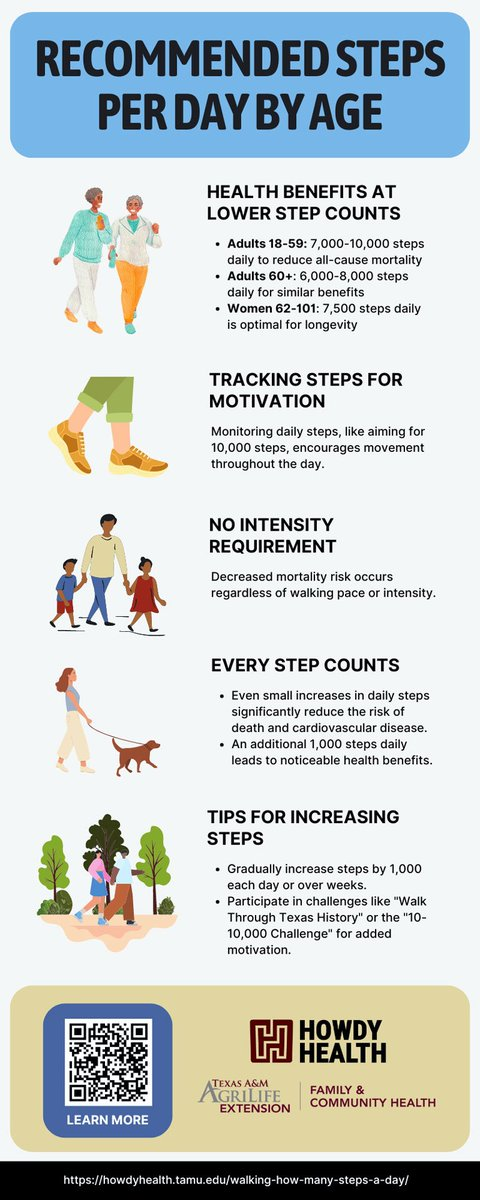
- Additional health benefits accrue with greater increases in daily step counts.
- Successfully improving walking time shifts innate immune function towards a less proinflammatory state.
- To avoid heart disease, walk like you're delivering mail
- Type 2 diabetic patients instructed to walk 10,000 steps per day increased HDL-C and resting energy expenditure and reduced plasminogen-activator inhibitor 1.
- Increasing walking steps daily can reduce blood pressure and diabetes in overweight participants.
- A 15-week program aimed at accumulating 10,000 steps/day improves cardiovascular performance and personal growth and also positively influences many variables that are indicators of health, fitness and psychological well-being.
- 10,000 steps is a reasonable target for healthy adults.
- Walking 10,000 steps/day or more reduces blood pressure and sympathetic nerve activity in mild essential hypertension.
- 10,000 steps per day lowers BMI, hip circumference, fat mass, fat mass percentage, resting energy expenditure, and anxiety in obese adults.
- Completing a 12,000 step goal and maintaining a step rate of over 103 steps per minute improved BMI, visceral fat area, hip circumfrence, HDL-C, fasting glucose, and triglycerides whereas simply meeting the 12,000 step goal did not.
- Walking at brisk pace, grocery shopping, window shopping in a mall, going to an entertainment centre, and attending parties are among practical methods to increase daily step counts.
- According to this literature review, there is an average daily deficit of about 4,000 steps.
- Accumulating at least 10,000 steps per day over a 12-week period improved physical and mood states in sedentary, overweight individuals.
- Overweight and obese women who walked an average of 12,323 steps per day improved body weight, BMI, and lowered high-sensitivity C-reactive protein.
- The results of this study highlight a significant improvement in mental health and wellbeing in subjects adhering to a 100-day 10,000 step program.
- Accumulating 10,000 steps per day does not necessarily guarantee meeting the guidelines of bout lengths documented to confer health benefits of physical activity.
- Walking speed improved with whole-body vibration therapy and routine physiotherapy in chronic stroke survivors.