PPAR-alpha
Return to Cellular Biology Menu
Peroxisome proliferator-activated receptor alpha (PPARα) is a transcription factor that regulates:
Fatty acid oxidation, Inflammation, Energy homeostasis, Lipid metabolism, Glucose homeostasis, Body weight, Vascular inflammation.
PPARα is a ligand-activated transcription factor that belongs to the nuclear receptor family. It regulates the expression of genes involved in fatty acid beta-oxidation.
PPARα is expressed by many cancers, including:
- Hepatocellular carcinoma (HCC)
- Cholangiocarcinoma (CCA)
PPARα is activated by different metabolites of fatty acids and agonists like fibrates.
Some unwanted effects of PPAR-α agonists include:
- Increased total mortality
- Rhadomyolysis, myopathy and myalgia
- Increased plasma creatinine
- Increased plasma homocysteine
- Increased gallstones
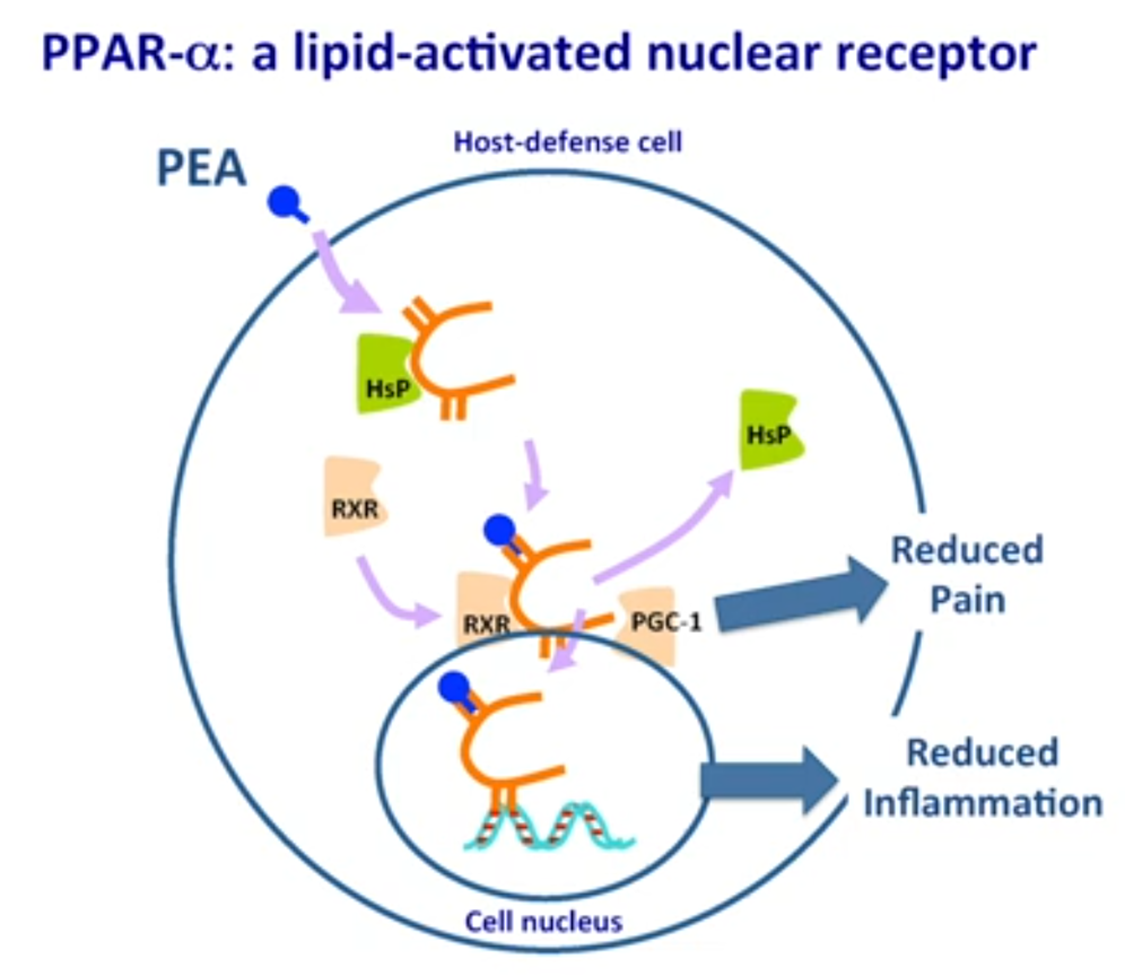
Host-defense cells exist to defend us against viruses, bacteria, injury. The orange colored icon represents PPAR-alpha which sits outside the nucleus and is bound to HsP (heat shock protein) . When palmitoylethanolamide (PEA) enters the cell it binds to PPAR-alpha. Then the HsP goes away, then the receptor binds to another receptor called RXR and other proteins called co-activators. This complex enters the cell nucleus, binds to the DNA and regulates the expression of proteins that regulate inflammation. Through another process, not yet completely understood, it also reduces pain.
Rapid Broad-Spectrum Analgesia through Activation of Peroxisome Proliferator-Activated Receptor-a
Palmitoylethanolamide is a fatty amine related to anandamide that binds to the PPAR-alpha receptor.
Pomegranate flower extract is a dual PPAR-alpha and PPAR–gamma activator