Macassar Kernels
See also: Brucea (genus)
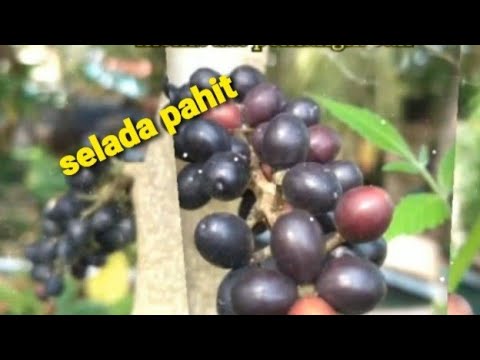
Brucea javanica has demonstrated a variety of antitumoral, antimalarial, and anti- inflammatory properties. As a Chinese herbal medicine, Brucea javanica is mainly used in the treatment of lung and gastrointestinal cancers. Pharmacological research has identified the main antitumor components are tetracyclic triterpene quassinoids. However, most of these active components have poor water solubility and low bioavailability, which greatly limit their clinical application. Nanoparticulate delivery systems are urgently needed to improve the bioavailability of Brucea javanica.
Brucea javanica, the ripe fruit of Brucea javanica (L) Merr (Simaroubaceae), was first mentioned in the Chinese medical monograph named Compendium of Materia Medica published in the sixteenth century. It mainly exists in the tropical and subtropical zones of China, including Guangdong, Guangxi, Yunnan, and Fujian. The fruit of the Brucea javanica plant is characteristically ovate in shape, hard, and slightly apiculate at the apex with an approximate length of 6–10 mm and diameter of 4–7 mm. It is covered with protuberant reticulation and usually turns black or brown when ripe. Generally, the fruit is harvested in autumn and dried after removal of impurities.
Actually, Brucea javanica is regarded as cold character and bitter taste, what laid the foundation for its various pharmacological properties. In Chinese medicine, Brucea javanica is characterized as an antipyretic and detoxifying plant, and widely used in the treatment of lung, prostate, and gastrointestinal cancer, and has potent antimalarial, anti-inflammatory, and antiviral effects, with low toxicity. Modern pharmacological research has demonstrated that tetracyclic triterpene quassinoids are the active ingredients in Brucea javanica, and that the potential mechanism for antitumor efficacy lies in induction of apoptosis and decreasing cell proliferation by reducing expression of the Bcl-2 gene.Brucea javanica also enhances immune function.
Increasing attention has been paid to the remarkable antitumor activity of Brucea javanica in recent years. In this paper, we discuss the chemical components of this medicinal plant, its pharmacological actions, and the prospect of developing nanoparticulate drug delivery systems, by presenting a summary of the relevant published literature on the active components of this plant and novel drug delivery systems containing Brucea javanica. Read more...
The active constituents of Brucea javanica are the quassinoid compounds bruceantin and brucein C. 35 It possesses properties designated as beneficial to multiple bodily systems, including the digestive and circulatory systems, and the large intestines. Both the roots and fruits of Brucea javanica are used as popular agents against diarrhea, dysentery, and fever. In vitro studies have verified that Brucea javanica extracts are effective as amoebicides, and clinical studies have shown it to be an effective agent in the treatment of amoebic dysentery, and malaria. In animal studies B. javanica has been demonstrated to play a role in immunological regulation, as evidenced by its killing effect on the cysts associated with Pneumocystis carnii pneumonia. Other reports have illustrated its activity against various noncommensal organisms including Shigella species (S. shiga, S. flexneri, S. boydii), Salmonella species (S. lexington, S. derby, S. typhi type II) and Vibrio species (V. cholerae, V. inaba and V. cholerae ogawa)
Constituents:
Quassinoid triterpenes, including bruceantin, bruceantinol, bruceantinoside A,
bruceins A–G and Q, brucein E 2-O--D-glucoside, bruceolide, bruceosides A–
C, brusatol, dehydrobruceantinol, dehydrobruceins A and B, dehydrobrusatol,
dihydrobrucein A, yadanzigan, yadanziolides A–D, and yadanziosides A–P
predominate as the secondary metabolite constituents
Dosage forms
Seeds for decoction, or capsules. Store in airtight container, protected
from light and moisture
Cautions: not for children or pregnant womenSome
cases of anaphylaxis have been reported after external applications of the
fruits of B. javanica