Pine Spike
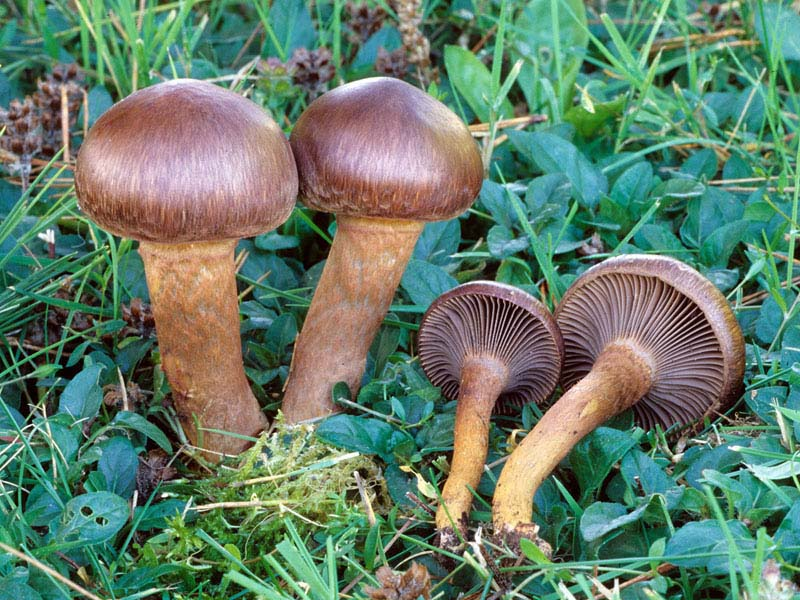
Chroogomphus vinicolor, commonly known as the Pine Spike, is a species of mushroom that belongs to the family Gomphidiaceae. This mushroom is notable for its unique appearance, ecological role, and culinary potential.
Identification
Identifying Chroogomphus vinicolor involves observing several key characteristics:
- Cap: The cap of Chroogomphus vinicolor is convex to flat, often with a slight central depression. It typically measures 2-10 cm in diameter. The surface is smooth and sticky when wet, with colors ranging from reddish-brown to vinaceous (wine-colored), hence the name "vinicolor."
- Gills: The gills are decurrent, meaning they run down the stem. They are initially pale gray but darken to a smoky gray or black as the spores mature.
- Stem: The stem is cylindrical, measuring 4-10 cm in length and 1-2 cm in thickness. It is often the same color as the cap or slightly lighter, with a fibrous texture.
- Spore Print: The spore print of Chroogomphus vinicolor is black, which is a distinguishing feature.
- Flesh: The flesh is firm and white, sometimes with a slight reddish tint near the cap surface.
Habitat
Chroogomphus vinicolor is typically found in coniferous forests, particularly those dominated by pine trees. It forms a mycorrhizal relationship with these trees, meaning it exchanges nutrients with the tree roots, benefiting both organisms. This symbiotic relationship is crucial for the health of forest ecosystems.
- Geographical Distribution: This mushroom is widely distributed across North America, Europe, and Asia. It is most commonly found in temperate regions.
- Season: Chroogomphus vinicolor fruits in the late summer to fall, depending on the climate and geographical location.
Ecological Significance
The ecological role of Chroogomphus vinicolor is multifaceted:
- Mycorrhizal Relationships: By forming mycorrhizal associations with pine trees, Chroogomphus vinicolor helps improve the nutrient uptake of its host trees. This relationship enhances the growth and health of the trees, contributing to the stability and productivity of forest ecosystems.
- Decomposition: While primarily mycorrhizal, Chroogomphus vinicolor also plays a role in the decomposition of organic matter, breaking down dead plant material and recycling nutrients back into the soil.
Edibility
Chroogomphus vinicolor is considered edible, though it is not as highly prized as some other wild mushrooms. Here are some points to consider:
- Flavor and Texture: The flavor of Chroogomphus vinicolor is mild, with a slightly nutty taste. The texture is firm, making it suitable for various culinary applications.
- Preparation: It is recommended to cook Chroogomphus vinicolor thoroughly before consumption. This not only enhances its flavor but also ensures that any potential toxins are neutralized.
- Culinary Uses: This mushroom can be sautéed, grilled, or added to soups and stews. It pairs well with other mushrooms and can be used as a meat substitute in vegetarian dishes.
Caution
While Chroogomphus vinicolor is generally considered safe to eat, there are a few precautions to keep in mind:
- Identification: Always be certain of your identification before consuming wild mushrooms. Chroogomphus vinicolor can be confused with other, potentially toxic, species.
- Allergies: Some individuals may have allergic reactions to certain mushrooms. If you are trying Chroogomphus vinicolor for the first time, consume a small amount to ensure you do not have an adverse reaction.
- Environmental Contaminants: Mushrooms can absorb heavy metals and other contaminants from their environment. Avoid collecting mushrooms from polluted areas.