Sharp Lobed Hepatica
Videos
Plant ID on GoBotany
Taxonomic note: Sharp-lobed hepatica is commonly treated as Anemone acutiloba (Ranunculaceae). Older references may use Hepatica acutiloba; regional floras and current taxonomic treatments can differ.
Plant identification cues
- Growth form: Small, low-growing, spring-flowering woodland perennial arising from a short rhizome or rootstock.
- Leaves: Three-lobed, leathery leaves on long petioles; lobes are distinctly pointed or sharp-tipped, helping distinguish it from round-lobed hepatica (Anemone americana, formerly Hepatica americana). New leaves may be reddish or bronze and often persist through winter.
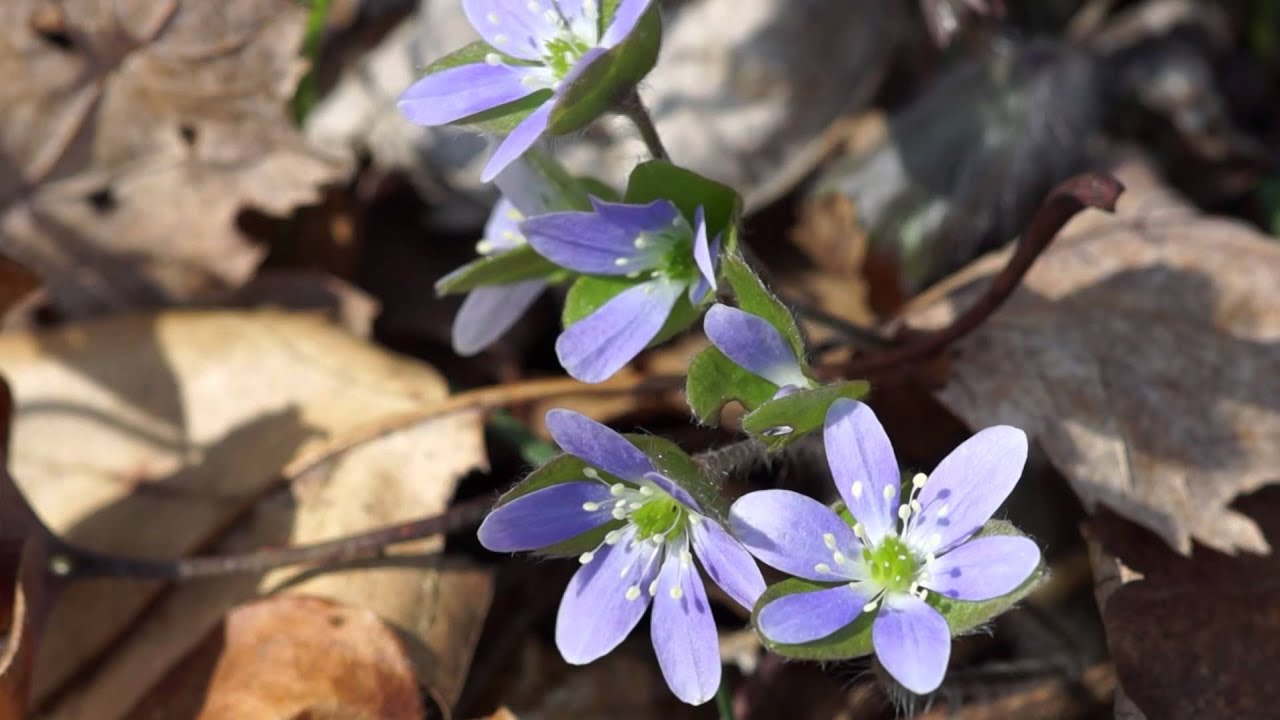
- Flowers: Solitary, daisy-like flowers carried above the foliage on hairy stalks. Flowers are typically white to pink or lavender, with several petal-like sepals and conspicuous yellow stamens. They appear very early in spring, often before the tree canopy closes.
- Fruit: A cluster of small one-seeded fruits (achenes), each associated with a narrow, persistent style; the fruiting head is useful for confirmation after flowering.
- Habitat: Rich, moist, well-drained deciduous woods, wooded slopes, ravines, and limestone-influenced soils. Distribution is primarily eastern and central North America; verify local range with a regional flora.
- Field caution: Confirm the sharply pointed lobes, flower color, hairiness of the flower stalk, and habitat together. Do not rely on a single feature; photograph leaves, flowers, and fruit for expert verification.
Botanical information
Family: Ranunculaceae (buttercup family)
Genus: Anemone
Species: A. acutiloba
Synonym encountered in older literature: Hepatica acutiloba
The species is a rhizomatous herbaceous perennial and an ephemeral component of deciduous forests. Its early flowering period allows pollination before canopy shade develops. The flower is technically composed of petal-like sepals; numerous stamens surround the central cluster of carpels. After pollination, the achenes mature in a compact head and are dispersed near the parent plant.
Traditional and ethnobotanical uses
Native American Uses
CHEROKEE — abdominal pains. This plant is made into an herb infusion with Asarum canadense and Epigaea repens. This is boiled down to a thick syrup which is drunk as an emetic to cure abdominal pains.
Hepatica possesses tonic and astringent properties and was used in chronic hepatic affections. The tonic properties of this plant, plus those of Asarum canadense, make this a useful medicine for stomach pains.
These statements document historical use; they do not establish modern clinical efficacy or safety. Preparation, dose, plant identification, and historical source should be recorded when citing ethnobotanical claims.
Pharmacological information
- Reported constituents: Hepatica species have been reported to contain flavonoids, tannins, saponins, and other phenolic compounds; composition can vary with species, plant part, season, and extraction method.
- Traditional activity claims: Astringent and tonic actions are consistent with historical use of preparations for gastrointestinal complaints, but these descriptions are traditional pharmacognostic categories rather than validated clinical endpoints.
- Preclinical evidence: Extracts from hepatica/anemone relatives have shown antimicrobial, antioxidant, anti-inflammatory, or cytotoxic activity in some laboratory studies. Results from test-tube or animal experiments cannot be assumed to apply to whole-plant preparations or human treatment.
- Evidence limitations: Species-level pharmacological data for A. acutiloba are limited compared with better-studied medicinal plants. Standardized extracts, validated dosing, pharmacokinetics, and controlled human trials are not established here.
Safety and conservation
- The Ranunculaceae includes plants with irritant or toxic constituents. Fresh plant material may cause irritation, gastrointestinal upset, or other toxicity; do not self-administer without qualified botanical and medical guidance.
- Historical emetic use is not a recommendation for contemporary practice. Avoid use during pregnancy, breastfeeding, in children, or with liver disease unless specifically supervised by a clinician.
- Accurate identification is essential: several spring woodland plants can resemble hepatica, and common names are inconsistent.
- Collect responsibly. Because it is a slow-growing woodland perennial, avoid removing wild plants; use photographs and herbarium or nursery material where possible.
References and verification
Plant ID on GoBotany
Consult a current regional flora, herbarium specimen, and peer-reviewed pharmacognosy literature before making taxonomic, medicinal, or safety claims.