Intermittent claudition
Return to Cardiovascular Disease Menu
Videos
It's Not Just Blood Flow: Muscle Changes with Claudication and the Implications for Rehabilitation

Ayurvedic Treatment
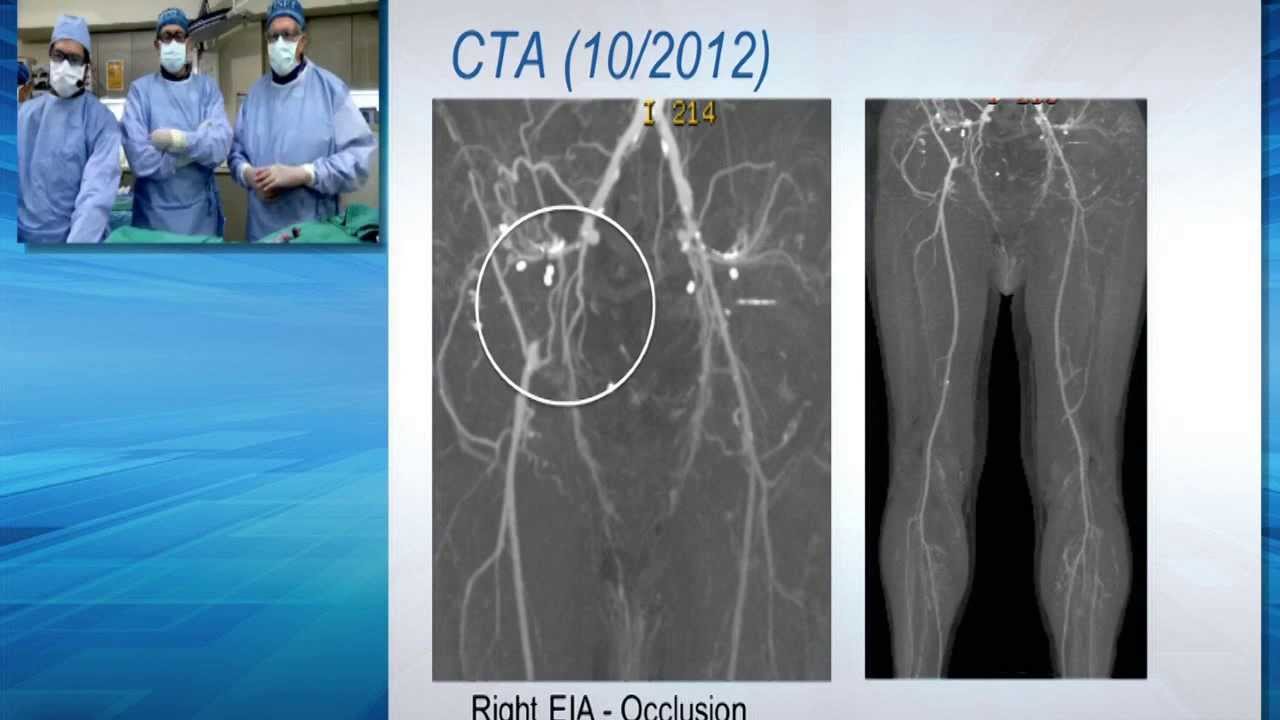
Bilateral Buttock and Lower Extremity Claudication
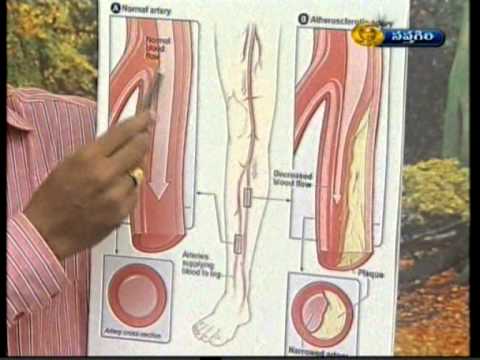
Intermittent claudication: An aching, crampy, tired, and sometimes burning pain in the legs that comes and goes -- it typically occurs with walking and goes away with rest -- due to poor circulation of blood in the arteries of the legs. In very severe claudication the pain is also felt ar rest. Intermittent claudication may occur in one or both legs and often continues to worsen over time. However, some people complain only of weakness in the legs when walking or a feeling of "tiredness" in the buttocks. Impotenceis an occasional complaint in men.
The usually intermittent nature of the pain is due to narrowing of the arteries that supply the leg with blood, limiting the supply of oxygen to the leg muscles, a limitation that is felt especially when the oxygen requirement of these muscles rises with exercise.
Intermittent claudication can be due to temporary artery narrowing due to vasospasm (spasm of the artery), permanent artery narrowing due to atherosclerosis, or complete occlusion (closure) of an artery to the leg. The condition is quite common, more so in men than women. It affects 1-2% of the population under 60 years of age, 3-4% of persons age 60 to 70 and over 5% of people over 70.
The effectiveness of G. biloba extract in the treatment of intermittent claudication (peripheral arterial occlusive disease Fontaine stage II), as compared with a placebo, was demonstrated in placebo-controlled, double-blind clinical trials by a statistically significant increase in walking distance. Sixty patients with peripheral arterial occlusive disease in Fontaine stage IIb physical training also clearly increased their walking distance.
Out of 15 controlled trials (up to the end of 1990) only two were of acceptable quality . The results of both studies were positive and showed an increase in walking distance in patients with intermittent claudication after 6 months, and an improvement of pain at rest in patients treated with 200 mg of G. biloba extract for 8 weeks .
After meta-analysis of five placebo-controlled clinical trials (up to the end of 1991) of G. biloba extract in patients with peripheral arterial disease, investigators concluded that the extract exerted a highly significant therapeutic effect.