Threadleaf Arrowhead
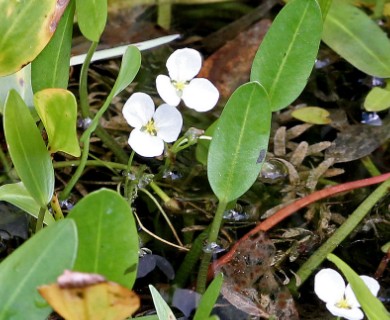
The Threadleaf Arrowhead, scientifically known as Sagittaria filiformis, is an aquatic plant that belongs to the Alismataceae family. This perennial herb is native to North America and is commonly found in freshwater habitats such as ponds, streams, and marshes.
Description
The Threadleaf Arrowhead is easily recognizable by its slender, thread-like leaves, which can grow up to 30 centimeters in length. These leaves are typically submerged, giving the plant a delicate, grass-like appearance. The leaves are linear and filiform, meaning they are long, narrow, and thread-like, which is a distinctive feature that sets it apart from other species in the Sagittaria genus.
The plant produces small, white flowers that bloom above the water surface. These flowers are arranged in whorls on a long, erect stalk. Each flower has three petals and three sepals, and they are typically about 1 to 2 centimeters in diameter. The blooming period usually occurs from late spring to early fall, depending on the climate and environmental conditions.
Habitat and Distribution
Sagittaria filiformis thrives in shallow, slow-moving freshwater environments. It is commonly found in the eastern United States, ranging from Maine to Florida and westward to Texas. The plant prefers soft, muddy substrates where it can anchor its roots and absorb nutrients. It is often found in habitats that are rich in organic matter, which provides the necessary nutrients for its growth.
The plant's ability to grow in a variety of freshwater habitats makes it an important component of aquatic ecosystems. It provides shelter and food for various aquatic organisms, including fish, amphibians, and invertebrates. Additionally, the Threadleaf Arrowhead plays a role in stabilizing the substrate and reducing erosion in its native habitats.
Ecological Importance
The Threadleaf Arrowhead is an essential part of the aquatic ecosystem. Its dense growth provides habitat and protection for small fish and invertebrates. The plant's leaves and stems offer a surface for algae and microorganisms to colonize, which in turn supports a diverse food web. The presence of Sagittaria filiformis can enhance the overall biodiversity of the aquatic environment.
Moreover, the plant contributes to water quality by absorbing excess nutrients from the water column. This nutrient uptake helps to prevent algal blooms, which can be detrimental to aquatic ecosystems. The Threadleaf Arrowhead also plays a role in oxygenating the water through photosynthesis, which is crucial for the survival of aerobic aquatic organisms.
Cultivation and Uses
While Sagittaria filiformis is primarily valued for its ecological benefits, it can also be cultivated for ornamental purposes in water gardens and naturalized ponds. Its delicate, grass-like appearance adds aesthetic value to aquatic landscapes. The plant is relatively easy to grow, provided it is given the right conditions, such as shallow water and a muddy substrate.
To cultivate Threadleaf Arrowhead, it is best to plant it in the spring or early summer when water temperatures are warmer. The plant can be propagated by dividing the rhizomes or by planting seeds. It is important to ensure that the plant has access to adequate sunlight, as it thrives in full sun to partial shade.