Fluoride

‘
Documentary: The Great Culling: Our Water
In-depth comprehensive look into fluoride:

Does Fluoride Calcify Your Pineal Gland
The Truth About CDC's Knowledge on Fluoride Neurotoxic Effects
Fluoride in pregnancy affects a child's IQ
Fluoride makes your body absorb extra aluminum. Aluminum goes to the brain. Aluminum shows up alarmingly in the brains of Alzheimer’s patients.
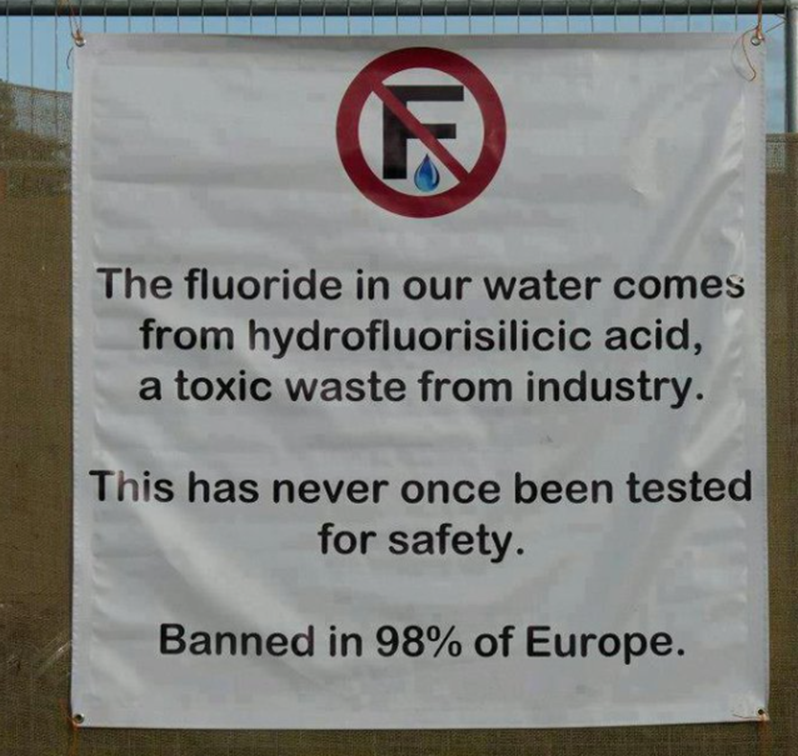
Originally, sodium fluoride is used in drinking water. Hexafluorosilicic acid (H2SiF6) and its salt sodium hexafluorosilicate (Na2SiF6) are more commonly used additives, especially in the United States. The use of hydrofluorosilicic acid contaminated with heavy metals creates a regulatory blind spot that jeopardizes any safe use of fluoride additives
Fluoride Exposure Linked to Lower Testosterone in Young Men
Fluoride's IQ Impact: New Gov. Study Adds to Growing Body of Evidence of HARM
Reevaluating Fluoride in Public Water: Balancing Cognitive Risks and Dental Benefits
March 2023: Fluoride Factors in Covid-19 and Underlying Conditions – Introduction
Video: Health Issues and Remediation Methods for Drinking Water with High Levels of Fluoride
2006 report “Fluoride in Drinking Water: A Scientific Review of EPA’s Standards”, the National Research Council (NRC):
“several lines of information indicate an effect of fluoride on thyroid function.”
“fluoride exposure in humans is associated with elevated TSH concentrations, increased goiter prevalence, and altered T4 and T3 concentrations” with “similar effects on T4 and T3 reported in experimental animals”
The NRC panel recommended, “effects of fluoride on various aspects of endocrine function should be examined further, particularly with respect to a possible role in the development of several diseases or mental states in the United States.”
Turmeric protects the brain from fluoride.
Sodium fluoride causes oxidative stress and apoptosis in cementoblasts.

Estimated daily intake
Daily intakes of fluoride can vary significantly according to the various sources of exposure. Values ranging from 0.46 to 3.6–5.4 mg/day have been reported in several studies (IPCS, 1984).[14] In areas where water is fluoridated this can be expected to be a significant source of fluoride, however fluoride is also naturally present in huge range of foods, in a wide range of concentrations.[27] The maximum safe daily consumption of fluoride is 10 mg for an adult.
Examples of fluoride content
Food| /Drink Fluoride | (mg per 100 g) | Portion Fluoride | (mg per portion) |
| Black tea (brewed) | 0.373 | 1 cup, 240 g (8 fl oz) | 0.884Raisins |
|---|---|---|---|
| , seedless0.234small | box, 43 g (1.5 oz) | 0.033Tablewine0.153Bottle | |
| , 750 ml (26.4 fl oz) | 1.150Municipaltap-water | ||
| , (Fluoridated) | 0.081Recommendeddailyintake | , 3 litres (0.79 US gal) | 2.433 |
| Baked potatoes, Russet0.045Medium | potato, 140 g (0.3 lb) | 0.078Lamb0.032Chop | |
| , 170 g (6 oz) | 0.054Carrots0.0031 | ||
| large carrot, 72 g (2.5 oz) | 0.002 |
Data taken from United States Department of Agriculture, National Nutrient Database
derivatives
Organic and inorganic anions are produced from fluoride, including:
- Bifluoride used as an etchant for glass.[46]
- Tetrafluoroberyllate
- Hexafluoroplatinate
- Tetrafluoroborate used in organometallic synthesis.
- Hexafluorophosphate used as an electrolyte in commercial secondary batteries.
- Trifluoromethanesulfonate