Three Flowered Maple
Native to China
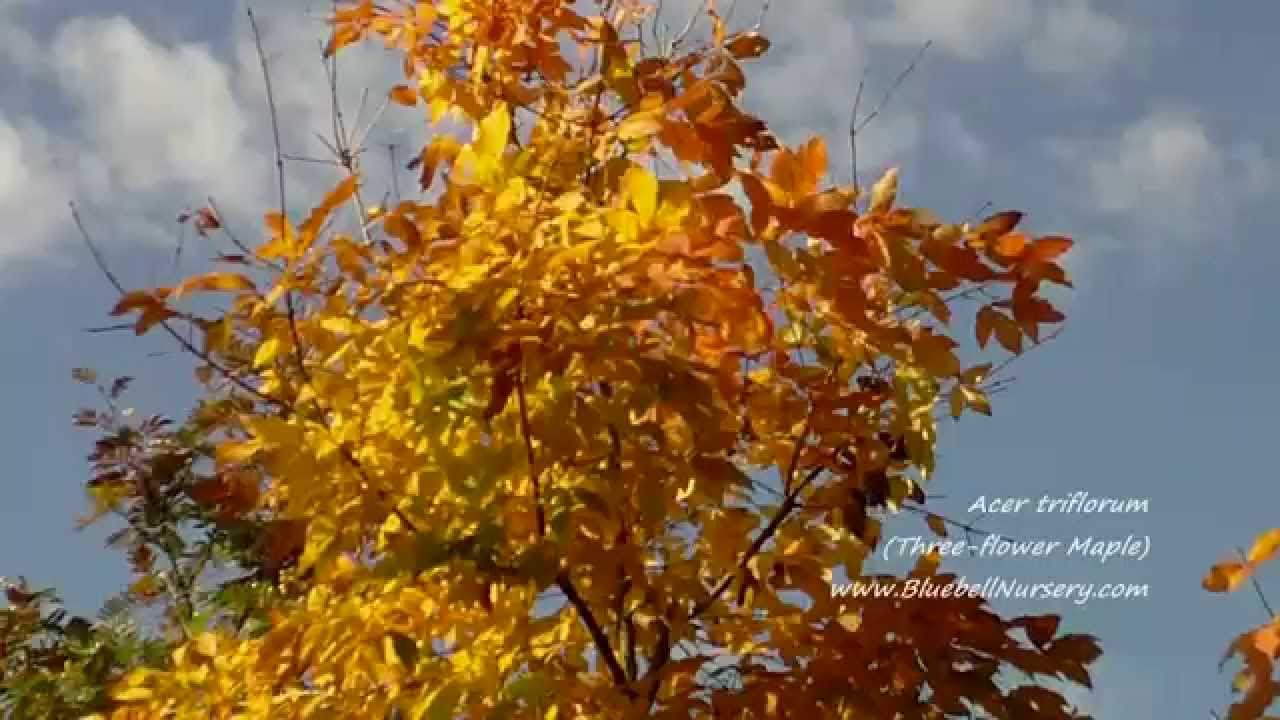
Acer triflorum, commonly known as the Three-flowered Maple, is a deciduous tree that belongs to the Sapindaceae family. Native to northeastern China and Korea, this tree is celebrated for its ornamental value, particularly its striking bark and vibrant fall foliage.
Botanical Characteristics
Appearance
Acer triflorum typically grows to a height of 20 to 30 feet, with a spread of 15 to 25 feet, making it a medium-sized tree suitable for various landscape settings. The tree is characterized by its trifoliate leaves, which consist of three leaflets. These leaves are dark green during the growing season and turn a brilliant mix of yellow, orange, and red in the fall, providing a spectacular display of autumn colors.
Bark
One of the most distinctive features of Acer triflorum is its bark. The bark is grayish-brown and exfoliates in long, thin strips, revealing a lighter, cinnamon-colored inner bark. This peeling bark adds year-round interest and texture to the tree, making it a focal point in any garden or landscape.
Flowers and Fruit
As its name suggests, Acer triflorum produces clusters of three small, yellowish-green flowers in the spring. These flowers are not particularly showy but are followed by winged samaras (seed pods) that mature in late summer to early fall. The samaras are about 1 to 1.5 inches long and add another layer of interest to the tree.
Cultivation Requirements
Soil and Light
Acer triflorum is relatively adaptable but thrives best in well-drained, slightly acidic to neutral soils. It prefers full sun to partial shade, with at least 4 to 6 hours of direct sunlight per day to achieve optimal growth and fall coloration. While it can tolerate a range of soil types, including clay and loam, good drainage is essential to prevent root rot.
Watering and Fertilization
This tree has moderate water needs. It should be watered regularly during its first few years to establish a strong root system. Once established, Acer triflorum is relatively drought-tolerant but benefits from occasional deep watering during prolonged dry periods. Fertilization is generally not necessary, but a balanced, slow-release fertilizer can be applied in early spring if the soil is particularly poor.
Pruning
Pruning is not typically required for Acer triflorum, except to remove dead or damaged branches. If shaping is desired, it is best done in late winter to early spring before new growth begins. Avoid heavy pruning, as this can stress the tree and reduce its ornamental value.
Uses in Landscaping
Ornamental Value
Acer triflorum is highly valued for its ornamental qualities. Its exfoliating bark and vibrant fall foliage make it an excellent choice for specimen planting, where it can be showcased as a focal point. It is also suitable for mixed borders, woodland gardens, and as an understory tree in larger landscapes.
Wildlife Attraction
The tree's flowers and seeds attract various pollinators and birds, adding ecological value to its ornamental appeal. The dense canopy provides shelter for small mammals and birds, making it a beneficial addition to wildlife-friendly gardens.
Low Maintenance
Acer triflorum is relatively low-maintenance once established, requiring minimal pruning and being resistant to most pests and diseases. Its adaptability to different soil types and conditions makes it a versatile choice for both novice and experienced gardeners.