Leafless Anabasis
Constituents
- Listing on Duke’s Database
- Alkaloids ofAnabasis aphylla and their cholinergic activities
- Antimicrobial phenolic compounds from Anabasis aphylla L.
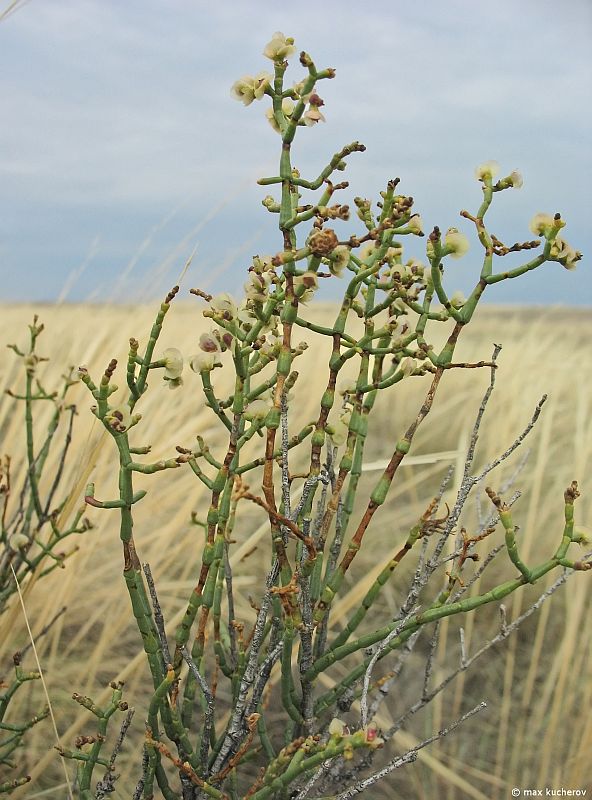
Anabasis aphylla, commonly known as leafless anabasis, is a plant species that belongs to the Amaranthaceae family. This perennial shrub is native to the arid and semi-arid regions of Central Asia, including countries like Kazakhstan, Uzbekistan, and Turkmenistan. It thrives in saline soils and is well-adapted to harsh environmental conditions, making it a subject of interest for botanists and ecologists alike.
Botanical Characteristics
Anabasis aphylla is characterized by its unique morphological features:
- Stem and Leaves: The plant is typically leafless, which is a significant adaptation to reduce water loss in arid environments. Instead of leaves, it has green, photosynthetic stems that perform the function of leaves.
- Height: It usually grows to a height of 30-100 cm, depending on the environmental conditions.
- Flowers: The flowers are small, inconspicuous, and usually appear in clusters. They are wind-pollinated, which is common for plants in open, dry habitats.
- Roots: The root system is extensive and deep, allowing the plant to access water from deeper soil layers.
Ecological Significance
Anabasis aphylla plays a crucial role in its native ecosystems:
- Soil Stabilization: The extensive root system helps in stabilizing the soil, preventing erosion in arid and semi-arid regions.
- Habitat: It provides habitat and food for various desert-dwelling animals and insects.
- Salinity Tolerance: Its ability to thrive in saline soils makes it an important species for studying plant adaptations to high salinity environments.
Uses and Applications
The plant has several uses, both traditional and modern:
- Traditional Medicine: In Central Asia, Anabasis aphylla has been used in traditional medicine for its purported anti-inflammatory and antimicrobial properties.
- Forage: It serves as forage for livestock, especially in regions where other vegetation is sparse.
- Phytoremediation: Due to its salinity tolerance, it is being studied for use in phytoremediation projects to reclaim saline soils.
Adaptations to Arid Environments
Anabasis aphylla exhibits several adaptations that enable it to survive in harsh, arid environments:
- Leaflessness: The absence of leaves reduces water loss through transpiration.
- Photosynthetic Stems: The green stems carry out photosynthesis, compensating for the lack of leaves.
- Deep Root System: The deep roots allow the plant to access water from deeper soil layers, which is crucial for survival in dry conditions.
- Salinity Tolerance: The plant can tolerate high levels of soil salinity, which is often a characteristic of arid and semi-arid regions.