White Bryony
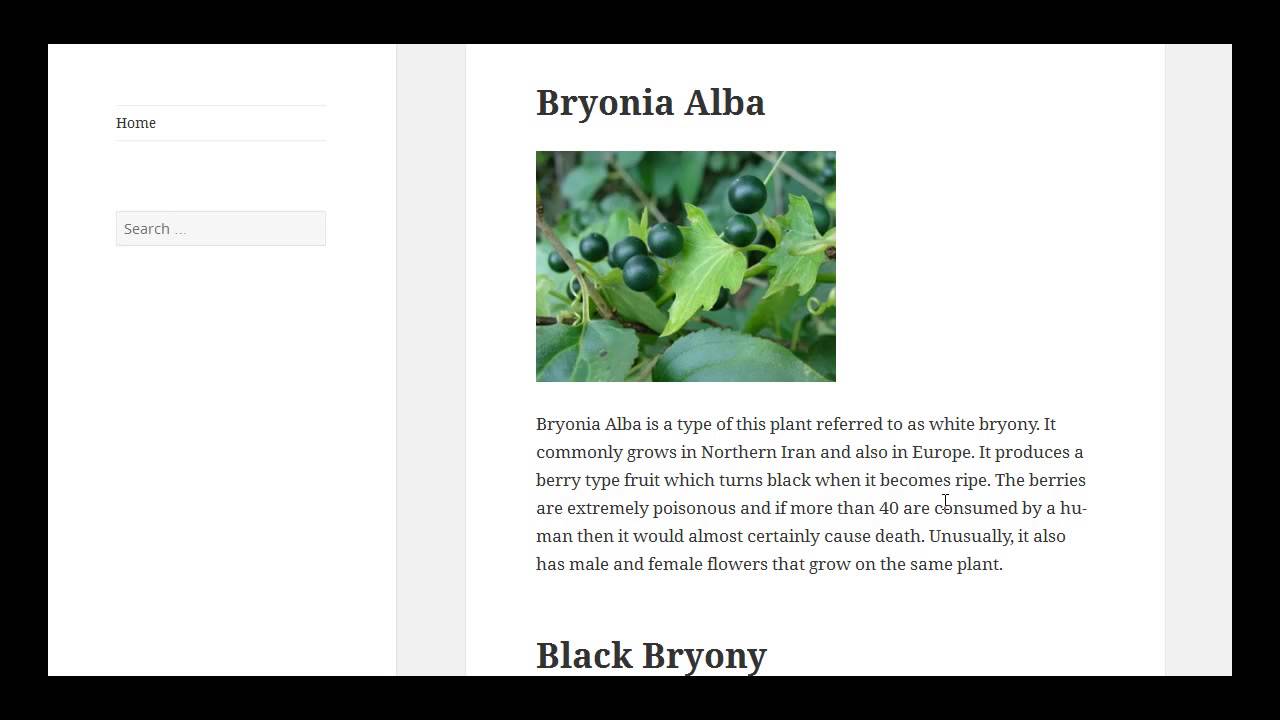
Bryonia alba and B. dioica are vigorous twining perennials in the cucumber family. Bryony is such a vigorous climber that it has the potential to be a noxious weed with the destructive potential like Kudzu. Bryony has palmately lobed leaves and greenish-white flowers that are followed by poisonous purple berries. Although the whole plant is known to be toxic, it has some history as a medicinal plant, which seems to have mostly been forgotten, except that today it is used mainly as a homeopathic remedy. Its medicinal use is as a laxative, emetic, for gastrointestinal disease, respiratory illnesses, especially those with a painful cough, flu and infections. Strangely, Bryonia root is listed in the original GRAS in the USA as a flavoring, though I don’t know if it still has any such use today
Medicinal Parts: the dried taproot
Constituents
Cucurbitacins: Including cucurbitacins B, D, E, I, J, K, L, 23, 24-dihydro-cucurbitacins, 1,2,23,24-tetrahydrocucurbitacins, 22-deoxycucurbitacins and bryodulcimgenin; curcubitacin glycosides, including bryonin, elaterinide, bryonoside, bryodulcigenin, cucurbitacin glycosides
Triterpenes with unusual structure: for example, bryonolic acid
Steroids; including sterols like C-4- and/or C-24- methylated or ethylated cholest-7- en-3- beta- oles
Polyhydroxy fatty acids; including 9,12,13-trihydroxy- octadeca-10 (E)- 15(Z)- dienic acid
Lectins
Flavone *C*-glycosides from *Bryonia alba* and *B. dioica*
Effects
The mainly glycosidically bonded cucurbitanes contained in the plant have a strong toxic and cytotoxic effect; in topical application they are irritating to the skin and mucous membranes. Various aqueous extracts display an antitumoral effect in animal tests. The resin is a drastic purgative. The methanol extracts have a strong hypoglycemic affect. Use as an emetic nd purgative has become obsolete because of the toxicity.
Uses
Bryony has deep folklore in European traditions of being able to either bring luck and protection to people or take them away. Bryony was also used in the Catholic Church for a time for blessings, and then later this practice stopped as it was associated with witchcraft, as happened for other herbs in the Catholic Church. Homeopathic preparations of Bryony still used today (which are very dilute preparations) are indicated for digestive problems (especially marked by constipation, dry mouth, and headache), headache (worse with movement, and especially with constipation), sprains and fractures (especially accompanied by inflammation, pain and swelling in the joints and rheumatism), cough (dry painful cough, worsened by motion), flu (dry lips, splitting headache, and irritability). Although mostly forgotten as an old European medicine, it is still in use in some parts of the Balkan Peninsula. There is also some consideration of it as a potential adaptogen, helping the body to adapt to stress, although this seems unlikely to me considering its toxicity. Bryony is an old European plant of symbolic meaning and medicinal relevance that is still today kept as an ornamental in heritage gardens. (Source)
Because of its strong purgative and emetic effect, its use cannot be recommended. Bryonia root has been used as a laxative, emetic and diuretic in the treatment of various disorders of the gastrointestinal tract and respiratory tract and for rheumatic disorders. It has also been used prophylactically and therapeutically for metabolic disorders, liver disease, and acute and chronic infectious disease.
Cautions
It is highly toxic when freshly harvested. The toxicity declines rapidly with dehydration and storage because of the instability of the cucurbitacins. Due to the cucurbitacin content, it has a severely irritating effect on skin and mucous membranes. Contact between skin and the juice of the plant can lead to rash, infection, blister formation and necroses.
Overdose
Intake of toxic doses can lead to vomiting, bloody diarrhea, colic, kidney irritation, anuria, collapse, spasms, paralysis and, under certain contitions, to death. Consumption of 40 berries is presumed fata for an adult; 15 for a child.