Field Bindweed
Per Sloan-Kettering
Clinical Summary
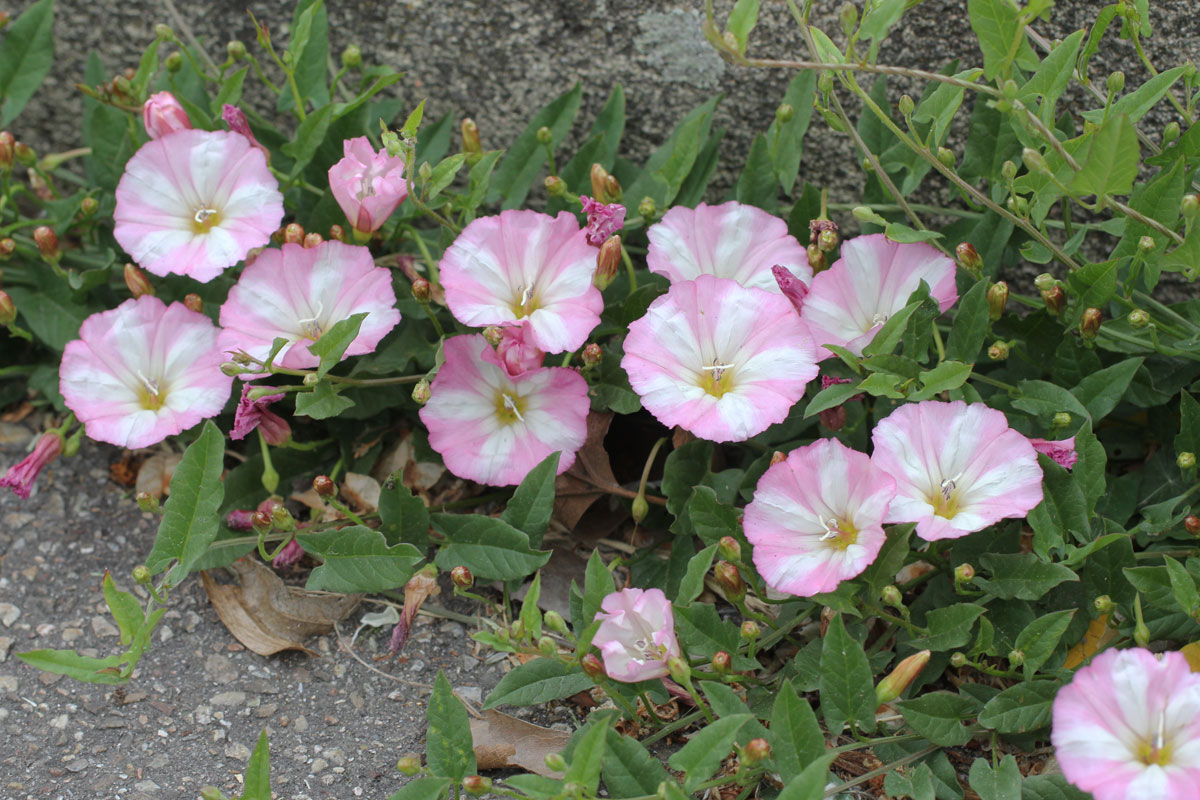
Convolvulis arvensis, commonly known as field bindweed, is a plant that belongs to the morning glory family. It is a perennial vine with white to pink flowers that can be found in temperate regions. C. arvensis is considered a noxious weed in US farmlands due to its invasive nature, but has historical use as a medicinal plant in Europe for hypertension and as a laxative, and in traditional Chinese medicine for relief of itching, pain, and toothache (2). The leaf extract is marketed as a dietary supplement to support vascular health by restricting new blood vessel growth. Related products are also promoted as a natural cancer treatment.
In vitro and animal studies show that water extracts from the plant’s aerial parts are rich in proteoglycans and have antiangiogenic and immune-stimulating effects. Other studies found that these constituents also increased vasodilation and circulatory function, and lowered blood pressure in animals . Alkaloids from raw field bindweed are toxic to animals, but dietary supplements are alkaloid-free.
Due to its ability to inhibit new blood vessel growth, C. arvensis should not be used before and after surgery. Infants, children, adolescents, and pregnant women should also avoid this product.
Mechanism of Action
Water extract from the aerial parts of C. arvensis is thought to be rich in proteoglycans. It exerts immunostimulatory effects in animals by increasing total leukocyte and lymphocyte counts as well as increasing serum lysosome activity. The lipophilic glycoside constituents have cytotoxic effects in human tumor cell lines. Tumor growth inhibition with a high molecular weight extract of C. arvensis was dose-dependent and attributed to its ability to inhibit blood vessel growth.
Other animal studies show that tropane alkaloids from C. arvensis have antimuscarinic activity, slowing gastrointestinal motility. This may increase absorption of toxins, leading to intestinal fibrosis gastritis and/or hepatitis.
Cautions
C. arvensis leaf extract inhibits vascular development, and can theoretically interfere with wound healing.
In animal studies, weight loss and intestinal pain occurred after consuming large amounts of bindweed, likely due to the tropane alkaloid contents.
Herb/Drug Interactions
Antiangiogenic agents (eg, bevacizumab): Theoretically, because leaf extracts of C. arvensis have antiangiogenic activities, it may increase the risk of adverse effects when used with these medications.
Studies
Effects of a high molecular mass *Convolvulus arvensis* extract on tumor growth and angiogenesis.
Tropane alkaloids and toxicity of *Convolvulus arvensis.* Phytochemistry. May 1995;39(2):301-303.
Toxicity of field bindweed (*Convolvulus arvensis*) to mice. Vet Hum Toxicol. Oct 1995;37(5):452-454.