Hoary Puccoon
Native American children chew the plant with their gum to dye it red, as referenced in the common name "hoary puccoon". The taproot produces the reddish-purple juice that is commonly used as a pigment. Native Americans also use the roots of the plant to treat asthma or any lung complaints, and as a sedative. The Menomini peoples used the ripened, white seed of the plant as a type of ceremonial bead. A tea made from the leaves is applied externally in the treatment of fevers accompanied by spasms.
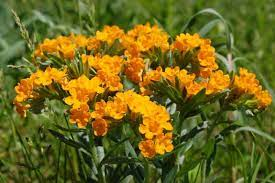
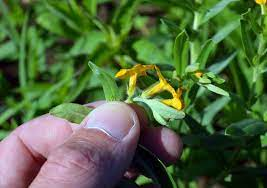
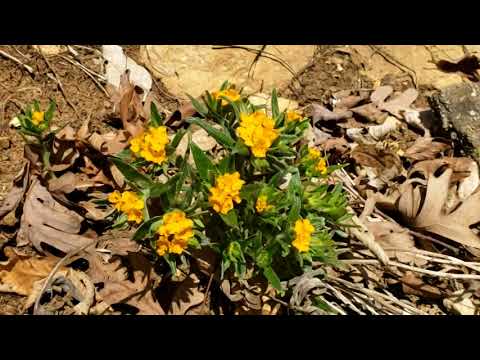
Lithospermum canescens, commonly known as hoary puccoon or gray gromwell, is a perennial herbaceous plant native to North America. This plant belongs to the Boraginaceae family and is known for its striking yellow to orange flowers that bloom in late spring to early summer.
Characteristics
Hoary puccoon is characterized by its hairy, lance-shaped leaves that are arranged in a basal rosette. The plant typically grows to a height of 6 to 18 inches and produces clusters of tubular flowers that are bright yellow to orange in color. These flowers are not only visually appealing but also attract pollinators such as bees and butterflies, aiding in the plant's reproduction.
The roots of Lithospermum canescens are deep and branching, allowing the plant to thrive in a variety of soil types, including dry, sandy, or rocky soils. The plant's ability to adapt to different environmental conditions makes it a resilient species in its native habitats.
Habitat
Hoary puccoon is primarily found in prairies, open woodlands, and savannas across the central and eastern regions of North America. It prefers well-drained soils and thrives in areas with full sun exposure. The plant's distribution ranges from the Great Plains to the Appalachian Mountains, where it adds a splash of color to the landscape with its vibrant flowers.
In addition to its natural habitats, Lithospermum canescens can also be cultivated in home gardens and native plant landscapes. Its low maintenance requirements and drought tolerance make it a popular choice for gardeners looking to attract pollinators and add a touch of native beauty to their outdoor spaces.
Uses
Indigenous peoples of North America have long recognized the medicinal properties of hoary puccoon. The roots of the plant were traditionally used to create herbal remedies for various ailments, including coughs, sore throats, and skin conditions. The plant's roots contain compounds with anti-inflammatory and expectorant properties, making it a valuable resource in traditional medicine.
In addition to its medicinal uses, Lithospermum canescens has cultural significance for Native American tribes. The plant's bright flowers and unique foliage have been incorporated into traditional ceremonies and rituals, symbolizing strength, resilience, and connection to the natural world.
Conservation Status
Despite its cultural and ecological importance, hoary puccoon faces threats from habitat loss, land development, and invasive species. As a result, the plant's populations have declined in some regions, prompting conservation efforts to protect and restore its natural habitats.
Conservation organizations and botanical gardens are working to conserve Lithospermum canescens through seed banking, habitat restoration, and public education initiatives. By raising awareness about the plant's ecological value and cultural significance, these efforts aim to ensure the long-term survival of hoary puccoon and other native plant species.