Wrinkled Dock
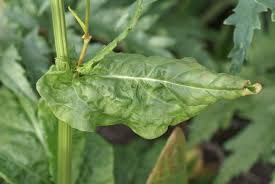
Rumex rugosus, commonly known as Indian sorrel or wrinkled dock, is a perennial herbaceous plant that belongs to the family Polygonaceae. Native to the Indian subcontinent, this hardy plant has gained popularity for its culinary and medicinal uses.
Appearance and Habitat
Indian sorrel is a robust plant that can grow up to 1 meter in height. It has large, wrinkled leaves that are lanceolate or ovate in shape. The leaves are dark green with prominent veins and have a slightly acidic taste. The plant produces small, greenish flowers that are arranged in clusters on tall, erect stems. These flowers eventually give way to small, triangular seeds.
This plant is well-adapted to a variety of habitats and can be found growing in both moist and dry areas. It thrives in open fields, gardens, and waste places. Indian sorrel is known for its ability to tolerate a wide range of soil conditions, from sandy to clayey soils. It is also resistant to drought and can survive in areas with low rainfall.
Culinary Uses
Indian sorrel has a long history of culinary use in various cuisines. The leaves of this plant are rich in oxalic acid, giving them a tangy, sour taste. They are commonly used as a souring agent in dishes, similar to how lemon or tamarind is used. The leaves can be added to curries, soups, stews, and chutneys to enhance their flavor.
In addition to its sour taste, Indian sorrel leaves are also rich in essential nutrients. They are a good source of vitamins A and C, as well as minerals like calcium and iron. The leaves can be consumed raw in salads or cooked as a vegetable. They can also be dried and powdered to make a tangy spice that can be used in various dishes.
Medicinal Properties
Indian sorrel has been used in traditional medicine for centuries due to its numerous health benefits. The leaves of this plant are known for their anti-inflammatory and antioxidant properties. They are used to treat various ailments, including digestive disorders, skin diseases, and respiratory problems.
The high oxalic acid content in Indian sorrel leaves makes them effective in treating kidney stones. The leaves act as a diuretic, helping to flush out toxins and prevent the formation of stones. They are also used to alleviate the symptoms of urinary tract infections.
Indian sorrel leaves are believed to have antimicrobial properties and are used to treat skin infections and wounds. The leaves can be crushed and applied topically to relieve itching, inflammation, and pain. They are also used in traditional remedies for conditions like eczema and psoriasis.
In addition, Indian sorrel leaves are used to improve digestion and relieve gastrointestinal issues. They are believed to stimulate the production of digestive enzymes, aiding in the breakdown of food and promoting better absorption of nutrients. The leaves are also used to treat conditions like constipation and diarrhea.