Oriental False Hawksbeard
Overview
Youngia japonica is a cosmopolitan weed species distributed worldwide, especially in temperate zones. In Chinese traditional medicine it is used mainly for reducing pyrexia (fever), detoxification, and atopic/itchy conditions. Phytochemical studies report guaiane-type sesquiterpenes and other constituents with marked antiallergic, antioxidant, and antitumor activities.
Traditionally, the plant is considered:
- Antitussive (relieves cough)
- Febrifuge (reduces fever)
- Detoxifying (clearing “heat” and toxins)
- Used externally and internally for boils and snakebites in some folk practices
Botanical & Habitat Notes
- Family: Asteraceae (Compositae)
- Growth form: Annual or short-lived perennial herb; often appearing as a lawn or field weed
- Habitat: Disturbed soils, gardens, roadsides, fields, and urban greenspaces, especially in warm–temperate regions
Identification Cues
Overall Habit
- Tap‑rooted annual (occasionally biennial).
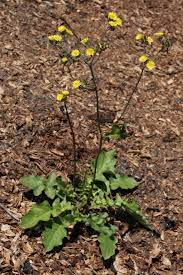
- Grows 4–28 inches tall.
- Found in disturbed areas: roadsides, trail edges, lawns, floodplains, clearings. fsus.ncbg.unc.edu
- Often behaves as a weedy, invasive composite. North Carolina Extension Gardener Plant Toolbox
Leaves
Basal Leaves (most diagnostic)
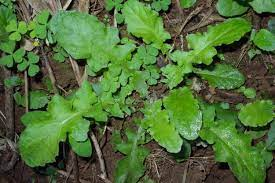
- Form a basal rosette.
- Oblong‑lanceolate, 2–5 inches long.
- Irregularly pinnatifid with jagged, uneven lobes.
- Densely hairy, often with brownish, crinkled hairs.
- May show reddish‑purple tints.
Upper Leaves
- More linear, often sessile (no petiole).
- Still hairy.
- Emit milky sap when torn.
North Carolina Extension Gardener Plant Toolbox
Stems
- One to several stems rising from the rosette.
- Hairy below, smoother above.
- Can be reddish‑purple‑tinged.
- Flowering stalk generally leafless, branched at the top, 6–15 inches tall (sometimes up to 3 ft).
North Carolina Extension Gardener Plant Toolbox
Flowers
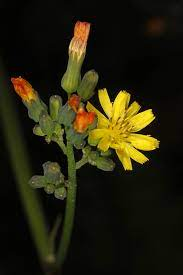
- Bright yellow composite heads, about 1/3 inch wide.
- 10–20 ray florets, each with squared‑off, 5‑toothed tips.
- Heads surrounded by narrow green bracts with fleshy midribs.
- Flower heads are dandelion‑like, but smaller (~½ inch).
North Carolina Extension Gardener Plant Toolbox
Fruit / Seed Head
- Dandelion‑like pappus, ¼–½ inch diameter.
- Wind‑dispersed seeds.
North Carolina Extension Gardener Plant Toolbox
- Achenes oblong‑ellipsoid, ribbed, brown, with white pappus bristles ~4 mm long.
Habitat & Distribution
- Native to Southeast/Eastern Asia.
- Now naturalized and spreading in many regions, including minimally disturbed natural areas.
- Occurs in forest edges, shrubland, artificial terrestrial habitats, and disturbed soils.
Quick Field ID
- Basal rosette with hairy, jagged, irregularly lobed leaves.
- Milky sap when leaves/stems are torn.
- Slender, mostly leafless flowering stalk.
- Small yellow composite flowers with square‑tipped rays.
- Dandelion‑like seed head, but smaller and on branched stems.
Constituents & Pharmacology
Key reported constituents
- Guaiane-type sesquiterpenes
- Additional phenolic and flavonoid components (supporting antioxidant and anti-inflammatory effects)
Reported activities (from experimental and in vitro/animal work)
- Antiallergic: Modulation of allergic inflammatory responses
- Antioxidant: Scavenging of reactive oxygen species; protection against oxidative stress
- Antitumor / anticancer: Growth-inhibitory effects on certain tumor cell lines
- Antiviral: Reported in the cited study below against selected viral models
- Anti-inflammatory / antipyretic: Consistent with its traditional use as febrifuge and “heat-clearing” herb
Clinical evidence in humans is still limited; most data are preclinical (cell and animal studies).
Traditional Therapeutic Uses
Internal uses
- Fever and “heat” conditions: Taken as decoction or infusion for febrile illnesses
- Cough and minor respiratory irritation: As an antitussive adjunct
- Detoxification: General “heat-toxin” indications in Chinese traditional practice (e.g., inflamed skin, sore throat, minor infections)
External / topical uses
- Boils, abscesses, inflamed skin lesions: Poultice of fresh leaves or topical wash
- Snakebites: Applied in some folk traditions (supportive measure only; not a substitute for emergency care or antivenom)
Edibility
Food use
- Edible parts: Young leaves
- Preparation:
- Eaten raw in salads or as a garnish
- Cooked briefly (stir-fry, blanched, added to soups) to soften texture and reduce potential bitterness
Taste profile is generally mild to slightly bitter, depending on age of leaves and growing conditions.
As with all wild foods: correct identification, clean habitat, and moderation are essential.
Safety & Precautions
- Identification: Some Asteraceae species can look similar; misidentification can carry risk.
- Allergy: As a member of the Asteraceae family, it may cause reactions in individuals sensitive to daisies, ragweed, etc.
- Pregnancy / lactation: Insufficient safety data; use with caution and professional guidance.
- Drug interactions: Theoretical interactions with anticoagulants, immunomodulatory, or chemotherapeutic agents due to antioxidant/antitumor and anti-inflammatory activities; consult a qualified practitioner.
This plant should not replace appropriate medical evaluation and treatment.