Himalayan Bugleweed
Constituents
Ajuga bracteosa, commonly known as the Himalayan Bugleweed, is a fascinating herbaceous perennial plant that belongs to the mint family, Lamiaceae. This beautiful plant is native to the Himalayan region, where it thrives in cool, moist environments with well-drained soil.
Appearance and Characteristics
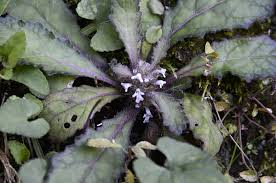
One of the most striking features of Ajuga bracteosa is its attractive foliage. The plant forms dense mats of glossy, dark green leaves that are often tinged with purple or bronze hues. The leaves are oval-shaped and have scalloped edges, creating a visually appealing carpet-like effect. In addition to its foliage, Ajuga bracteosa produces stunning spikes of small, tubular flowers in shades of blue, purple, or white. These flowers bloom in late spring to early summer, attracting pollinators such as bees and butterflies to the garden.
Cultivation and Care
Ajuga bracteosa is a relatively low-maintenance plant that is easy to grow in the right conditions. To cultivate this plant successfully, it is essential to provide it with a location that receives partial to full shade. While Ajuga bracteosa can tolerate some sun, it generally prefers cooler, shadier spots in the garden. The soil should be rich, moist, and well-drained to support healthy growth. Regular watering is crucial, especially during dry periods, to keep the soil consistently moist but not waterlogged.
Propagation of Ajuga bracteosa can be achieved through division or by collecting and sowing seeds. Dividing established clumps of the plant in the spring or fall is a simple way to create new plants. Alternatively, collecting seeds from mature flower spikes and sowing them in a seed-starting mix can also yield successful results. It is important to keep the soil consistently moist during the germination process to encourage seedling growth.
Landscape Uses
Ajuga bracteosa is a versatile plant that can be used in a variety of landscape settings. Its low-growing habit and spreading nature make it an excellent ground cover for shady areas where other plants may struggle to thrive. The plant's dense foliage helps to suppress weeds and create a lush carpet of greenery. Ajuga bracteosa is also well-suited for planting in woodland gardens, rock gardens, or along the edges of paths and borders.
In addition to its practical uses, Ajuga bracteosa is valued for its aesthetic appeal. The plant's colorful foliage and delicate flowers add visual interest to garden beds and containers. When planted in mass groupings, Ajuga bracteosa can create a striking display of color and texture. The plant's ability to attract pollinators further enhances its value in the garden, contributing to a healthy ecosystem.
Medicinal and Culinary Uses
Beyond its ornamental qualities, Ajuga bracteosa has a long history of medicinal and culinary uses. In traditional herbal medicine, various parts of the plant, including the leaves and roots, have been used to treat a range of ailments. Ajuga bracteosa is believed to possess anti-inflammatory, antimicrobial, and antioxidant properties, making it a valuable herb for promoting overall health and well-being.
In culinary applications, Ajuga bracteosa can be used as a flavorful addition to salads, soups, and teas. The leaves of the plant have a slightly bitter taste with hints of mint, making them a unique ingredient in culinary creations. Ajuga bracteosa can also be infused into oils or vinegars to add a subtle herbal flavor to dishes. When harvested responsibly, Ajuga bracteosa can be a sustainable and nutritious addition to the kitchen.