Fiddle Dock
See also: Rumex (genus)
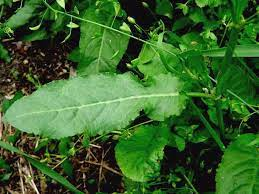
Leaves are edible.
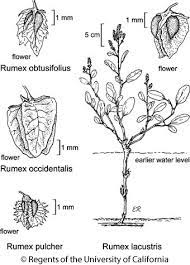
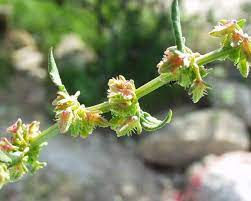
Fiddle Dock, scientifically known as Rumex pulcher, is a fascinating plant species belonging to the Polygonaceae family. This perennial herb is native to Europe but has spread to various parts of the world, including North America, where it is often considered a weed. Despite its invasive nature, Fiddle Dock has several interesting characteristics and uses that make it a noteworthy plant.
Botanical Description
Fiddle Dock is a herbaceous plant that typically grows to a height of 1 to 3 feet. It has a distinctive appearance, characterized by its fiddle-shaped leaves, which is how it gets its common name. The leaves are broad at the base and taper to a narrow point, resembling the shape of a fiddle or violin. The plant produces small, greenish flowers that are arranged in clusters on tall, slender stems. These flowers eventually give way to reddish-brown seeds that are dispersed by the wind.
Key Features
- Leaves: Fiddle-shaped, broad at the base, tapering to a narrow point.
- Stems: Tall, slender, and often reddish in color.
- Flowers: Small, greenish, and clustered.
- Seeds: Reddish-brown and wind-dispersed.
Habitat and Distribution
Fiddle Dock thrives in a variety of habitats, including meadows, pastures, roadsides, and disturbed areas. It prefers moist, well-drained soils but can tolerate a range of soil types. The plant is commonly found in temperate regions and has a wide distribution due to its ability to adapt to different environmental conditions.
Geographic Spread
- Native Range: Europe
- Introduced Range: North America, Australia, and other temperate regions
Ecological Impact
As an introduced species, Fiddle Dock can become invasive, outcompeting native vegetation and altering local ecosystems. Its ability to produce a large number of seeds and its tolerance to various soil conditions contribute to its invasive potential. In some areas, it is considered a noxious weed and efforts are made to control its spread.
Invasive Characteristics
- High seed production
- Tolerance to various soil types
- Ability to outcompete native plants
Uses and Benefits
Despite its reputation as a weed, Fiddle Dock has several uses that have been recognized by different cultures. The plant has been used in traditional medicine, and its leaves are sometimes consumed as a leafy green vegetable. Additionally, Fiddle Dock can be used as a natural dye due to the pigments found in its roots and stems.
Traditional Uses
- Medicinal: Used in traditional remedies for various ailments.
- Culinary: Leaves can be eaten as a vegetable.
- Dye: Roots and stems can be used to produce natural dyes.
Medicinal profile
- Moderate bitters
- Moderate astringency
- Similar but weaker alterative action
- More variability between populations
Interchangeability
- Can substitute in a pinch, but:
- Less reliable potency
- More bitterness
- More drying
- Works best in short-term digestive formulas, not long-term alterative protocols.
Ozark note
Patchy distribution; useful but not a primary medicinal dock.
Control and Management
Managing the spread of Fiddle Dock involves a combination of mechanical, chemical, and cultural control methods. Mechanical control includes hand-pulling or mowing the plants before they set seed. Chemical control involves the use of herbicides, although this should be done with caution to avoid harming non-target species. Cultural control includes practices such as maintaining healthy, competitive vegetation to reduce the establishment of Fiddle Dock.
Control Methods
- Mechanical Control: Hand-pulling, mowing
- Chemical Control: Use of herbicides
- Cultural Control: Promoting healthy vegetation