Desert Lavender
Constutients
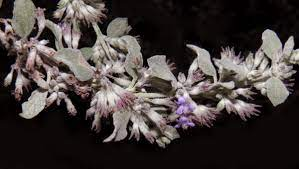
Hyptis albida, commonly known as the Brazilian mint, is a species of flowering plant in the Lamiaceae family. This plant is native to South America, particularly Brazil, where it thrives in various habitats, including open fields, savannas, and disturbed areas. The Hyptis genus comprises around 400 species, with Hyptis albida standing out for its unique characteristics and potential medicinal properties.
Description and Characteristics
Hyptis albida is a perennial herb that typically grows to a height of 1 to 2 meters. It features square stems, opposite leaves, and small white flowers arranged in dense spikes. The leaves of Hyptis albida are aromatic when crushed, emitting a pleasant minty fragrance, which is why it is often referred to as Brazilian mint. The plant's leaves are lanceolate to ovate in shape, with serrated margins, and are covered in fine hairs, giving them a slightly fuzzy texture.
Traditional Uses
In traditional medicine, various parts of Hyptis albida have been used for their medicinal properties. The leaves are commonly brewed into a tea or used topically as a poultice to treat a range of ailments. The plant is believed to have anti-inflammatory, analgesic, and antimicrobial properties, making it a popular remedy for conditions such as stomachaches, colds, and skin infections. Additionally, the aromatic leaves are sometimes used to flavor foods and beverages.
Phytochemical Composition
Studies have shown that Hyptis albida contains a variety of bioactive compounds that contribute to its medicinal properties. These compounds include essential oils, flavonoids, terpenoids, and phenolic compounds. The essential oils extracted from the plant have demonstrated antimicrobial and antioxidant activities, while the flavonoids and phenolic compounds exhibit anti-inflammatory effects. These phytochemicals work synergistically to provide the plant with its therapeutic potential.
Pharmacological Studies
Researchers have conducted several pharmacological studies to investigate the potential health benefits of Hyptis albida. These studies have shown promising results, indicating that the plant may possess analgesic, anti-inflammatory, and antimicrobial properties. For example, extracts of Hyptis albida have been found to inhibit the growth of various pathogenic bacteria and fungi, suggesting its potential as a natural antimicrobial agent. Additionally, the plant's anti-inflammatory effects have been demonstrated in animal models, supporting its traditional use for inflammatory conditions.
Cultivation and Conservation
Due to its medicinal properties and ornamental value, Hyptis albida is cultivated in gardens and nurseries in various regions. The plant is relatively easy to grow, requiring well-drained soil, ample sunlight, and regular watering. Propagation is typically done through seeds or stem cuttings. However, despite its popularity in cultivation, the wild populations of Hyptis albida face threats from habitat loss and overexploitation. Conservation efforts are essential to ensure the continued survival of this valuable plant species.
Future Research and Applications
As interest in natural remedies and plant-based medicine continues to grow, Hyptis albida holds promise for further research and potential applications. Future studies could focus on isolating and characterizing specific bioactive compounds from the plant, elucidating their mechanisms of action, and exploring new therapeutic uses. Additionally, the cultivation and sustainable harvesting of Hyptis albida could provide economic opportunities for local communities while promoting the conservation of this important species.