Interstitium
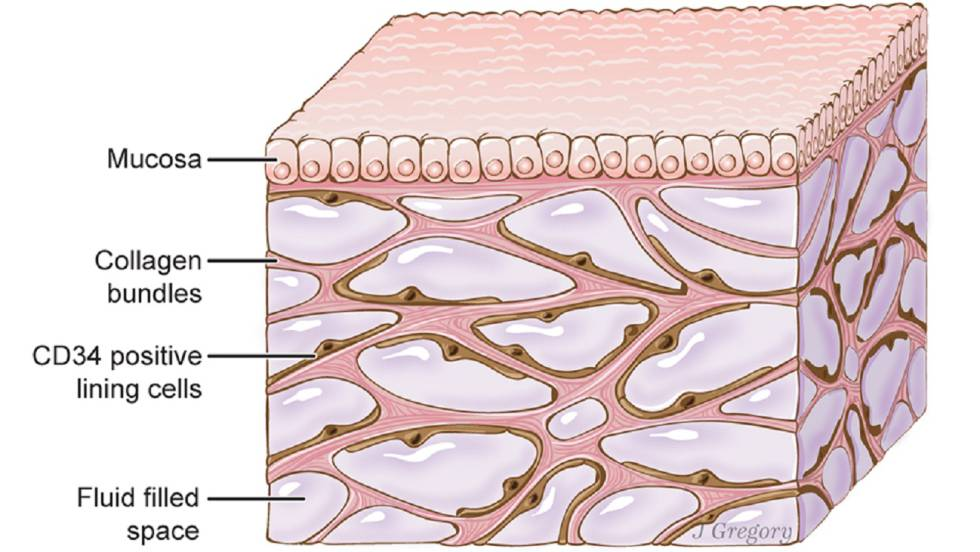


The interstitium is a relatively recent discovery in the field of human anatomy, and it has sparked significant interest and debate among scientists and medical professionals. Traditionally, the human body was thought to be composed of solid organs and tissues, with spaces filled by fluids. However, the interstitium challenges this notion by presenting a new perspective on the body's internal structure.
What is the Interstitium?
The interstitium is a network of fluid-filled spaces within and between tissues and organs. It acts as a sort of "highway" for fluids to move throughout the body. This network is supported by a mesh of collagen and elastin, which provides structural integrity and flexibility. The interstitium is not confined to a single location but is found throughout the body, including beneath the skin, around the lungs, digestive tract, and blood vessels.
Discovery and Significance
The interstitium was identified using advanced imaging techniques, such as confocal laser endomicroscopy, which allowed scientists to observe living tissues at a microscopic level. This discovery was significant because it revealed a previously unrecognized component of the human anatomy that could have implications for understanding various physiological processes and diseases.
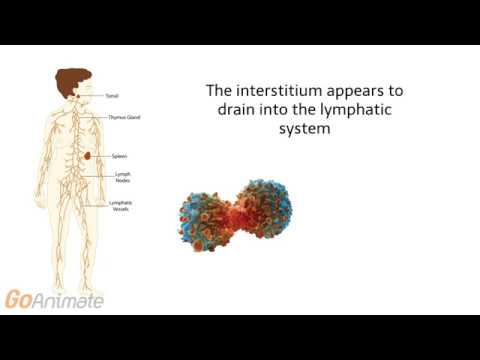
The interstitium's role in fluid transport and storage suggests it may be involved in the spread of diseases, such as cancer, and in the body's immune response. Additionally, it could play a part in conditions like edema, where fluid accumulates in tissues, leading to swelling.
Functions of the Interstitium
The interstitium serves several critical functions in the body:
- Fluid Transport: It acts as a conduit for interstitial fluid, which is the fluid that surrounds cells. This fluid is essential for nutrient delivery and waste removal at the cellular level.
- Shock Absorption: The interstitium's fluid-filled spaces can absorb mechanical shocks, protecting tissues and organs from damage.
- Immune Response: It may play a role in the immune system by facilitating the movement of immune cells and signaling molecules throughout the body.
- Tissue Support: The collagen and elastin fibers provide structural support to tissues, maintaining their shape and integrity.
The interstitial space is a fluid-filled network of interconnected spaces within the body that exists between cells, tissues, and organs. Key features of the interstitial space include:
- Structure: It consists of a honeycomb-like reticulum supported by collagen bundles, elastin, and Glycosaminoglycans (GAGs).
- Location: Found throughout the body, including beneath the skin, between muscles, and surrounding organs.
- Composition: Filled with interstitial fluid, which is primarily water containing nutrients, signaling molecules, and waste products.
- Function:
- Acts as a shock absorber for tissues
- Facilitates nutrient and waste exchange between cells and blood vessels
- Serves as a transportation system for immune cells
- Plays a role in lymph formation
- Volume: Comprises about 20% of total body weight in healthy individuals.
- Pressure: Varies between different organs, ranging from -4 mmHg in skin to 24 mmHg in the liver.
- Significance: Recently recognized as a potential new "organ" due to its interconnected nature and importance in body-wide communication 4 8.
The interstitial space plays a crucial role in maintaining homeostasis and supporting various physiological processes throughout the body.
Implications for Medicine
The discovery of the interstitium has several potential implications for medicine and healthcare:
- Cancer Research: Understanding how the interstitium facilitates fluid movement could provide insights into how cancer cells spread through the body, leading to new strategies for preventing metastasis.
- Drug Delivery: The interstitium's network could be leveraged to improve drug delivery systems, ensuring medications reach their target tissues more effectively.
- Diagnostics: New imaging techniques that visualize the interstitium could enhance diagnostic capabilities, allowing for earlier detection of diseases.
- Edema Treatment: A better understanding of fluid dynamics in the interstitium could lead to improved treatments for conditions involving fluid retention and swelling.
Challenges and Controversies
Despite its potential significance, the interstitium's discovery has not been without controversy. Some scientists argue that the interstitium is not a new organ but rather a reclassification of known structures. Others question the extent of its role in disease processes and whether it warrants the attention it has received.
Additionally, the variability in the interstitium's structure and function across different tissues and individuals presents a challenge for researchers. More studies are needed to fully understand its complexities and implications.
Future Research Directions
The interstitium's discovery opens up numerous avenues for future research:
- Mapping the Interstitium: Detailed mapping of the interstitium across different tissues and organs could provide a comprehensive understanding of its structure and function.
- Role in Disease: Investigating the interstitium's involvement in various diseases, including cancer, autoimmune disorders, and inflammatory conditions, could lead to new therapeutic approaches.
- Technological Advancements: Developing new imaging and diagnostic tools to study the interstitium in vivo will be crucial for advancing our understanding of this structure.