Hollyleaf Redberry
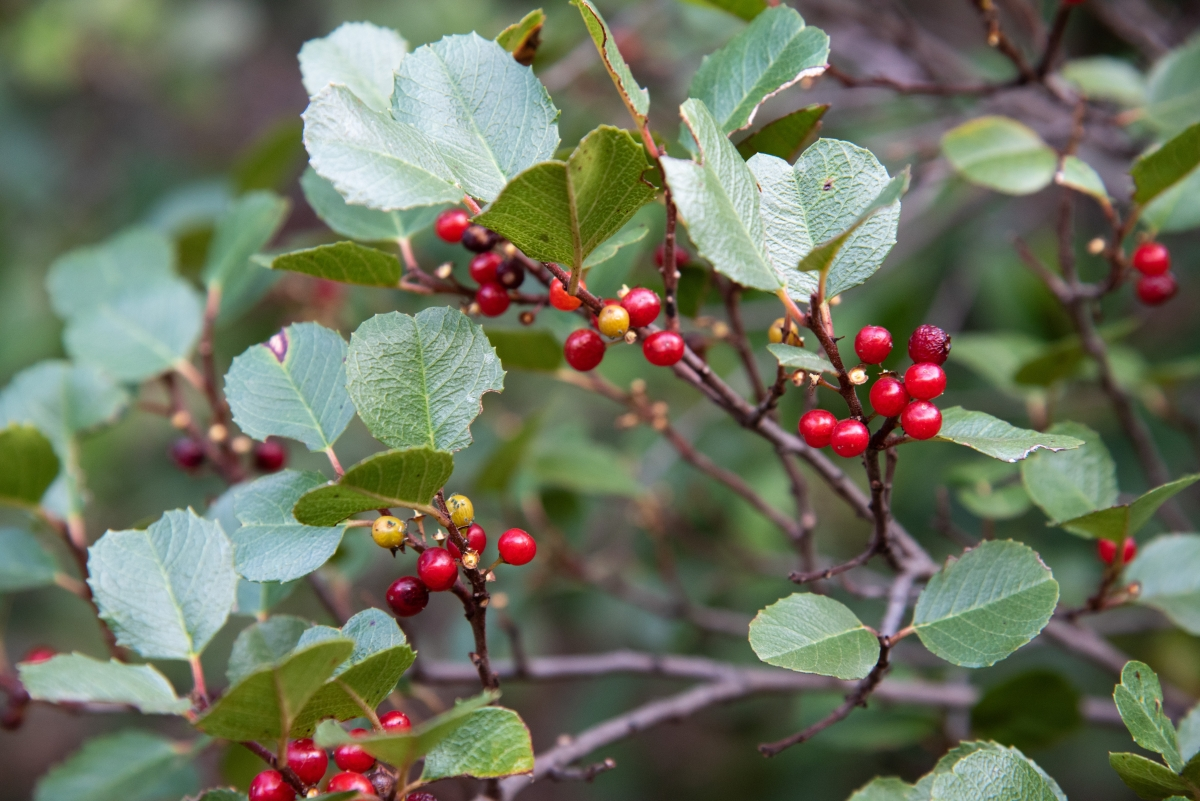
The Hollyleaf Redberry, scientifically known as Rhamnus ilicifolia, is a plant species native to the southwestern United States and northern Mexico. This shrub is a member of the Rhamnaceae family and is notable for its distinctive holly-like leaves and bright red berries. It thrives in chaparral, woodlands, and coastal sage scrub environments, making it an integral part of these ecosystems.
Botanical Description
Leaves
The leaves of the Hollyleaf Redberry are one of its most distinguishing features. They are:
- Evergreen
- Glossy and dark green
- Serrated, resembling holly leaves
- Typically 1 to 2 inches long
Flowers
The plant produces small, inconspicuous flowers that are:
- Greenish-yellow in color
- Clustered in small groups
- Blooming in late spring to early summer
Fruits
The berries are another key characteristic:
- Bright red when mature
- About 1/4 inch in diameter
- Containing 2 to 3 seeds
- Ripening in late summer to early fall
Habitat and Distribution
Hollyleaf Redberry is predominantly found in:
- California
- Arizona
- Baja California
It prefers:
- Dry, rocky slopes
- Well-drained soils
- Elevations ranging from sea level to 5,000 feet
Ecological Importance
This shrub plays a crucial role in its native habitats. It provides:
- Food for wildlife: Birds and small mammals consume the berries.
- Shelter: Dense foliage offers protection for various animals.
- Soil stabilization: Its root system helps prevent erosion on slopes.
Cultivation and Uses
Gardening
Hollyleaf Redberry can be an excellent addition to native plant gardens due to its:
- Drought tolerance
- Low maintenance requirements
- Attractive foliage and berries
Traditional Uses
Indigenous peoples have historically used parts of the plant for:
- Medicinal purposes: Various parts were used to treat ailments.
- Dye production: The berries can be used to produce natural dyes.
Conservation Status
Currently, Rhamnus ilicifolia is not listed as endangered or threatened. However, habitat destruction and invasive species pose potential threats to its populations. Conservation efforts focus on:
- Protecting natural habitats
- Promoting the use of native plants in landscaping
Interesting Facts
- The name "Hollyleaf" comes from the resemblance of its leaves to those of the holly plant.
- Despite its attractive berries, they are not commonly consumed by humans due to their bitter taste.
- The plant is sometimes confused with other species in the Rhamnus genus, but its distinctive leaves and berries help in accurate identification.