African Lettuce
Range: Tropical Africa - Mauritania, Senegal, Cote D'Ivoire, Ghana, Togo, Benin, Niger, Nigeria, Cameroon, Equatorial Guinea, Chad, Sudan, Ethiopia, Tanzania
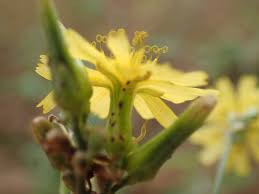
Edibility
Leaves - raw or cooked. They can be eaten fresh as a salad or cooked in soups and sauces. The leaves of wild forms are tough and very bitter, but cultivated forms are more tender and less bitter. The basal, rosette leaves are most liked as a vegetable in the early stages of growth when they are not yet very bitter. A flowering shoot develops from the rosette, and the stem leaves are less appreciated because they are very bitter, especially as they get older.
The mineral content of the leaves is relatively high (21·8%-1), and the plant is burnt to ash in parts of Africa in order to make a vegetable salt.
Medicinal
The plant is used as a treatment against vomiting, teeth pain and diabetes. The boiled leaves are applied to the head of a newly-born baby if the bones have not knit together properly. The limbs of backward children are rubbed with the leaves to induce them to walk.
A decoction of the leaves is used to treat wounds. The leaves, mixed with fine ash, are rubbed onto the sores of yaws
Cisplatin-induced testicular dysfunction and its amelioration by Launaea taraxacifolia leaf extract.
DNA Damage Protecting Activity and Antioxidant Potential of Launaea taraxacifolia Leaves Extract
Phytochemical Screening, Proximate and Mineral Composition of Launaea taraxacifolia Leave
Mitigated Mercuric Chloride Alteration of the Microanatomy of Rat Brain