Large-flowered Bluestar
Constituents
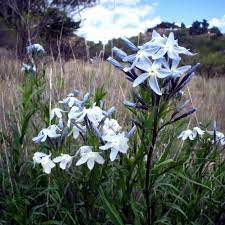
Amsonia grandiflora, commonly known as the Blue Star, is a stunning perennial plant that belongs to the Apocynaceae family. Native to the southeastern United States.
Appearance and Characteristics
Amsonia grandiflora is a herbaceous perennial that typically grows to a height of 2 to 3 feet and spreads about 2 to 3 feet wide. The plant features narrow, lance-shaped leaves that are arranged alternately along the stems. The foliage is a vibrant green color during the growing season and transforms into a striking golden-yellow hue in the fall, adding a beautiful contrast to the garden landscape.
One of the most striking features of Amsonia grandiflora is its clusters of star-shaped flowers that bloom in late spring to early summer. The delicate, powder-blue flowers have a unique shape and are borne in terminal clusters, creating a stunning display that attracts pollinators such as bees and butterflies to the garden.
Cultivation and Care
Amsonia grandiflora is relatively easy to grow and maintain, making it a favorite among gardeners. Here are some tips for cultivating and caring for this beautiful plant:
Sunlight:
Blue Stars thrive in full sun to partial shade. Plant them in a location that receives at least 6 hours of sunlight per day for optimal growth and flowering.
Soil:
These plants prefer well-draining soil that is rich in organic matter. Amending the soil with compost before planting can help improve drainage and provide essential nutrients for healthy growth.
Watering:
While Amsonia grandiflora is drought-tolerant once established, it is important to water newly planted specimens regularly to help them establish strong root systems. Once established, water the plants during dry periods to prevent wilting.
Pruning:
Pruning is generally not required for Blue Stars, but deadheading spent flowers can promote additional blooming and maintain a tidy appearance. Cut back the stems to the base in late fall or early spring to encourage new growth.
Propagation:
Amsonia grandiflora can be propagated through division or seeds. Divide mature plants in the spring or fall to create new specimens, or collect seeds from the dried seed pods and sow them in the fall for germination the following spring.
Landscaping Uses
Amsonia grandiflora is a versatile plant that can be used in various landscaping settings to add beauty and interest. Here are some popular landscaping uses for Blue Stars:
Borders and Edging:
Plant Blue Stars along borders and edges of flower beds to create a cohesive and visually appealing look. The delicate blue flowers and golden foliage provide a striking contrast against other plants in the garden.
Mass Plantings:
Create a stunning display by mass planting Amsonia grandiflora in large drifts or clusters. The abundance of blue flowers and golden foliage will make a bold statement in the landscape.
Pollinator Gardens:
Blue Stars are excellent plants for attracting pollinators such as bees and butterflies to the garden. Include them in pollinator gardens or wildlife-friendly landscapes to support local pollinator populations.
Rock Gardens:
The compact size and attractive foliage of Amsonia grandiflora make it a great choice for rock gardens or alpine plantings. Plant them among rocks and boulders to add color and texture to these unique garden spaces.