Fluid Compartments
Return to Functional Anatomy / Physiology Menu
Measurement
Water Distribution
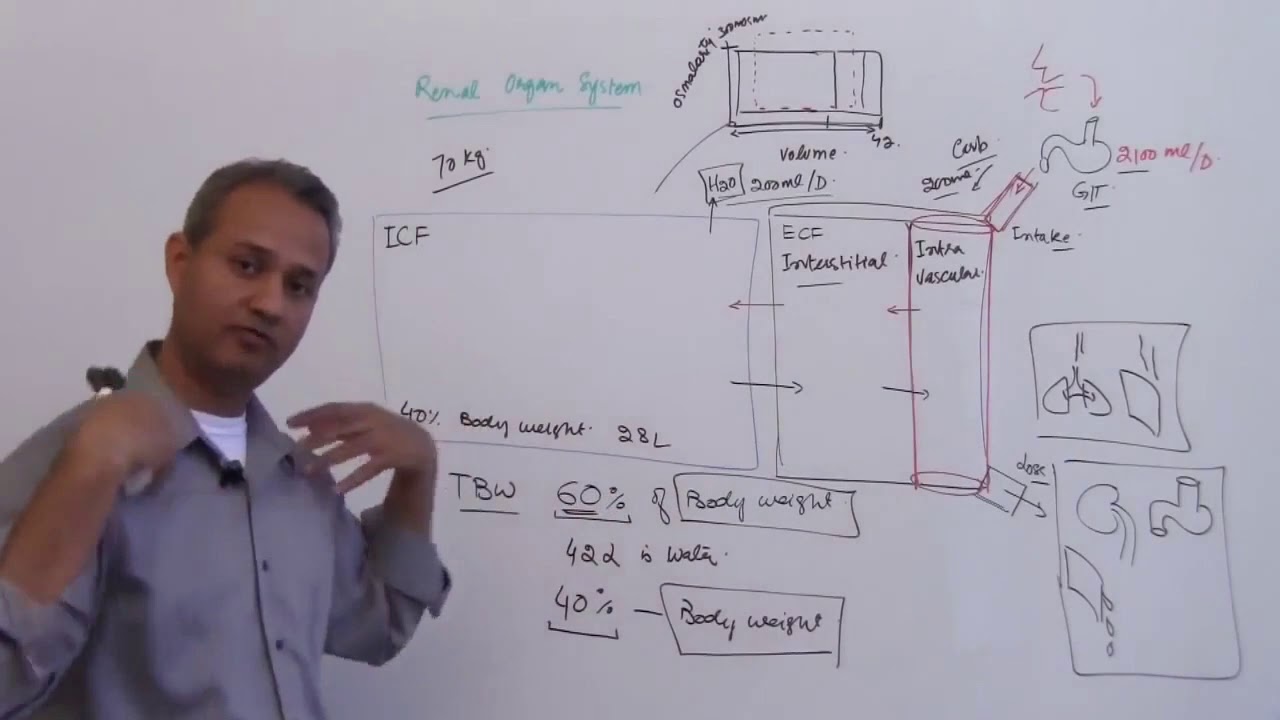
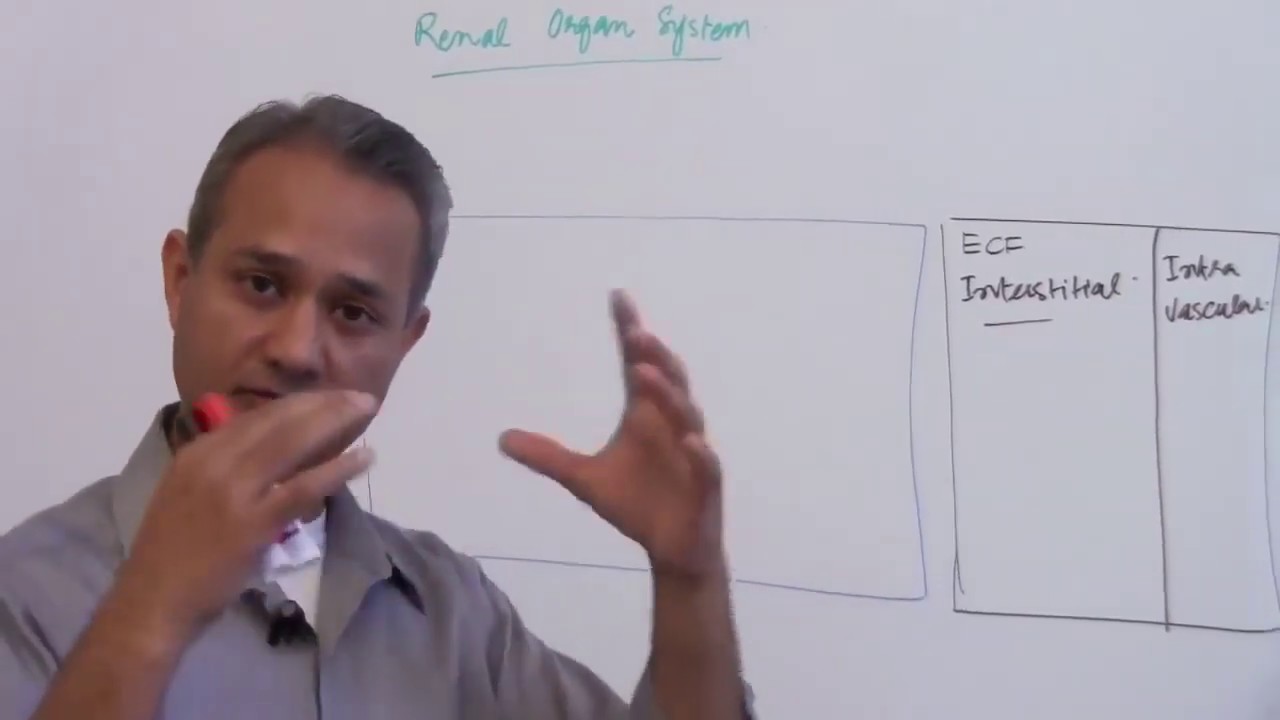
We have two basic fluid compartments. One is where we take all of the cytoplasm (the fluid within cells) and put it into one fluid compartment called the Intracellular Fluid Compartment (ICF). It is bounded by the plasma membrane. Outside of the cell we have extracellular space called the Extracellular Fluid Compartment (ECF). Its what is immediately outside all of the cells.
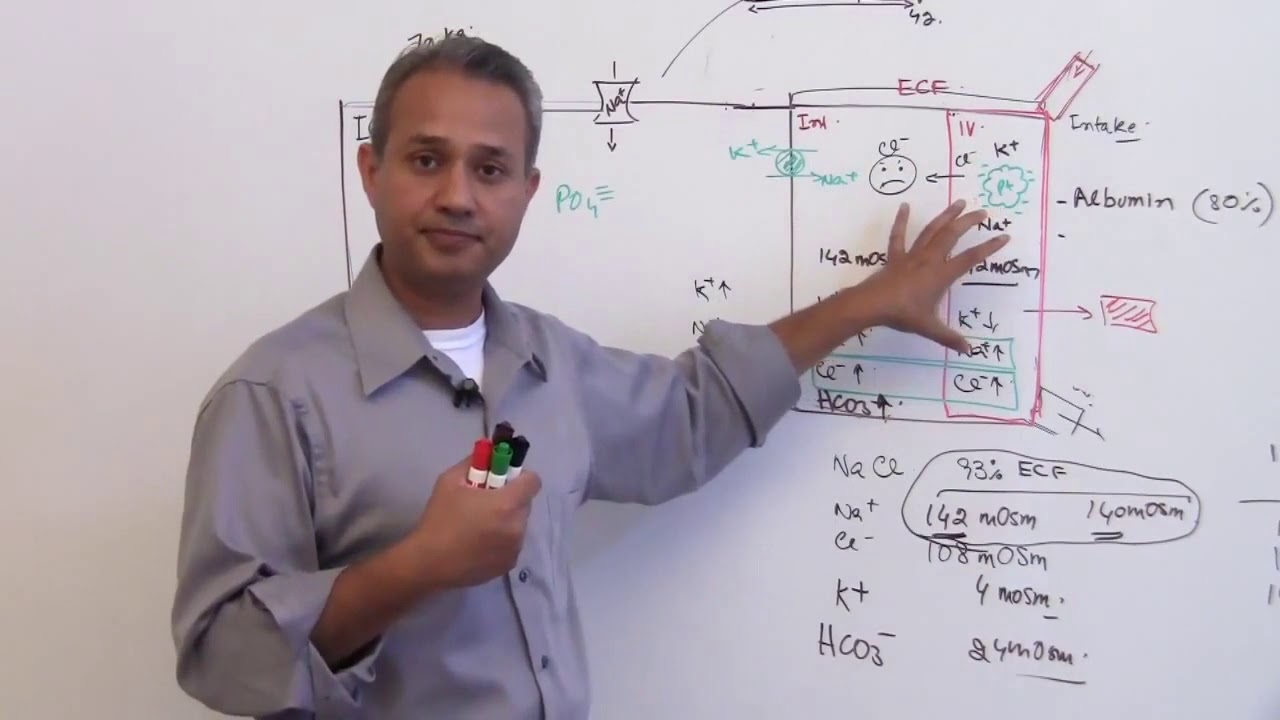
These two compartments are dissimilar in content.
There is a disequilibrium between the ECF and ICF that is maintained at a constant or steady state. This is due to an enzyme called ATPase which cleaves ATP (so the enzyme uses energy) to move the sodium out of the cells. 3 sodiums (Na) are pumped out of the cell for every two potassium (K) pumped into the cells.
This is needed because there are little leaks between these two compartments that allow potassium to slowly leak out of the cells and into the extracellular fluid space.
This pump re-organizes the distribution of the ions and keeps them at a disequilibrium.
Total body water (TBW) = 42 L/70 kg male, or 60% of total body weight
ICF = cytoplasm (2/3 TBW)
EDF = surrounds cells, is an interface with external environment (1/3 TBW)
Interstitial fluid = ¾ x 1/3 = 3/12 TBW
Intravascular fluid = ¼ x 1/3 = 1/12 TBW (equal to the amount of plasma)
So it turns out that the blood is the smallest amount of fluid in the body.
Self-Regulating Mechanisms
Between intravascular space and interstitial space:
Equilibrium: equal amount of substance
- No net transfer of substance or energy
- No barrier to movement
- No energy expenditure to maintain
Between ECF and ICF:
Steady State: constant amount of substance in compartments
- Input = output
- Requires energy to maintain (we need to use ATP, the energy within the cells, to maintain this gradient)
The reason physiologists are so interested in these fluid compartments: The cells themselves require fluids to be within a very tight range. Key factors are the amount of oxygen, the amount of carbon dioxide, the amount of hydrogen ions, the temperature, the amount of glucose which is presented to the cells. So while the cells require a tightly regulated environment, as we go through our daily lives we're bringing into our bodies a very diverse amount of materials. The ECF is the buffer zone in this constantly changing environment.
Maintenance of extracellular constituents as relatively constant is the main theme of physiology. All of the organs of the body work to keep the ECF in this narrow range. Homeostasis.