Phrenic Nerve
Phrenic Nerve Surgery for Diaphragm Paralysis: Greg's Story

The phrenic nerve is a critical component of the human nervous system, playing a vital role in the respiratory process. This nerve is primarily responsible for the motor control of the diaphragm, the main muscle involved in breathing.
Anatomy of the Phrenic Nerve
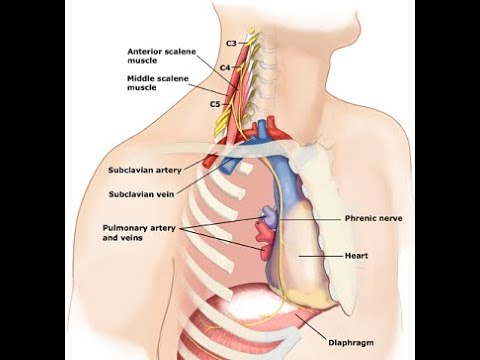
The phrenic nerve originates from the cervical spinal cord, specifically from the C3, C4, and C5 nerve roots. This origin is often summarized by the mnemonic "C3, 4, 5 keeps the diaphragm alive." The nerve descends through the neck, passing between the subclavian artery and vein, and continues into the thorax. It travels along the pericardium of the heart before reaching the diaphragm.
Pathway
- Cervical Origin: The phrenic nerve begins at the cervical spinal cord levels C3, C4, and C5.
- Neck: It descends through the neck, running anterior to the anterior scalene muscle.
- Thorax: The nerve enters the thoracic cavity, passing between the subclavian vessels.
- Pericardium: It travels along the pericardium, the fibrous sac surrounding the heart.
- Diaphragm: Finally, the nerve reaches the diaphragm, where it provides motor innervation.
Function of the Phrenic Nerve
The primary function of the phrenic nerve is to provide motor innervation to the diaphragm, enabling the muscle to contract and facilitate breathing. The diaphragm's contraction creates a negative pressure within the thoracic cavity, allowing air to flow into the lungs. Additionally, the phrenic nerve carries sensory information from the central part of the diaphragm, the pleura (lining of the lungs), and the pericardium.
Motor Function
- Diaphragm Contraction: The phrenic nerve stimulates the diaphragm to contract, which is essential for inhalation.
- Breathing Regulation: By controlling the diaphragm, the phrenic nerve plays a crucial role in the regulation of breathing.
Sensory Function
- Diaphragm Sensation: The nerve transmits sensory information from the diaphragm to the brain.
- Pleura and Pericardium Sensation: It also carries sensory signals from the pleura and pericardium, contributing to the perception of pain and other sensations in these areas.
Clinical Significance
The phrenic nerve's role in breathing makes it clinically significant. Damage or dysfunction of this nerve can lead to serious respiratory issues. Understanding the potential causes and implications of phrenic nerve damage is important for diagnosis and treatment.
Causes of Phrenic Nerve Damage
- Trauma: Physical injury to the neck or chest can damage the phrenic nerve.
- Surgery: Surgical procedures involving the neck, chest, or heart can inadvertently harm the nerve.
- Neurological Disorders: Conditions such as multiple sclerosis or amyotrophic lateral sclerosis (ALS) can affect the phrenic nerve.
- Tumors: Tumors in the neck or chest can compress or invade the nerve.
Symptoms of Phrenic Nerve Damage
- Diaphragmatic Paralysis: Loss of function in the diaphragm, leading to difficulty breathing.
- Shortness of Breath: Especially noticeable during physical activity.
- Hiccups: Persistent hiccups can be a sign of phrenic nerve irritation.
- Referred Pain: Pain in the shoulder or neck due to sensory signals from the diaphragm.
Diagnosis and Treatment
- Imaging: X-rays, CT scans, and MRIs can help visualize damage to the phrenic nerve.
- Electromyography (EMG): This test measures the electrical activity of the diaphragm to assess nerve function.
- Surgical Intervention: In some cases, surgery may be necessary to repair or decompress the nerve.
- Physical Therapy: Exercises to strengthen the diaphragm and improve breathing.