Glucuronidation
- BPA glucuronidation was decreased in patients with Parkinson disease.
- Effects of herbal supplements on drug glucuronidation. Review of clinical, animal, and in vitro studies.
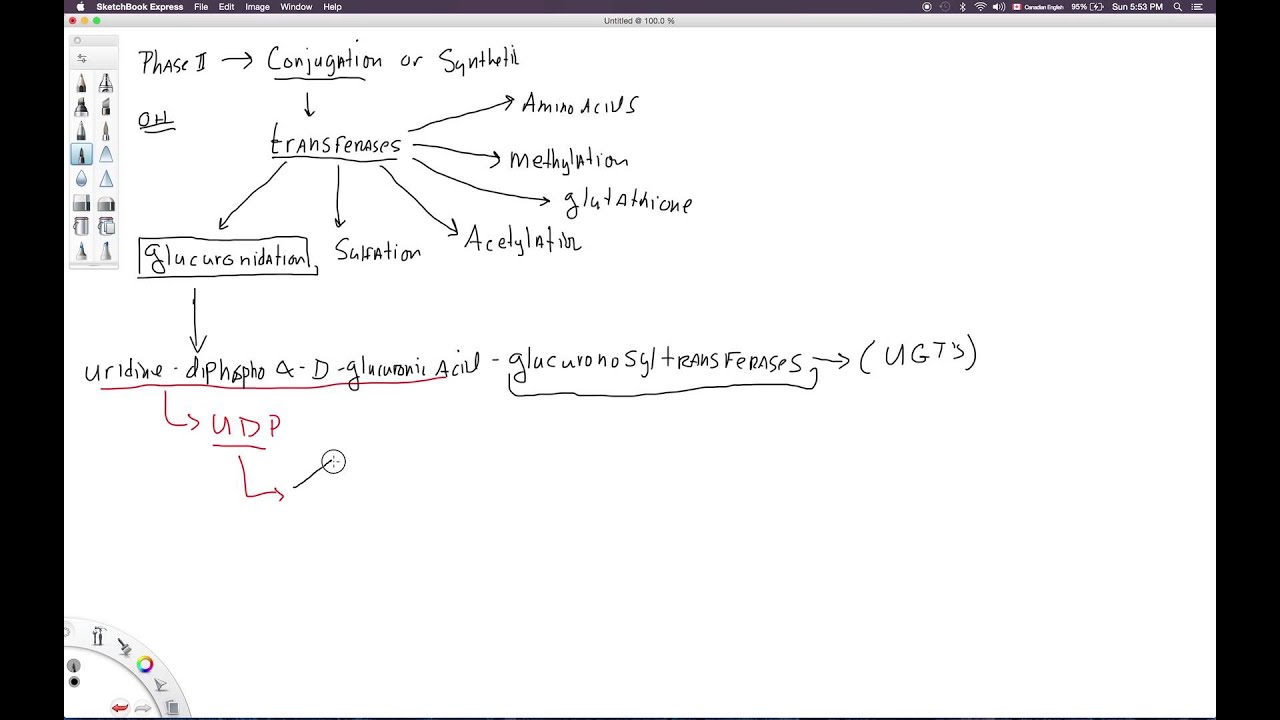
Glucuronidation plays many roles in the body, not just that of binding estrogen, thus one may have low or normal levels of glucaronic acid along with low, normal or high levels of estrogen. The healthy body employs many different detoxification pathways, in the liver and elsewhere, of which glucuronidation is one. Glucuronidation removes several toxic and potentially toxic chemicals from our system, such as polycyclic aromatic hydrocarbons, steroid hormones, some nitrosamines, Heterocyclic Amines in Meat, some fungal toxins, and aromatic amines. It also removes "used" hormones, such as estrogen and T4, that are produced naturally by the body. This, glucuronidation represents a major means of converting most drugs, steroids, and many toxic and endogenous substances to metabolites that can then be excreted into the urine or bile.
The liver, spleen, and gut may be damaged or otherwise impaired by several means:
- Liver disease or disorder, such as hepatitis
- Drugs or toxic exposure disrupts phase 1 or phase 2 function
- Accidental ingestion of toxic substances (such as plants, poisons, drug overdose, mercury)
- Intentional ingestion of substances which overload detox pathways (such as nicotine, acetaminophen, NSAIDs, xenobiotics, therapeutic glycosides, etc.
Many of these toxic and otherwise therapeutic substances (xenobiotics, drugs) disrupt the glucuronidation by impairing it, stopping it, or causing the binds to be rupture, separating the bound molecules from its inert transport. The toxins that are thus not removed by normal binding and excretion may settle elsewhere in the body, causing tumors and other signs of toxicity.
Glucuronidase is an enzyme that inhibits the glucuronidation process, breaking apart the bound toxins. Calcium D-glucarate (a calcium salt that is found in some plants, such as apples, grapefruit, broccoli and alfalfa) suppresses that enzyme, restoring this particular detoxification pathway. A benefical fungus,Saccharomyces boulardii, helps reduce some of the gut organisms that produce glucuronidase.
For more information related to glucuronidation, please see the 2002 Update in my Estrogen Dominance article.
Acetaminophen Users:
Acetaminophen also affects the glutathione detoxification pathway in the liver, so those taking acetaminophen products should also take a glutathionesupplement.