Sea Daffodil
Constituents
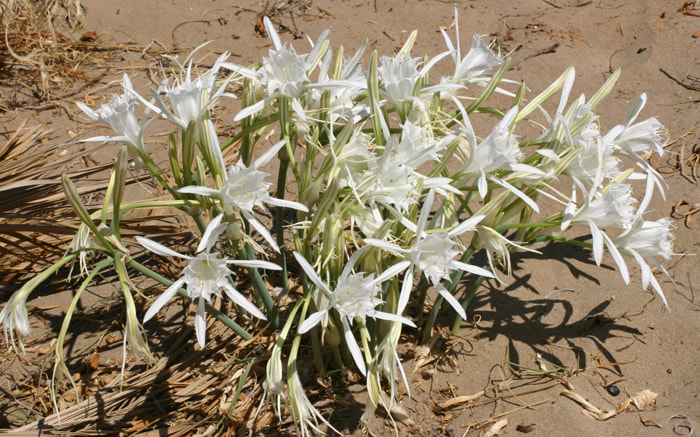
The Sea Daffodil, scientifically known as Pancratium maritimum, is a plant that thrives in coastal environments. This perennial species is part of the Amaryllidaceae family and is renowned for its striking white flowers and ability to flourish in sandy, saline conditions.
Botanical Characteristics
Appearance
The Sea Daffodil is easily recognizable by its large, fragrant white flowers, which bloom from late summer to early autumn. Each flower consists of six narrow petals that form a star-like shape, surrounding a central corona that resembles a small cup. The flowers are borne on long, slender stalks that rise above the plant's basal rosette of strap-shaped, gray-green leaves.
Growth Habit
This plant is a geophyte, meaning it grows from a bulb. The bulb is buried deep in the sand, which helps protect it from harsh coastal conditions and allows it to store nutrients and water. The Sea Daffodil's roots are extensive and can reach deep into the soil, anchoring the plant and helping it access water and nutrients.
Adaptations
The Sea Daffodil has several adaptations that enable it to survive in its challenging habitat:
- Salt Tolerance: It can tolerate high levels of salinity, which is common in coastal soils.
- Drought Resistance: Its deep root system and bulb allow it to survive periods of drought.
- Sand Burial: The plant can endure being buried by shifting sands, a common occurrence in its habitat.
Habitat and Distribution
The Sea Daffodil is native to the Mediterranean region, where it is commonly found along sandy beaches and coastal dunes. Its range extends from the Iberian Peninsula and North Africa to the eastern Mediterranean, including Greece, Turkey, and the Levant. The plant prefers sunny locations with well-drained, sandy soils and is often found in areas with minimal vegetation, where it faces less competition for resources.
Ecological Role
Pollination
The Sea Daffodil plays a crucial role in its ecosystem by providing nectar and pollen for a variety of pollinators, including bees, butterflies, and moths. Its large, fragrant flowers are particularly attractive to nocturnal pollinators, such as moths, which are drawn to the flowers' sweet scent and bright white color.
Soil Stabilization
The extensive root system of the Sea Daffodil helps stabilize sandy soils, reducing erosion and promoting the formation of dunes. This stabilization is essential for maintaining the integrity of coastal ecosystems, which are often vulnerable to erosion from wind and waves.
Cultural Significance
The Sea Daffodil has been admired for centuries for its beauty and resilience. In ancient Greece, it was associated with the goddess Aphrodite and was often depicted in art and literature as a symbol of purity and beauty. The plant's ability to thrive in harsh conditions has also made it a symbol of endurance and perseverance.
In modern times, the Sea Daffodil continues to be valued for its ornamental qualities and is sometimes cultivated in gardens and landscapes, particularly in regions with similar climates to its native habitat. However, it is important to note that the plant is protected in many areas due to its declining populations, which are threatened by habitat loss and human activities.
In vitro propagation of an endangered medicinal plant: Pancratium maritimum L
The woolly hairs on the inside of the seed coat (should this say the seed case?) are used to weave felt shoes and other garments.
Conservation
The Sea Daffodil faces several threats, including habitat destruction, coastal development, and climate change. As coastal areas are developed for tourism and other purposes, the plant's natural habitat is often disturbed or destroyed. Additionally, rising sea levels and increased storm activity associated with climate change pose significant risks to coastal ecosystems.
Conservation efforts are underway in many regions to protect and preserve the Sea Daffodil and its habitat. These efforts include:
- Habitat Protection: Establishing protected areas and reserves to safeguard critical habitats.
- Restoration Projects: Rehabilitating degraded coastal areas to restore suitable conditions for the plant.
- Public Awareness: Educating the public about the importance of the Sea Daffodil and the need for conservation.