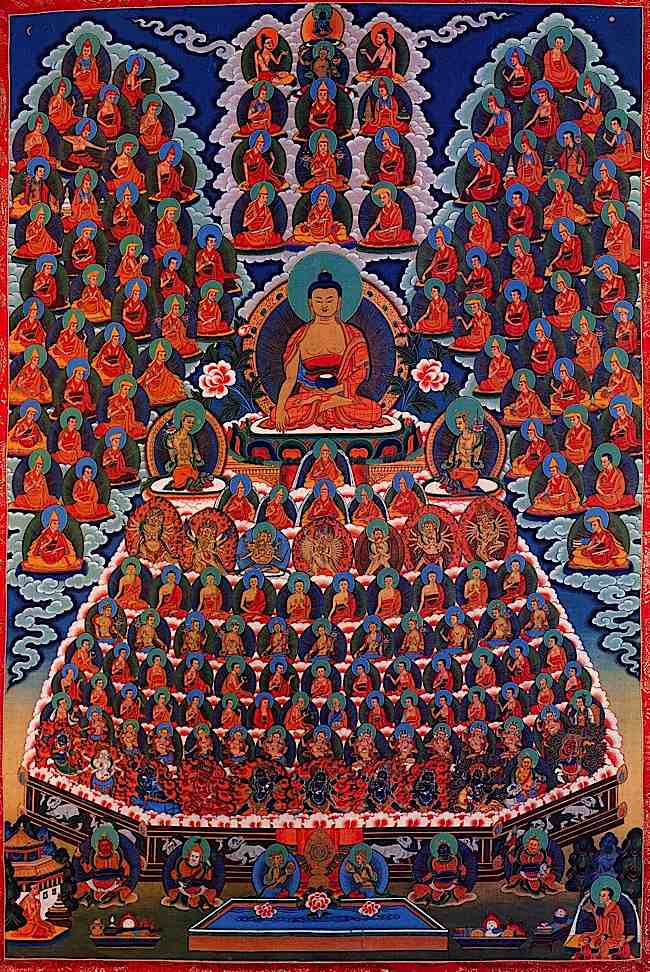
Lamrim Tradition
The Lamrim Tradition (Tibetan: lam rim, “stages of the path”) is a systematic presentation of the Buddha’s teachings that arranges the entire spiritual path into a progressive sequence of topics, guiding practitioners from ethical foundations to full enlightenment. Originating with the 11th-century Indian master Atiśa and his seminal work Bodhipathapradīpa (“Lamp for the Path to Enlightenment”), the Lamrim tradition was later elaborated by Je Tsongkhapa (1357–1419) in his monumental Lamrim Chenmo (“The Great Treatise on the Stages of the Path to Enlightenment”). It organizes the Buddha’s vast teachings into three scopes—those of beings seeking better rebirths, personal liberation, and complete buddhahood—emphasizing gradual transformation through study, reflection, and meditation on topics such as impermanence, karma, renunciation, bodhicitta, and the wisdom realizing emptiness.
Beyond its scholastic brilliance, Lamrim remains one of the most practically integrative traditions in Tibetan Buddhism, uniting scriptural study, ethical training, and meditative realization. It serves as both a philosophical map and a contemplative manual, used across schools including Gelug, Kagyu, and Nyingma, to ensure that practice proceeds in a balanced and complete way. By offering a clear step-by-step path from the ordinary mind to the awakened state, Lamrim harmonizes method and wisdom, compassion and emptiness—making it not merely a doctrinal system but a living guide for inner transformation and awakening.