What Is a Yogi?
A yogi is a practitioner of Yoga,[1] including a sannyasin or practitioner of meditation in Indian religions.[2] The feminine form, sometimes used in English, is yogini.
Yogi has since the 12th century CE also denoted members of the Nath siddha tradition of Hinduism,[3] and in Hinduism, Buddhism and Jainism, a practitioner of tantra.[4][5] In Hindu mythology, the god Shiva and the goddess Parvati are depicted as an emblematic yogi–yogini pair.[6]
A yogi or yogini aspires to Brahmacharya (Sanskrit: ब्रह्मचर्य), which means celibacy if single, or non-cheating on one's partner.[16][17]
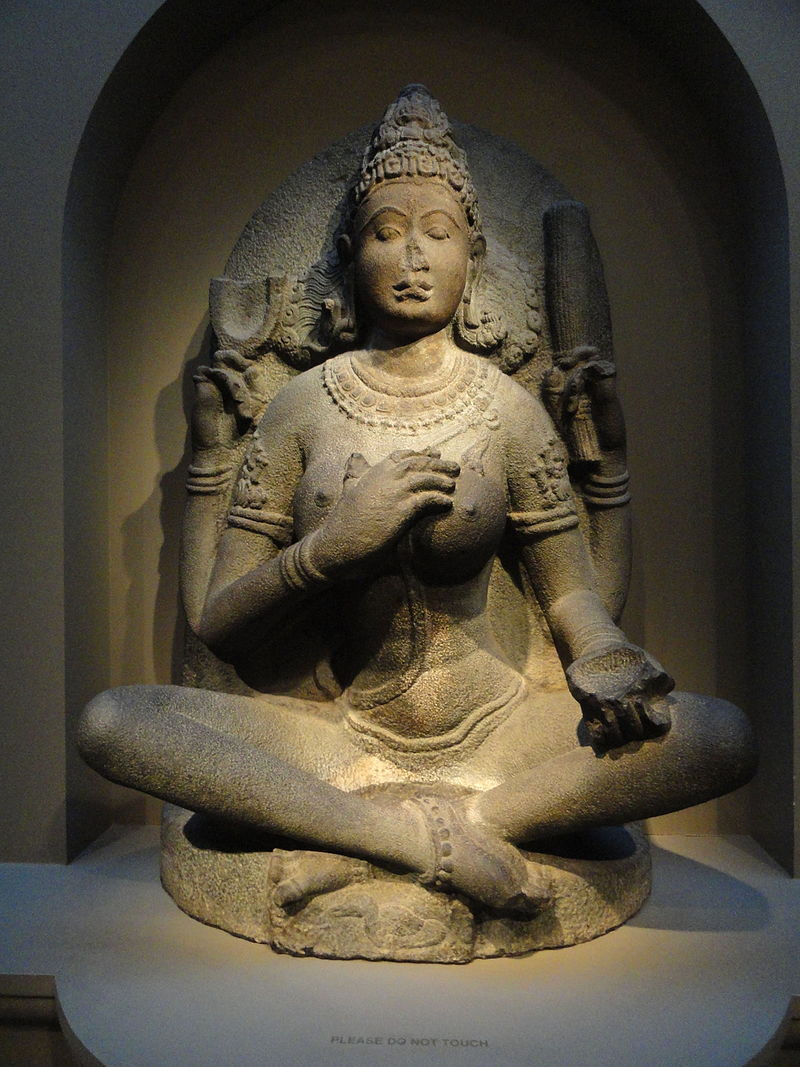
A 10th-century Yogini statue from Tamil Nadu, India. She is seated in an asana, and her eyes are closed in meditative state.
Daderot - Own work
Etymology
| Part of a series on |
|---|
| Hinduism |
 |
show |
show |
show |
show |
show Practices |
show |
show |
show |
show Society |
show |


In Classical Sanskrit, the word yogi (Sanskrit: masc yogī, योगी; fem yoginī) is derived from yogin, which refers to a practitioner of yoga. Yogi is technically male, and yoginī is the term used for female practitioners.[4] The two terms are still used with those meanings today, but the word yogi is also used generically to refer to both male and female practitioners of yoga and related meditative practices belonging to any religion or spiritual method.
The term yogini is also used for divine goddesses and enlightened mothers, all revered as aspects of the mother goddess, Devi.[7]
A yogi, states Banerjea, should not be confused with someone practicing asceticism and excessive self-mortification.[2]
downloaded: January 16, 2024, 4:46 PM