Egyptian faience
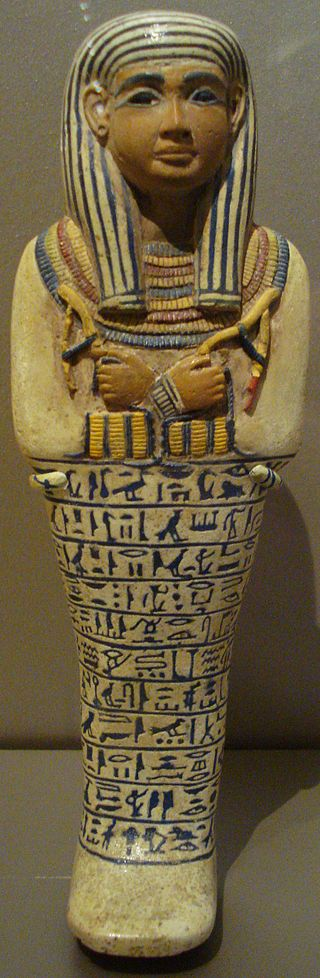
Shawabti of Lady Sati. Faience. New Kingdom, Dynasty XVIII, reign of Amenhotep III, c. 1390-1352 BC. Possibly from Saqqara
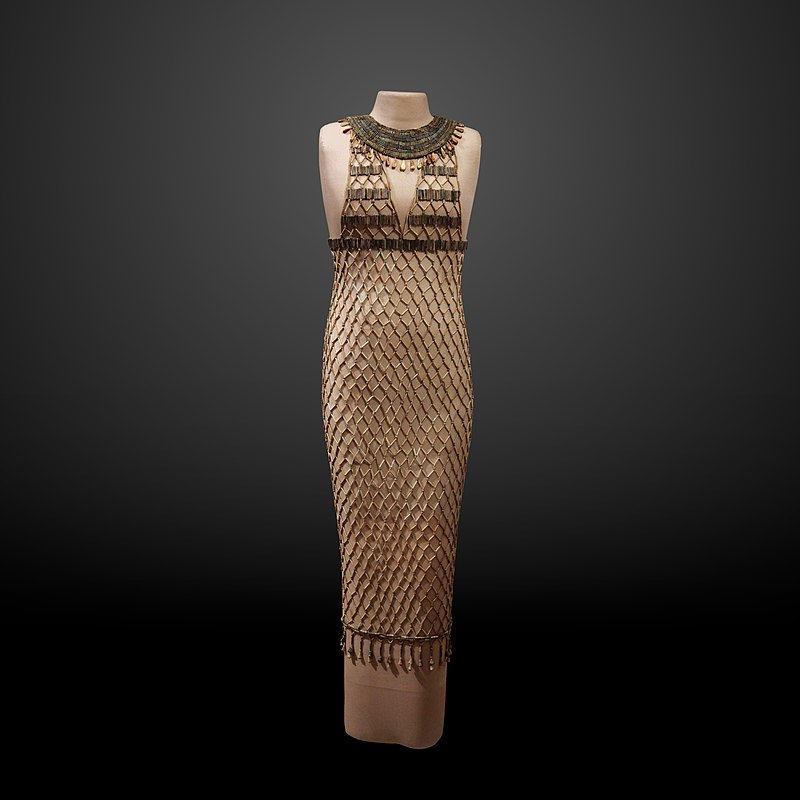
Egyptian faience beaded fishnet dress dating from the Fourth Dynasty of Egypt.
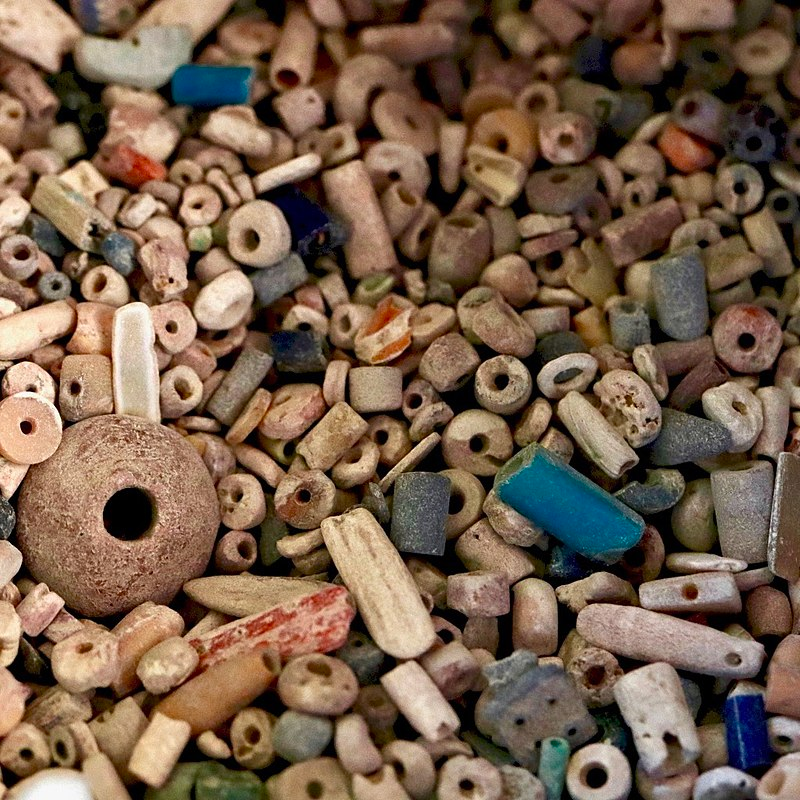
Assortment of Egyptian faience beads
Typical composition and access to raw materials
Faience has been defined as the first high technology ceramic, to emphasize its status as an artificial medium, rendering it effectively a precious stone.[14]
Egyptian faience is a non-clay based ceramic composed of crushed quartz or sand, with small amounts of calcite lime and a mixture of alkalis, displaying surface vitrification due to the soda lime silica glaze often containing copper pigments to create a bright blue-green luster.[7] While in most instances domestic ores seem to have provided the bulk of the mineral pigments, evidence suggests that during periods of prosperity, raw materials not available locally, such as lead and copper, were imported.[12] Plant ash, from "halophyte" (salt-tolerant) plants typical of dry and sea areas, was the major source of alkali until the Ptolemaic Period, when natron-based alkalis almost completely replaced the previous source.[14] Although the chemical composition of faience materials varies over time and according to the status of the workshop, also as a cause of change of accessibility of raw materials, the material constitution of the glaze is at all times consistent with the generally accepted version of faience glazing.[12]