Materia medica
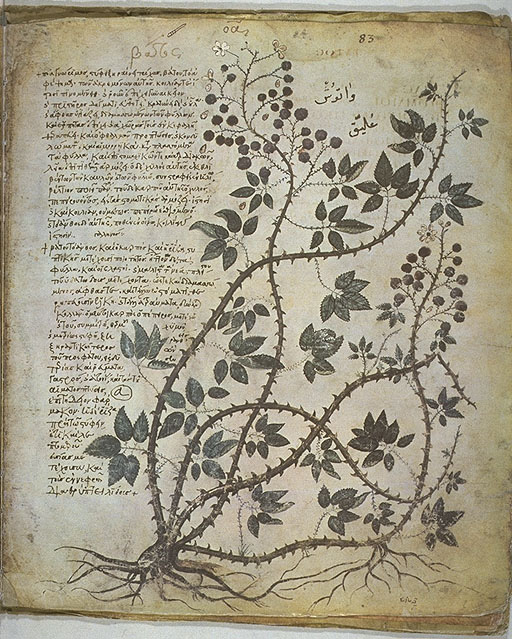

Illustration form the Vienna Dioscurides.
Unknown author - Seite aus dem Wiener Dioskurides Kodex (Codex medicus graecus 1 der Österreichischen Nationalbibliothek, fol 83 recto)
Materia medica (lit.: 'medical material/substance') is a Latin term from the history of pharmacy for the body of collected knowledge about the therapeutic properties of any substance used for healing (i.e., medications). The term derives from the title of a work by the Ancient Greek physician Pedanius Dioscorides in the 1st century AD, De materia medica, 'On medical material' (Περὶ ὕλης ἰατρικῆς, Peri hylēs iatrikēs, in Greek).
The term materia medica was used from the period of the Roman Empire until the 20th century, but has now been generally replaced in medical education contexts by the term pharmacology. The term survives in the title of the British Medical Journal's "Materia Non Medica" column.
Ancient India
In India, the Ayurveda is traditional medicine that emphasizes plant-based treatments, hygiene, and balance in the body's state of being. Indian materia medica included knowledge of plants, where they grow in all season, methods for storage and shelf life of harvested materials. It also included directions for making juice from vegetables, dried powders from herb, cold infusions and extracts.[2]