Lockheed Model 10 Electra
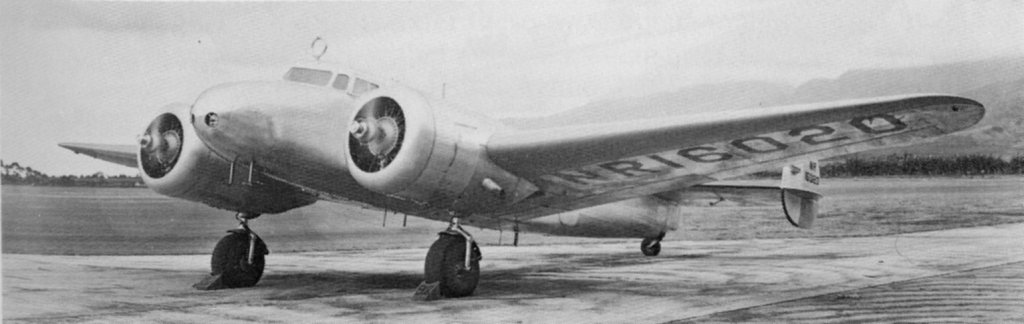
Amelia Earhart's Lockheed Model 10 Electra, at Oakland, CA on March 20, 1937.
The Lockheed Model 10 Electra is an American twin-engined, all-metal monoplane airliner developed by the Lockheed Aircraft Corporation in the 1930s to compete with the Boeing 247 and Douglas DC-2. The type gained considerable fame as one was flown by Amelia Earhart on her ill-fated around-the-world expedition in 1937.
After October 1934, when the US government banned single-engined aircraft for use in carrying passengers or in night flying, Lockheed was perfectly placed in the market with its new Model 10 Electra. In addition to deliveries to US-based airlines, several European operators added Electras to their prewar fleets. In Latin America, the first airline to use Electras was Cubana de Aviación, starting in 1935, for its domestic routes.
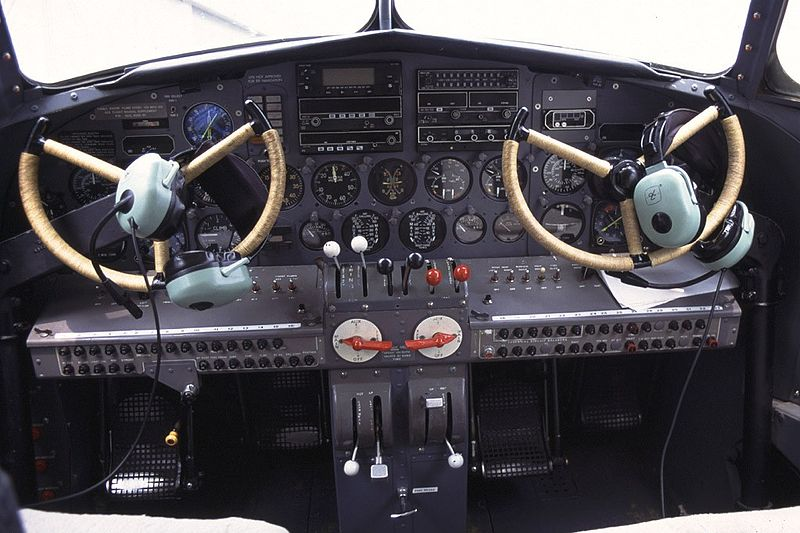
Flight deck of a Model 10A, which has been updated with a more modern instrument panel
Besides airline orders, a number of non-commercial civil operators also purchased the new Model 10. In May 1937, H.T. "Dick" Merrill and J.S. Lambie accomplished a round-trip crossing of the Atlantic Ocean. The feat was declared the first round-trip commercial crossing of that ocean by any aircraft. It won them the Harmon Trophy. On the eastbound trip, they carried newsreels of the crash of the Hindenburg, and on the return trip from the United Kingdom, they brought photographs of the coronation of King George VI. Bata Shoes operated the Model 10 to ferry its executives between their European factories.
Probably the most famous use of the Electra was the highly modified Model 10E flown by aviatrix Amelia Earhart. In July 1937, she disappeared in her Electra during an attempted round-the-world flight.
Many Electras and their design descendants (the Model 12 Electra Junior and Model 14 Super Electra) were pressed into military service during World War II, for instance the USAAF's C-36. By the end of the war, the Electra design was obsolete, although many smaller airlines and charter services continued to operate Electras into the 1970s.
Electras were popular as private planes for royalty in Asia and Europe. In India, the Maharaja of Jammu and Kashmir and the Maharaja of Jodhpur both purchased them for their personal use in 1937.