Derwitzer Glider
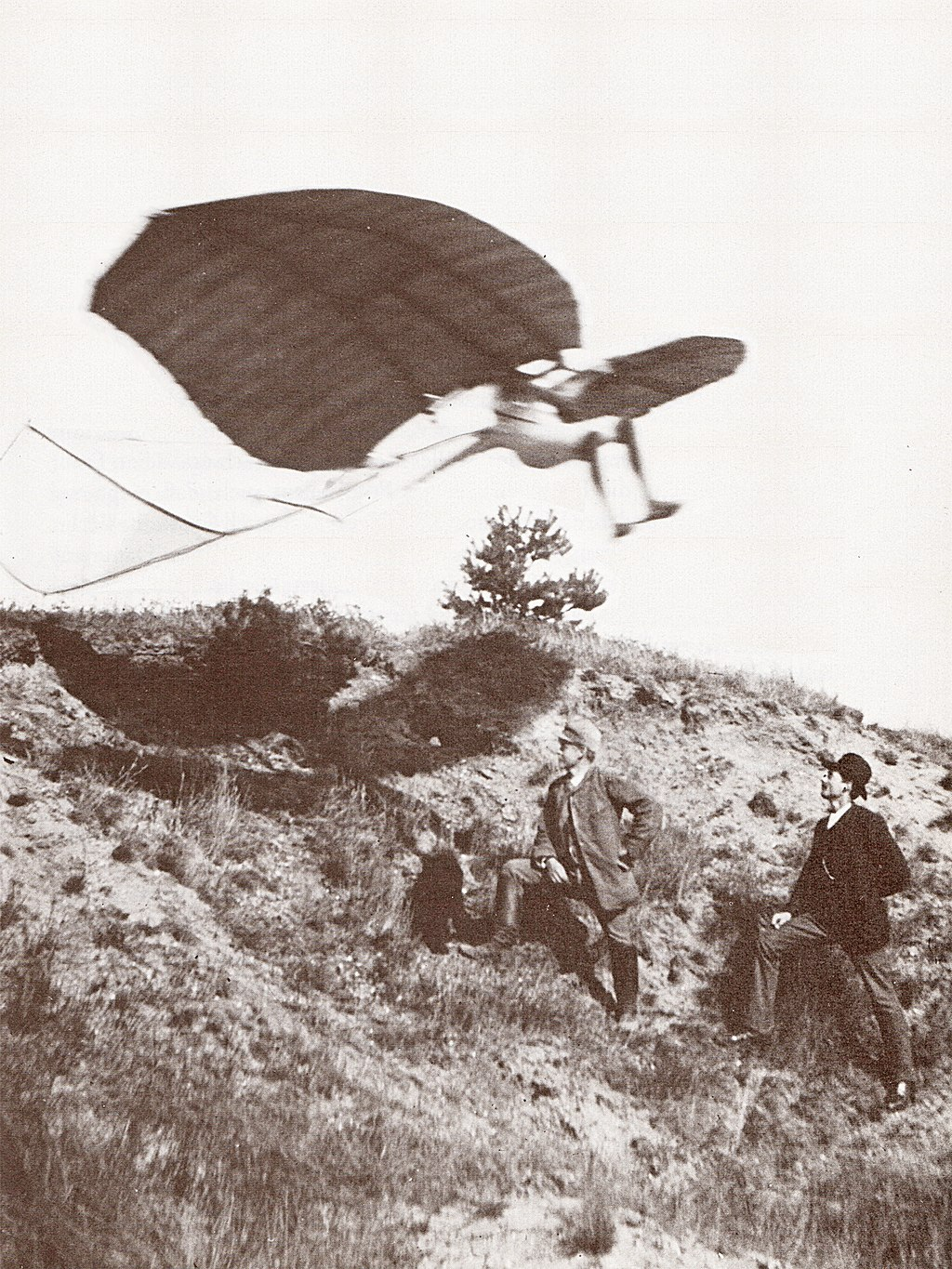
Derwitzer Glider in flight with Lilienthal as pilot, 1891
The Derwitzer Glider was a glider that was developed by Otto Lilienthal, so named because it was tested near Derwitz in Brandenburg. When flown in 1891, it became a very early successful design able to carry a person and the one of the first successful manned aircraft in the world. He made flights of up to 25 metres (80 feet) in it.
Specifications
General characteristics
Crew: One (pilot)
Length: 3.90 m (12 ft 10 in)
Wingspan: 7.62 m (25 ft 0 in) originally; 5.5 m (18 ft) later
Wing area: 10.0 m (108 sq ft)
Empty weight: 18 kg (40 lb)
During his short flying career, Lilienthal developed a dozen models of monoplanes, wing flapping aircraft and two biplanes. His gliders were carefully designed to distribute weight as evenly as possible to ensure a stable flight. Lilienthal controlled them by changing the center of gravity by shifting his body, much like modern hang gliders. However they were difficult to maneuvre and had a tendency to pitch down, from which it was difficult to recover. One reason for this was that he held the glider by his shoulders, rather than hanging from it like a modern hang glider. Only his legs and lower body could be moved, which limited the amount of weight shift he could achieve.
Lilienthal made many attempts to improve stability with varying degrees of success. These included making a biplane which halved the wing span for a given wing area, and by having a hinged tailplane that could move upwards to make the flare at the end of a flight easier. He speculated that flapping wings of birds might be necessary and had begun work on such a powered aircraft.