Taph Wryrw
They tell me to begin with my name and service record, but that’s a waste of your time and mine. If you’re sitting in this hall, you already know who I am, or at least what I was. Seventh Legion, Western Undercampaigns, thirty-four years active before a stone demon took my legs below the knee and the Goddess Shinthai took pity on what was left of me. The Faith was kind enough to offer a quiet retirement, wives enough to keep a man anchored, and an audience of recruits once a season who still believe wars are fought with courage instead of accounting.
So here I am.
What you are here to learn about today are the Taph’Wryrw.
Do not bother asking the quartermaster why the name looks like a cough written down. That is the closest the translators ever came, and close is good enough for corpses. In the old days we called them other things. Slur-names. Field-names. Names you are no longer permitted to use because the Kingdom has discovered manners. I will not repeat most of them. Not because they were inaccurate, but because I am tired of being corrected by people who never stood within arm’s reach of one.
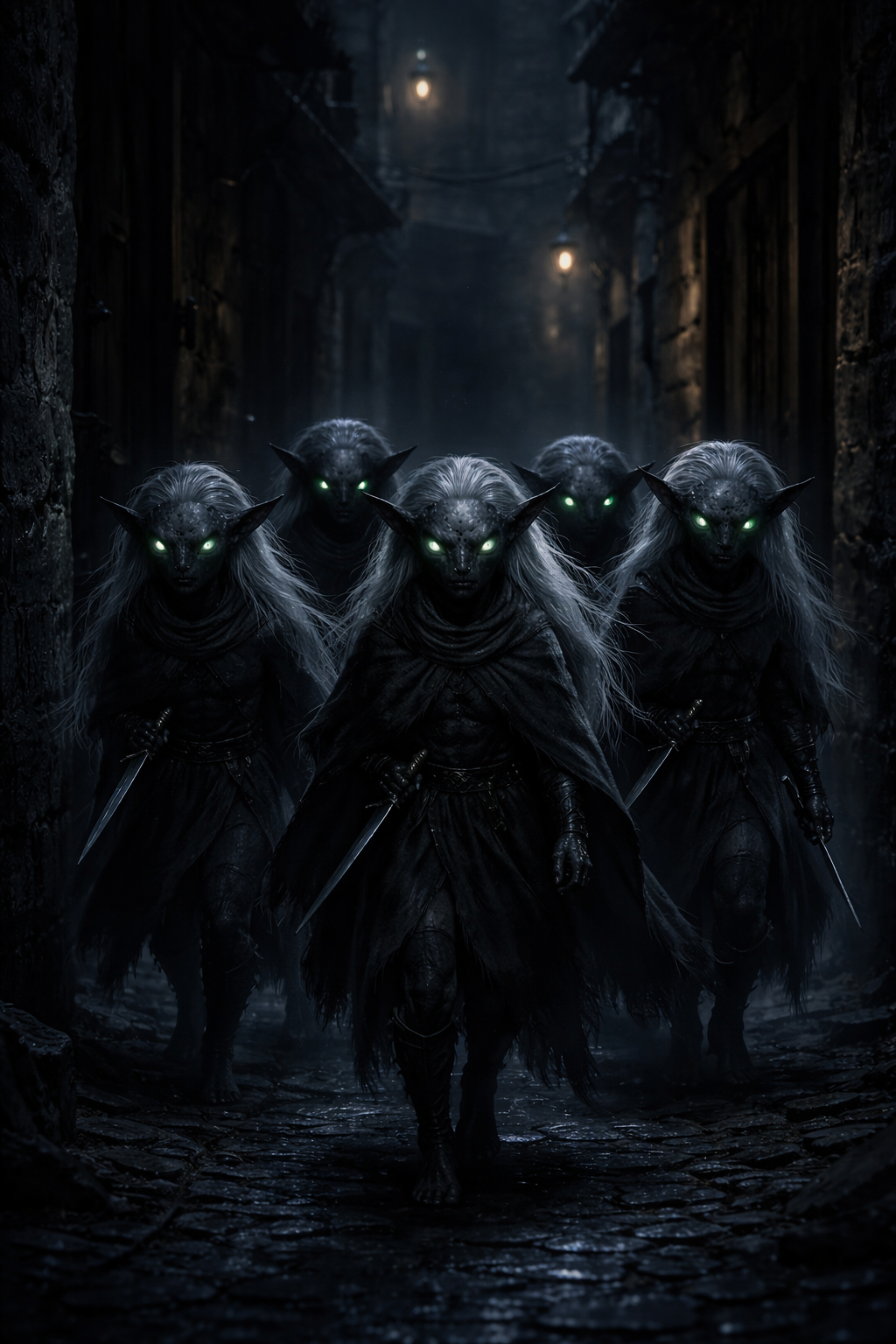
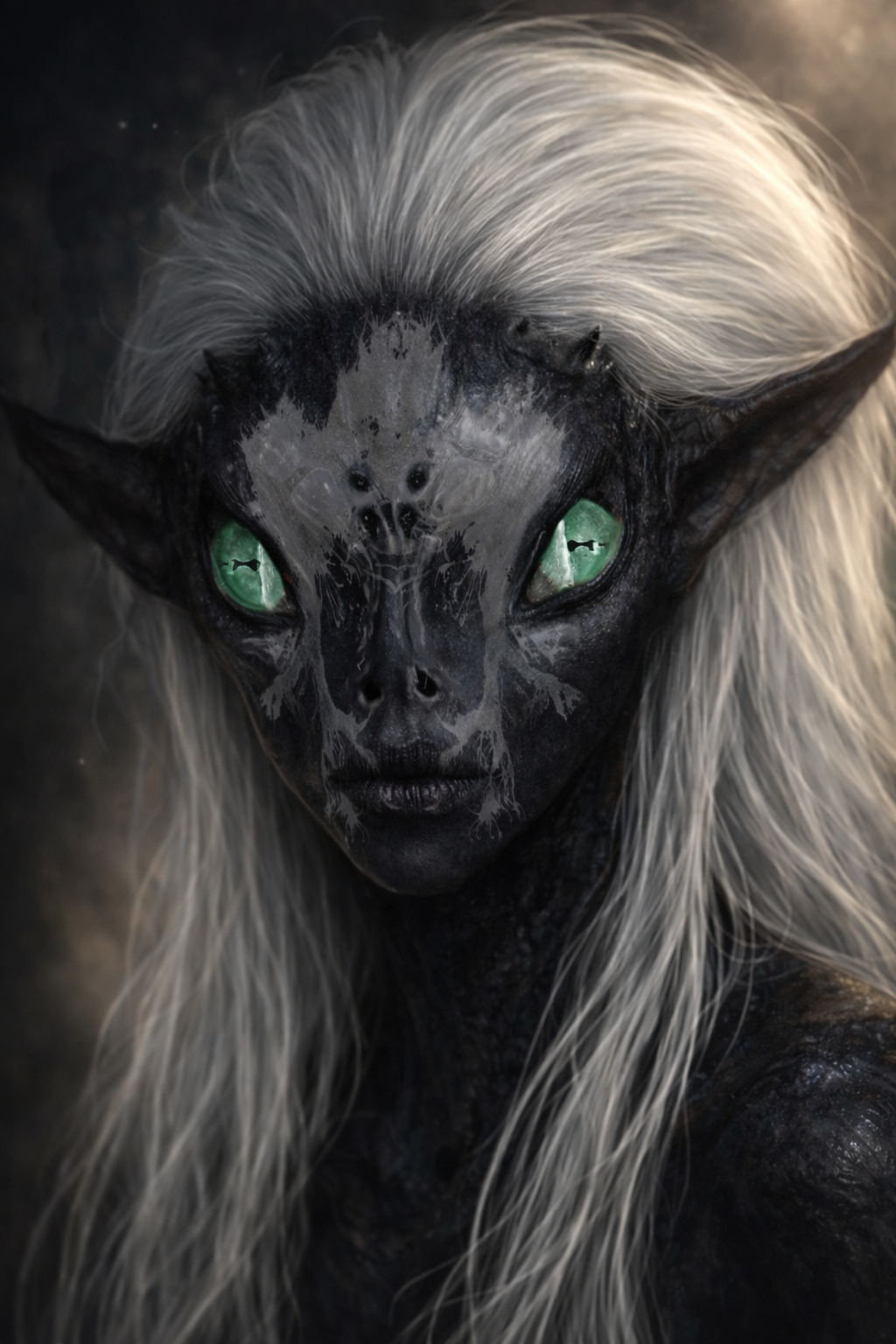
Small. That is the first thing you will notice, and the first thing that will mislead you. One hundred fifty centimeters at best, light-boned, narrow through the shoulders. Recruits used to laugh the first time they saw a pack unloaded from a lift-platform, hair floating like dandelion silk, eyes watering from the light. The laughter never lasted. The Taph’Wryrw had a way of remembering who laughed.
They are Drakka, yes, but not the kind you imagine when you hear that word spoken politely in the capital. These are not Boslopers, not traders or healers or those soft-spoken surface-adapted things who tuck themselves into corners of society and pretend to be grateful. No. The Taph’Wryrw are bad stock, and they know it. They got a Mater, but you never get to see those ordinarily. Paranoid. The brood mothers are taller, healthier looking and she dominants the runs as if they’re dolls and they obey her unerringly. I suspect she points them because on campaign they try to get back to her but if they cant after half a year they croak. They get epileptic seizures and then they die. Doomed, by their own reckoning, and therefore unburdened by the future in a way that makes contracts slippery.
They come in clusters. Three. Five. Seven. Never even. Never one. We tried once—isolated a single specimen for observation. It lasted four days before it stopped eating, stopped responding, and then stopped being anything we could recognize as alive. It started stinking and began hallucinating and then died. When kept together, though, they function as something else entirely. Not a unit. A continuum. You could watch it happen: heads tilting in sequence, pupils contracting together, the pale markings on their skin—those wandering stains—aligning into symmetry like frost forming on glass. Touch was enough. Prolonged proximity was better. Sleep, especially. When they slept piled together, they woke knowing what the others had dreamed.
We exploited this. Of course we did.
They were used as terror troops, though the manuals will now dress that term up in something bloodless. Infiltration. Psychological destabilization. Targeted elimination. Places where you needed soldiers who did not hesitate, did not negotiate internally, did not require extraction. You did not send Taph’Wryrw to win ground. You sent them to make sure the ground could not be held by anyone else.
They were effective. Unpleasantly so. Not a shred of honor in their bones, mean as rabid dogs. Vile creatures. hey could be incentivized, but not with coin in the ordinary sense. They did not plan far enough ahead for pensions or titles to mean much. What they wanted varied by cluster. The Brood mother wants all sorts things and those barter with other brood mothers. Some want access—to archives, to vaults, to bodies. Some wanted permission. They are power players that have their own agendas. Those are the dangerous ones. Give them access and they would take it as absolution. Others wanted vengeance, though against whom was rarely clear. We learned quickly not to ask questions we did not want answered.
Self-sacrifice was not rare. It was a lever. Frame the objective correctly, bind it to the cluster’s continuity, and an individual would walk into fire without ceremony. This unnerved command. It unnerved me, and I had already seen men charge artillery for less coherent reasons. The difference was that a human soldier dies hoping it matters. A Taph’Wryrw dies because the equation resolves that way.
They were never good with monetary contracts. Missed deadlines. Disappeared between payments. Showed up with objectives completed but terms technically violated. Legal hated them. Intelligence distrusted them. Operations adored them until the cleanup phase. That is where things went wrong.
We tried to keep them on-camp. Failed. Every time. They would slip away at night, not singly but in staggered fashion, as if leaving a trail only they could follow. Always toward their Nest Matriarchs. We never captured one. Not properly. Expeditions were mounted. Men were lost. Reports came back contradictory, incomplete, wrong. The Matriarchs were off-camp assets in the ledger, which is a polite way of saying we never owned the spine of the thing.
That should have told us something.
The Taph’Wryrw were regarded, in plain language, as expendable. That is the word you will not see in the official histories. Exploited is the word the universities prefer now. Very well. Call it exploited. They were used until the cost-benefit curve inverted, and then doctrine changed. Occupation requires predictability. Terror does not scale cleanly into governance. Someone up the chain decided we no longer did things that way.
So we stopped.
Or rather, we stopped pretending to employ them. Supplies dried up. Incentives vanished. Some clusters deserted outright, slipping back into whatever circulatory system connects them to their Matriarchs. Others lingered, tried to adapt, failed. These old mothers, they too slippery for us humans. How you corner something that’s three four centuries old? Those bitches use thse young ones as pawns in some sick contruct I never saw in any Drakka, not even anything comparable. Even other Drakka despise this, and they use a word that translates very badly.
The last pack I formally logged was thirty years ago. Three bodies recovered. Two vanished. Case closed.
I believed that. I wanted to believe that.
Last summer, in Low Ravelin, I was in a cart pulled by my wives. The sun was high. I hate markets. Too many blind angles. I felt it before I saw it—that sense of being observed without being targeted. When I turned, there it was. Just one. Standing under an awning, hair pale as ash, skin marked with those drifting stains, eyes green and sharp. Its hair was now braided and it worse expensive silk clothes. Looked much better than back in the old days. Goddamn rat faced thing knew my name.
Not my rank. My name.
It hissed. Spat at my feet. A small thing, but deliberate. The markings on its face aligned into symmetry I had not seen outside of a full cluster. I reached for my crossbow that has not been part of me for ages and felt ridiculous, furious, old. It did not attack. It did not need to. It held my gaze long enough to remind me that continuity does not require permission, then turned and disappeared into the crowd.
So listen to me now, and write this down if you are the sort who still believes notes make you safer.
The Taph’Wryrw are not gone. They are not loyal. They are not a mistake we corrected. They are a consequence we interrupted. We used them because they were useful. We abandoned them because usefulness shifted. They noticed.
You will not be ordered to work with them again. That is no longer allowed. Officially. You will also not be warned when they appear, because acknowledging them complicates the narrative of progress the Kingdom prefers.
Treat them as history if it comforts you. But remember this: history that can still say your name is not finished with you.
That concludes the briefing. You are dismissed.