Cotohtbai
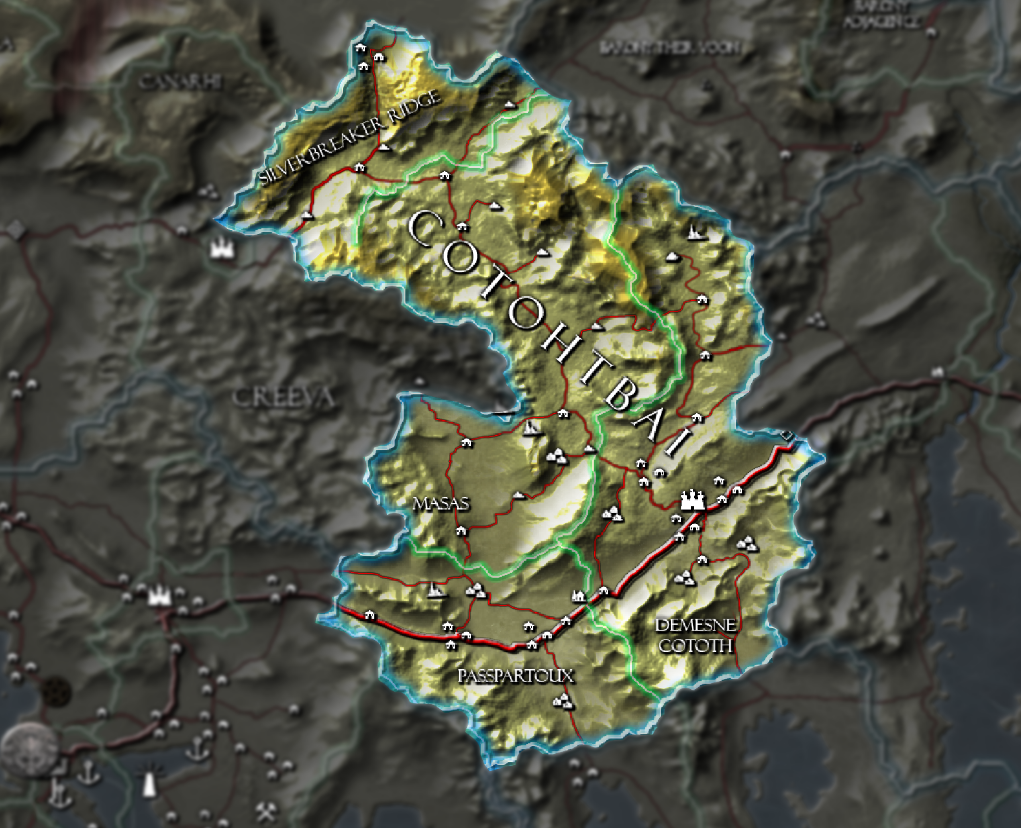

Far in the south-eastern reaches of the region of Praetoria, where the land tips toward rust and fire and the sky seems perpetually stained by old suns, lies Cotoht—not merely a territory, but a memory that refused to die. The map marks it today as a province folded neatly into the Kingdom’s borders, lines inked with bureaucratic confidence. Yet the land itself does not acknowledge such geometry. Cotoht remembers when borders were wounds, not agreements.
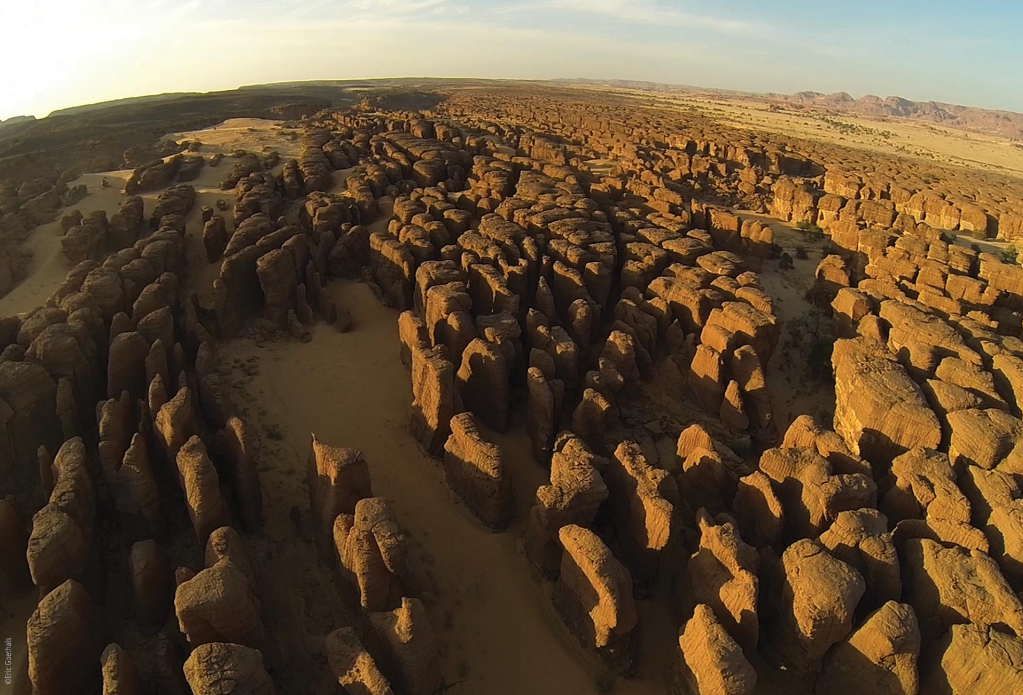
In ancient ages, Cotoht was vast—a sweep of broken plateaus, red valleys, knife-edged ridges, and stone seas that sang when the wind moved right. Human migration stalled here. Armies bled out here. Caravans learned humility here. The land did not kill indiscriminately; it tested. And those who failed were stripped clean by sun, silence, and distance.
From this crucible emerged the Cotoht, a proud ‘humanoid’ people whose identity was never built around kings or empires, but around continuance. They were not nomads in the shallow sense, nor settlers in the Kingdom’s meaning of the word. They were tribal custodians of pressure—of heat, scarcity, ritual violence, and memory. Their myths do not begin with creation, but with survival after creation went wrong.
Physically, the Cotoht are shaped by their land: sinewy rather than massive, scar-mapped rather than adorned, eyes narrowed by light and judgment alike. Their armor is functional to the point of austerity—layered hides, lacquered bone, scale-mail worked from desert beasts whose names are never spoken lightly. Blades are short and brutally honest. Spears are favored not for reach, but for control. A Cotoht warrior does not chase; they intercept inevitability.
Yet to reduce them to warriors is a Kingdom error—one made often, and expensively. Warfare for the Cotoht is not a tool of conquest, but a ritualized form of boundary maintenance. They fight to assert where they end, not to define what they own. Expansion, domination, glory—these are viewed as adolescent pathologies of softer civilizations. The Cotoht laugh at maps colored in ambition.
They do their tribal thing, as outsiders say, and the phrase betrays how little outsiders understand. Tribal life in Cotoht is a layered architecture of obligation and restraint. Each tribe governs a specific ecological niche—salt flats, high ridges, canyon chains—and their customs are tuned with near-scientific precision to those environments. Marriage binds water rights. Song cycles encode seasonal hazards. Games played by children rehearse ambush tactics older than the Kingdom’s founding charters.
When the Kingdom of Man finally arrived in force—steel-heavy, banner-bright, convinced of destiny—it did not meet a grand united resistance. That mistake nearly destroyed it. The Cotoht did not oppose the Kingdom as a single enemy, but as a thousand local impossibilities. Supply lines vanished. Scouts returned hollow-eyed or not at all. Forts stood pristine and useless, bypassed by an enemy that did not recognize them as meaningful objects.
The Kingdom learns quickly.
Result with the Cotht come through flattery, diplomacy, and deliberate non-interference. Envoys were instructed to listen more than speak, to bring gifts without expectations, and above all, to leave when told. No census. No roads unless invited. No missionaries. No “improvements.”
The Cotoht notice and can work with this.
Over generations, a relationship formed that was neither conquest nor alliance, but mutual tolerance sharpened into respect. The Kingdom recognize that attempting to rule Cotoht directly would cost more than it could ever extract. The Cotoht recognized that the Kingdom’s presence elsewhere created a buffer against lesser predators—raiders, zealots, petty warlords—who did crave domination.
Thus Cotoht were folded into the body politic without being digested.
At the apex of this arrangement stands the Potetigi.
To call the Potetigi a duke is technically accurate and spiritually insulting. The rank corresponds on parchment, but not in reality. The Potetigi is not appointed; he is acknowledged. His authority arises from survival, arbitration, and the quiet consensus of those who would absolutely kill him if he failed in either duty.
The current Potetigi has never traveled beyond Cotoht. This is not ignorance; it is policy. The world comes to him. Kingdom envoys cross salt and stone to kneel on woven mats, bringing gifts chosen not for value but for symbolic restraint. He receives them seated, unarmed, surrounded by advisors whose stillness radiates threat.
He is nobody’s fool.
The Potetigi listens to the Kingdom’s notions—trade frameworks, border assurances, abstract legalisms—with a patience that unnerves courtiers trained to perform urgency. He asks questions that collapse assumptions. He accepts what aligns with Cotoht values and lets his advisors handle the rest. If an idea violates tradition, it is not debated. It simply fails to exist.
To Praetoria’s credit, it learned early that attempting to outmaneuver the Potetigi was pointless. Better to meet him on his own terms, even if those terms included ritual delays, gift cycles that took years to complete, and negotiations paused for funerals of men no one outside Cotoht remembered.
Today, the Demesne of Cotoht appears calm—fierce, yes, but stable. Its warriors still train. Its tribes still feud, though bloodshed is bounded by ancient rules more effective than modern law. Kingdom roads skirt its edges respectfully. Maps label it. Merchants trade through it carefully.
But beneath that surface lies an older truth: Cotoht has not changed because it was conquered. It endures because it chose not to conquer. The city at the heart has expanded, its folk has become richer.