Fieser LF
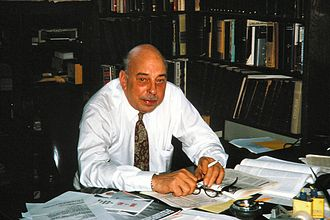
NAME: Fieser, Louis Frederick
ACHIEVEMENTS: Vitamin K; napalm; carcinogens
NICKNAME/ALIAS: None.
DATE/PLACE OF BIRTH: 7th April 1899, Columbus, OH
DATE/ PLACE OF DEATH/AGE AT DEATH: 25th July 1977, Cambridge, MA. Aged 78
DISCIPLINE: Chemist.
FIELD: Chemistry.
PARENTS: Father, Louis Frederick Fieser, mother, Martha Victoria Kershaw.
SIBLINGS:
SPOUSE: Mary Peters.
CHILDREN: None.
EDUCATION: Douglas school, Columbus; East High school, Columbus; Williams College; Harvard University.
MAJOR WORK: ‘Organic Chemistry’ 1944, ‘Reagents for Organic Synthesis’ 1967-77.
LIFE AND TIMES:
At Harvard Fieser studied under <taught by> Conant* and was awarded his doctorate for a thesis on the oxidation-reducing potential of quinones:- active agents in fungi, molds and insects, and pigments in plants.
Fieser then developed a reagent for the absorption of gaseous oxygen in gas analysis. He was awarded a scholarship to study abroad and spent a year in Frankfurt, Germany and at Oxford University in Britain.
In 1925, he began to teach at Bryn Mawr and, at the same time carried out more research on quinones. One of his students was Mary Peters, whom he later married in 1932. He went back to Harvard in 1930 as assistant professor leading a large team of researchers.
Soon after he began, the Royal Cancer Hospital in London discovered that a polycyclic hydrocarbon he had synthesised had cancer-inducing properties. This was the first pure chemical carcinogen ever identified. Fieser followed up this line of research and succeeded in synthesising several carcinogens, and his cancer studies provided a valuable new route for medical researchers.
In 1937, he was promoted to full professor and two years later became the Sheldon Emery professor of Organic Chemistry at Harvard. Fieser was a brilliant teacher and his lectures were always well attended. His main success in organic chemistry came in 1939, when he was able to synthesize vitamin K. As a result of his work on quinones, he was able to synthesize the blood-clotting factor and established that its structure derived from that of quinones. The human body requires vitamin K for post-synthesis modification of certain proteins that are required for blood coagulation (K from Koagulation, German for "coagulation") or for controlling binding of calcium in bones and other tissues.
During World War II, Fieser worked for the government as a director of scientific research. The army wanted to develop incendiary gels and Fieser produced several, carrying out experiments with them behind Harvard Stadium. In the course of his research, he discovered that combining certain metal soaps with gasoline resulted in an exceptionally strong gel.
One of these, made from aluminium naphthenate and aluminum palmitate, was named <invented> napalm*. It was used during the war in millions of incendiaries dropped over the European and in Pacific theatres of war. As well as developing napalm, Fieser worked on the production of anti-malarial drugs from quinone derivatives and he carried out research into cortisone.
Cortisone, a steroid, had first been isolated in 1936, but its therapeutic value couldn’t be demonstrated, because there were insufficient supplies for experimentation. Attempts had been made, by Fieser and other scientists, to synthesise cortisone. Their efforts were unsuccessful until 1951, when one of Fieser’s colleagues, Robert B Woodward, had a breakthrough, using Fieser’s research results.
During the war, Fieser began to produce textbooks, when his wife suggested writing as a way of keeping in touch with teaching. In 1944, ‘Organic Chemistry’ was published and became a great success. The book included up-to-date research and development and was written in a very readable style.
‘Organic Chemistry’ was translated into fifteen languages and read all over the world. Fieser, together with his wife and other colleagues, wrote many more texts, among them ‘Steroid’, published in 1959 and ‘Style Guide for Chemists’ in 1960.
In 1963, Fieser became part of a government initiative to find a link between cigarette smoking and disease. The findings resulted in a report that smoking was a major cause of lung cancer, heart problems and respiratory diseases. Fieser himself smoked heavily and in 1965 had a lung tumour removed. After his operation he became a dedicated campaigner against smoking.
He retired in 1968 and spent most of his last years writing the first six volumes of ‘Reagents for Organic Synthesis’, a source book of the many new reagents used in organic synthesis during the previous twenty years.
When press coverage revealed the true horror of napalm bombing, during the escalation of the Vietnam War under President <invention used by> Johnson*, Fieser was reviled by anti-war protestors, but he always defended his discovery of napalm as essential war work in the service of his country.
ASSESSMENT: Fieser's work on quinones and carcinogens enabled major new research to be carried out on cancer treatments. This work is often overshadowed by his record as the inventor of napalm.
CONNECTIONS: His work related to that of <influenced by work of> Meges Mouries*
ONELINER: Louis Fieser, inventor of napalm
BIBLIOGRAPHY:
ANB
Gates, Marshall, Biographical Memoirs, vol. 65, National Academy of Sciences, National Academy Press, Washington DC, 1994.