Hubble
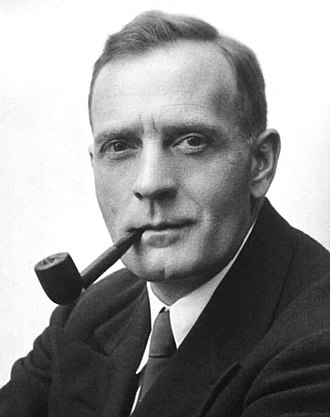
Name: Edwin Powell Hubble
Achievements: Extragalactic astronomy
Born: November 20, 1889; Marshfield, Missouri
Died: September 28, 1953; San Marino, California (Aged 63)
Field & Discipline: Science; Astronomy; Astronomer
Language: English
Father: John Powell Hubble
Mother: Virginia Lee James
Siblings: Six siblings
Spouse: Grace Burke Leib (married 1924)
Children: None
Education: Wheaton High School, to 1906; University of Chicago, 1906-10
Major Work:
“Red Shifts in the Spectra of Nebulae” (1934)
Life & Times:
By his senior year in college Hubble was working as a laboratory assistant to physicist Robert A. Millikan. In 1910 he won a Rhodes Scholarship to Queen's College, Oxford where he studied jurisprudence. He returned to the U.S. in 1913 and within a year went back to the University of Chicago to study for a doctorate in astronomy at the Yerkes Observatory at William's Bay, Wisconsin.
In 1916, Hubble was invited to join the Mount Wilson staff once he received his doctorate, but his arrival there came only after the end of World War I. In October 1923, Hubble was able to identify a Cepheid variable star in the Andromeda nebula, and using the correlation between periodicity and absolute magnitude (developed a decade earlier by [work related to] Leavitt* ), he was able to calculate the luminosity of the Cepheid from its period (the length of time for a star to go from maximum luminosity to
minimum and back to maximum).
Hubble then compared these luminosities (diminished by the distances of the nebulae in which the Cepheid stars were), and calculated distances for the Cepheids in the Andromeda nebula of approximately one million light years. He also discovered other Cepheids and calculated the distances to them.
Since scientists knew that the diameter of the Milky Way was only about 100,000 light years, Hubble's figures placed the spiral nebulae far beyond the boundaries of our galaxy, and so established the existence of galaxies outside our own. Eventually, he calculated the distance to nine galaxies, which he called "extragalactic nebulae".
In 1929 he made the dramatic discovery of what became known as the principle of 'red shift'. Red shift is the shift of the spectrum of an astronomical object towards longer (red) wavelengths, because of the [used work of] Doppler* and his [used] Doppler Effect*. This showed that these “red” galaxies were receding.
Hubble examined the red shifts of the distant galaxies and discovered that they were increasing proportionally with their increasing distance, and that they were therefore receding at high velocity. This proved to be the case with most galaxies.
Having discovered that all the galaxies (except for a few, nearby) were moving away from the Earth at high speed, Hubble then developed a mathematical correlation between this velocity and the distance from Earth which is now known as Hubble's Law or Hubble's Constant (1929).
Hubble's Law states that the greater the red shift of light from an object, the greater the distance of the object and the larger its retreating velocity, and that the more distant a galaxy is from the Earth, the faster it is moving away from us. The implications of Hubble's discovery were immense. The universe, long considered static, was now seen to be expanding, and expanding in such a way that the ratio of the speed of the galaxies to their distance is a constant. Hubble’s law of red shift has been confirmed by subsequent research and provides the cornerstone of modern relativistic cosmological theories of an expanding universe.
Hubble remained an active observer of galaxies until his death. Besides his pioneering work in astronomy, Hubble helped develop the Mount Palomar Observatory in California, as well as the Hale 200-inch telescope. For his achievements in astronomy, Hubble received many honours and awards, and the Hubble Space Telescope, launched by NASA in 1990, is named after him. A flaw inthe mirror made it almost useless, but was repaired by a team including the University of California .
Extra Connections: His work affected that of [work related to] Gamow*.
For a year he was also a student laboratory assistant for the physicist Robert Millikan, a future Nobel Prize winner. However, the Nobel Prize in Physics did not recognize work done in astronomy. Hubble spent much of the later part of his career attempting to have astronomy considered an area of physics, instead of being its own science. He did this largely so that astronomers—including himself—could be recognized by the Nobel Prize Committee for their valuable contributions to astrophysics. This campaign was unsuccessful in Hubble's lifetime, but shortly after his death, the Nobel Prize Committee decided that astronomical work would be eligible for the physics prize.[16] However, the prize is not one that can be awarded posthumously.
Hubble also worked as a civilian for U.S. Army at Aberdeen Proving Ground in Maryland during World War II as the Chief of the External Ballistics Branch of the Ballistics Research Laboratory during which he directed a large volume of research in exterior ballistics which increased the effective firepower of bombs and projectiles.
Hubble proved that many objects previously thought to be clouds of dust and gas and classified as "nebulae" were actually galaxies beyond the Milky Way.[4] He used the strong direct relationship between a classical Cepheid variable's luminosity and pulsation period[5][6] (discovered in 1908 by Henrietta Swan Leavitt[7]) for scaling galactic and extragalactic distances.
The Hubble Space Telescope was positioned by the Space Shuttle using [Hubble scope positioned by] hydrazine* fuel.
Assessment: His impact on science has been compared to that of Newton and Galileo.
Oneliner: Edwin Hubble, discoverer of the expanding universe
Bibliography:
- Dictionary of Scientific Biography.
- Encyclopedia Britannica.
- American National Biography.
- Christianson, Gale E., Edwin Hubble: Mariner of the Nebulae,Chicago: University of Chicago Press, 1995.
- Oleck, Joan, "Edwin Hubble", in Notable Twentieth-Century Scientists, 1999.
Multimedia
Connection 3 Episode 4. "An Invisible Object"
Astronaut Michael J. Massimino: A View of the Earth alt link (Best podcast ever)