Yoshi Hijikata
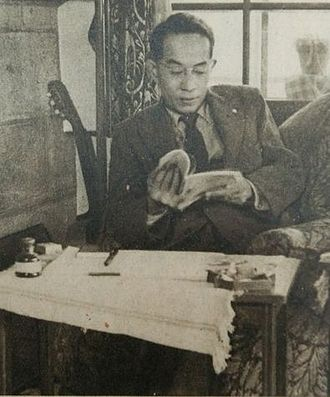
Yoshi Hijikata (土方 与志, Hijikata Yoshi, 16 April 1898 – 4 June 1959) was a prominent Japanese theatre director. His real name was Hisayoshi Hijikata (土方久敬, Hijikata Hisayoshi).[1][2][3] He studied at the University of Tokyo.[4]
He had Marxist leanings, and in 1933 traveled to Russia.[1] On his return to Japan in 1941 he was arrested, and remained in prison until 1945.[1][5] In 1946 he joined the Japanese Communist Party.[1]
He was a grandson of the Meiji politician Hijikata Hisamoto.[1][3] His grandfather Hijikata was a samurai in Tosa Domain (modern-day Kōchi Prefecture). He was sent by the domain to Edo for studies, where he became involved in the sonnō jōi movement (Revere the Emperor, expel the barbarians)
Following the Meiji restoration, Hijikata joined the Meiji government and was appointed a public prosecutor in Tokyo...He was subsequently made a tutor, then an Imperial Councilor to Emperor Meiji, who placed a great deal of confidence in him, and who made him a viscount (shishaku) in the kazoku peerage in 1884.
Mutsuhito (Japanese: 睦仁, 3 November 1852 – 30 July 1912), posthumously honored as Emperor Meiji[a] (明治天皇, Meiji-tennō), was the 122nd emperor of Japan, according to the traditional order of succession. Reigning from 1867 to his death, he was the first monarch of the Empire of Japan and presided over the Meiji era. His reign is associated with the Meiji Restoration, a series of rapid changes that witnessed Japan's transformation from an isolationist, feudal state to an industrialized world power.