Carranza V
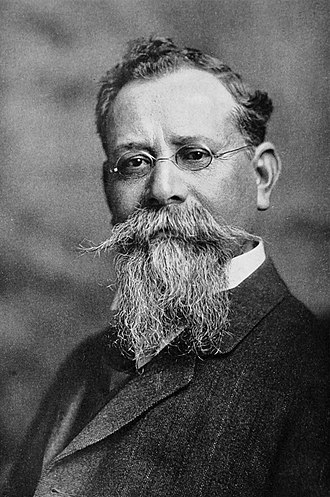
Name: Venustiano Carranza
Nickname/Alias: First Chief
Achievements: President of Mexico in the early 20th Century
Born: December 29, 1959; Cuatro Ciénegas, Coahuila, Mexico
DEATH: May 21, 1920; Tlaxcalantongo, Puebla, Mexico
Field & Discipline: Politics & Government; Statesman
Language: Spanish
Father: don José de Jesús Carranza (b. June 18, 1813, d. 1899)
Mother: doña María de Jesús de la Garza (m. 1837, d. 1895)
Siblings: 14 siblings (Emilio)
Spouse: Virginia Salinas (m. May 12, 1882, at age 20)
Children: 4 children with a mistress in Mexico City
Education: Ateneo Fuente in Saltillo; Esuela Nacional Preparatoria in Mexico City (1874-1877)
Life & Times:
Venustiano Carranza was born the son of a prosperous landowner in Coahuila, Mexico. After being appointed municipal judge in 1886, he became active in politics in 1887, publishing pamphlets on agricultural and industrial reform. That same year he was elected municipal president of Cuatro Ciénegas.
In 1894, Carranza was elected municipal president again, this time serving for three consecutive terms. He then served in the federal senate from 1903 to 1908. During the Coahuilan governor’s leave of absence in September 1908, Carranza served as temporary governor for two months. He ran for governor in 1908 again, but lost in the rigged election that followed.
Carranza supported Francisco Madero against Porfirio Díaz, in the revolution which ran from November 20, 1910 to April 22, 1911. He was appointed provisional governor of Coahuila, and was elected to the post in November 1911. While governor, Carranza pushed for and passed tax increases across the board to increase public services, and promoted social reforms to improve education and health conditions. In 1911, he was named Minister of War and Marine by Madero.
After Victoriano Huerta arrested Madero and forced him resign on February 18, 1913 Carranza became the leader of the Constitutionalists and he called on the other governors to join him in an armed revolt. Madero’s assassination a short time later, which may have been planned by Huerta and Félix Díaz, shocked the nation.
Carranza issued his Plan de Guadalupe on March 26 which refused to recognize Huerta or any judicial or legislative acts of the Huerta regime. He believed that the congress did not have the authority to designate the president. The Plan also named Carranza “First Chief” of the rebel army and interim president of Mexico until he could convoke national and state elections.
Thus began a new phase of Civil War. Carranza gained the support of many congressmen who refused to recognize Huerta. Enraged by their dissent, Huerta closed congress in October 1913 and marched 83 legislators to a federal penitentiary.
Although they did not work together, Carranza, Emiliano [joined in rebellion with] Zapata*, and Pancho [joined in rebellion with] Villa* all rebelled against Huerta, causing him to flee the country. In 1914, Carranza was proclaimed “First Chief” by a coalition of revolutionary forces which included Villa and Zapata.
Villa formally withdrew his recognition of Carranza as president on September 22, 1914. Aware of Villa’s opposition to Carranza, Zapata believed that they might be able to defeat him if they united and in the fall of 1914, they allied to oppose the provisional government and demanding immediate social reforms. The country entered another civil war.
Mexico’s military leaders were forced to choose between Carranza and Villa at the Convention of Aguascalientes on November 18, 1914 when Eulalio Gutiérrez, the convention president, named Villa the chief of the convention’s armies. Outnumbered, the Carrancistas were forced to flee Mexico City. Carranza set up headquarters in a Veracruz lighthouse. Disorganized, unable to work together, and constantly quarreling, Villa and Zapata were defeated by Carranza’s army, led by General Alvaro Obregón, at Celaya in April 1915.
During his presidency, Carranza worked to bring Mexican railroads, mines, and the oil industry under Mexican control, thus angering the United States. He was also determined to keep Mexico neutral during World War I, thus incurring the wrath and suspicion of Woodrow Wilson.
Carranza’s anti-foreign policies and refusal to bow to United States’ demands delayed Wilson’s recognition of the Carranza government. Finally realizing that it was inevitable, U.S. recognition occurred on October 19, 1915. Carranza served as the provisional president from 1915 to 1917. Mexico held free elections in September 1916 to elect delegates to draft the new constitution.
In December 1916 Carranza convened a constitutional convention which drafted the Constitution of 1917. Obregón pressured Carranza to accept the constitution even though it contained radical reforms of which Carranza was not really in favor. Carranza was then elected the first president of the new Mexican Republic, serving from May 1, 1917 to 1920.
Carranza was more interested in political reform than social change and did little to enforce the provisions of the 1917 constitution, which called for basic reforms in landownership, control of natural resources, and labor and social legislation.
Over the next few years, Carranza introduced amendments to the congress to further the constitution’s move towards social justice and economic development. However, by mid-1919 most of the deputies had turned their support to Obregón for the upcoming 1920 presidential campaign and rejected Carranza’s proposals.
Carranza’s presidential term was over in December 1920 and, although he had promised fair and open elections in 1920, he tried to force the election of Ignacio Bonillas as his successor. This violation of the 1917 Constitution drove labor away from Carranza.
As Carranza began to reduce funding for the politically powerful army, ambitious officers lost their commitment to him. An officer himself, Obregón enjoyed broad support from the military. The Zapatistas also agreed to support Obregón in March of 1920.
After months of Carranza’s harassment and imprisonment of Obregónistas, Carranza attempted to imprison Obregón himself on April 11. However, Obregón escaped and joined a revolt in Sonora led by de la Huerta. De la Huerta issued the Plan de Agua Prieta, a proclamation withdrawing recognition of Carranza’s presidency, stating that he had violated state sovereignty and was trying to manipulate the elections. Military officers rallied behind this proclamation and Obregón became the new president within 2 weeks.
Carranza, unwilling to admit defeat, fled Mexico City to try and reestablish his government in Veracruz. Carranza even refused an offer of pardon from Obregón on May 9th. By then, the railroad to Veracruz had been blocked by Carranza’s opponents.
Carranza and what remained of his party fled into the mountains. After promising Carranza his loyalty and leading the presidential party to the small peasant village of Tlaxcalantongo, Puebla, Rodolfo Herrero assassinated Carranza at 3:30 a.m. on May 21st.
Assessment:
Oneliner: Venustiano Carranza, Mexican President
Bibliography:
- “Carranza, Venustiano.” The Columbia Encyclopedia, 6th ed. Columbia University Press, 2001.
- “Carranza, Venustiano.” Encyclopedia Britannica. http://search.eb.com/eb/article?ue=20803. Accessed August 14, 2002.
- Richmond, D. W. Venustiano Carranza’s Nationalist struggle, 1893-1920. University of Nebraska Press. Lincoln, NE: 1983.
- “Venustiano Carranza.” Almanac of Famous People, 6th ed. Gale Research, 1998. Reproduced in Biography Resource Center. Farmington Hills, Mich.: The Gale Group. 2002.
- “Venustiano Carranza.” Encyclopedia of World Biography, 2nd ed. 17 vols. Gale Research, 1998. Reproduced in Biography Resource Center. Farmington Hills, Mich.: The Gale Group. 2002.