Greville C
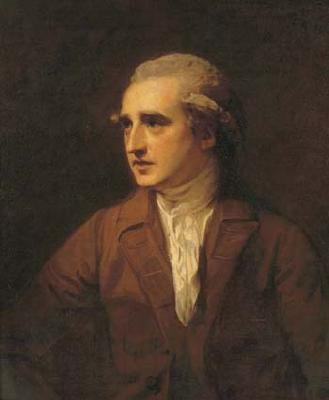
NAME: Greville, Charles Francis.
ACHIEVEMENTS: Development of Milford Haven, Wales.
NICKNAME/ALIAS: None.
DATE/PLACE OF BIRTH: 1749. Place unknown.
DATE/PLACE OF DEATH/AGE AT DEATH: 23rd April 1809, London. Aged 60.
DISCIPLINE: Town planner.
FIELD: Town planning
LANGUAGE: English.
PARENTS: Father, Francis, Earl of Warwick. Mother, Elizabeth Hamilton.
SIBLINGS: Two brothers: Robert Fulke and ?
SPOUSE: None.
CHILDREN: None.
EDUCATION: Unknown.
MAJOR WORK: None.
LIFE AND TIMES: Greville was a younger son of the Earl of Warwick and at the age of twenty-four, became Member of Parliament for Warwick with a minor government post.
He wrote to his uncle, <uncle was> Sir William Hamilton*, the English ambassador in Naples, that he wanted to find a rich wife. Despite this unemotional attitude toward marriage, he had, in the meantime, formed a liaison with Emma Hart (who would become <had affair with> Emma Hamilton*) who had no money at all.
Greville met Emma, who was working as an artists' model, in 1780. In 1781, she moved out of London to live with another young man, Sir Harry Featherstonehaugh. When this relationship started to break up after a few months, Greville persuaded Emma to come under his protection. It is possible that the child Emma was expecting at the time was Greville's but, in any event, the baby was immediately sent to be brought up by Emma's grandmother.
By 1782, Greville had moved to a house in Edgeware Road and set up home with Emma and her mother. Greville had made it clear that Emma could not bring her child to live with her and Emma and her mother became serving maids in the house.
At this time, his political career was in turmoil because Lord North, whom he supported as Prime Minister, was defeated in 1782 and Greville resigned, losing his government salary. He was hoping to find favour with the Marquis of Rockingham, who replaced North, but Rockingham died and was replaced by Shelburne, under whom Greville refused to serve.
Early in 1783, Shelburne had been ousted and North was back in power, and Greville's hopes of being rewarded for his loyalty were realised when he was made Treasurer of the Household for the Royals. Things were looking up so he treated Emma by taking her to be painted by the fashionable portrait painter, <employed> Romney*.
Things were soon to turn sour because <refused to serve under> Pitt* became Prime Minister at the end of 1783 and Greville again resigned. During 1783, Sir William Hamilton, newly widowed at the age of fifty-four and on leave from his post in Naples, often visited Greville, who was a favourite nephew. He met Emma and was enchanted by her, referring to her as "the fair tea-maker of Edgware Road".
In June 1784, Greville accompanied his uncle on a tour of Pembrokeshire where Sir William, who was childless, had an estate. Greville was hoping that Sir William would settle his debts and would make him agent for his estates and perhaps even his heir.
When Sir William returned to Naples in 1784, it seems to have been agreed that Emma should be transferred to the protection of Sir William. Correspondence shows that by this time, Emma had grown to love Greville and did not want to leave him. Eventually, Sir William agreed to make Greville his heir and also agent for his Pembrokeshire estate and, in return, he took Emma under his wing.
As agent, Greville had decided that a new port and town should be built on the Haven at Milford in Wales. Ships used the Haven already but not on a regular basis. If they were to do so, they would need more back-up on shore. He planned a Customs House which would replace the existing one at Pembroke and hoped that this would encourage trade. He also saw the need for a quay to create better facilities for passengers disembarking from the Irish mail boat.
Greville began to consider the possibility that a new commercial interest for the area could be whaling. Through the contacts he and Hamilton were able to call upon, they had an Act of Parliament passed in 1790, which allowed Hamilton and his heirs the right to develop the Milford Haven area. At the same, Greville sent an agent to America to sell the idea of Milford Haven as a base to American Quakers in the whale industry.
In 1796, the project expanded, when Greville got permission from the Navy Board for a Mr Jacobs to build ships at Milford.
Five years later Greville persuaded Sir William to visit the project together with Emma, whom he had since married, together with <visited by> Nelson*, the admiral with whom Emma was having an affair. Greville reasoned that publicity from Nelson would give a huge boost to the town and so they were received in Milford, at the end of July, by a cheering crowd waving flags.
Milford Haven expanded rapidly and over one hundred houses, on private leases, were built in the town, and the government built lighthouses at the entrance to the harbour and fortifications were erected to protect the town. During Greville's lifetime, three ships were launched from the dockyard at Milford Haven.
In 1803, Sir William died and Greville finally succeeded to the estate, which also included his uncle's house in Piccadilly, London, upon which, true to form, he gave Emma one month's notice to evacuate.
Greville continued to live at his house in Edgware Road. Having had only six years in which to enjoy the inheritance he was so persistent in achieving, Greville died alone.
ASSESSMENT: Greville's persistence brought about the founding of the town of one of the first ‘new towns’ in Britain. He is best remembered, though, as the early ‘protector’ of Emma Hamilton.
EXTRA CONNECTIONS: He corresponded with <corresponded with> Clerisseau*
Greville remained for years a very close friend of Sir Joseph Banks and, like him, a member of the Society of Dilettanti. He accompanied Banks at the organizing meeting in March 1804 of the precursor to the Royal Horticultural Society, the Society for the Improvement of Horticulture.
Greville gave Amy Lyon the name of Mrs Emma Hart when he took her as mistress in 1782. He helped to educate her, and took her to George Romney's studio, where he was sitting for his own portrait. Romney became fascinated with the beautiful Emma, and painted allegorical "fancy pictures" of Emma in various guises forty-five times.[6][7]
Greville plays a role in Susan Sontag's 1992 novel The Volcano Lover, about Sir William Hamilton.
He knew the water-colorist Paul <knew> Sandby*
ONELINER: Charles Greville, lover of Emma Hamilton
BIBLIOGRAPHY:
Rees, J F, The Story of Milford, University of Wales Press, Cardiff, 1954.
McKay, Ken, A Remarkable Relationship, Ken McKay Heritage and Maritime Museum, Milford Haven, 1992.
Thomas, Flora, The Builders of Milford, Haverfordwest, Pembroke, 1920.