Arminius
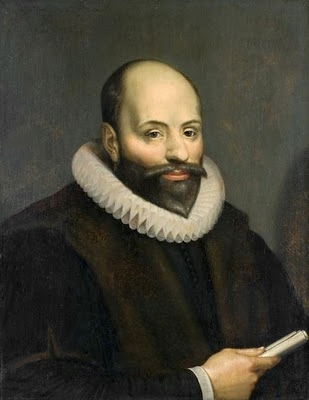
ACHIEVEMENTS: Armianism (challenged Calvinism)
NAME: Harmensen (or Hermansz), Jacob
DATE AND PLACE OF BIRTH: October 10, 1560, Oudewater, Netherlands
DATE/PLACE OF DEATH/AGE AT DEATH: October 19, 1609, Leiden, Netherlands. Aged 49
DISCIPLINE: Theologian
FIELD: Religion
LANGUAGE: Dutch
PARENTS: Harmen Jacobsz; Elborch Jacobsdr
SIBLINGS: 2 brothers, 1 sister
SPOUSE: Lijsbet Reael
CHILDREN: Sons: Harmen; Pieter; Jan; Laurens; Jacob; Willem; Daniel. Daughter: Engheltien Geertruyd
EDUCATION: School in Utrecht, Holland; Leiden University, Holland; Basel University, Switzerland; Geneva University, Switzerland
MAJOR WORK: "Opera theologica"
LIFE AND TIMES:
At 16, Arminius enrolled in Leiden University, Holland. Word of his academic excellence reached the ears of the Amsterdam Merchants' Guild, which offered to pay for his training for the ministry of the Dutch Reformed Church. In 1851, after a brief time at Basel University in Switzerland, he switched to the University of Geneva.
In 1588 he was ordained and appointed pastor of the Reformed Church in Amsterdam. In 1590, he married the daughter of a leading Amsterdam merchant and moved in with her family. The family had strong secular ideas and for the first time Arminius became exposed to other opinions about predestination, original sin and free will.
The Protestants in the Netherlands were greatly influenced by Calvin* and his doctrine of predestination, which held that those who would be saved had been selected before they were born; even before the creation of Adam and Eve.
When Calvin's views came under scrutiny in the Reformed Church, Arminius (revered for his brilliant mind) was chosen to defend the Calvinist view. But as he studied the question, he found he could not reconcile Calvin's views with the love and mercy of God. He could not accept that God had made an arbitrary decision that took no account of an individual's worth and denied free will to mankind, and he felt obliged to moderate Calvin's view.
He suggested that salvation would be granted to all those who responded to God's offer of salvation with true repentance of their sins and true love of God. This version of Calvin's thesis drew strong opposition. Nevertheless, in 1603, Arminius was made theological professor at Leiden.
After Arminius's death in 1609, his followers put together an expanded statement of his views. Written by Utrecht minister Johannes Uyttenbogaert, "The Remonstrances" was published in 1610. It maintained that all who believe in Christ can be saved; that atonement is universal, making it possible for all mankind to be saved; that mankind cannot be saved without the grace of God; and that God's grace is not irresistible. The document left open the question of whether grace could be lost once it was granted.
At the Synod of Dort, where the work was debated from 1618 to 1619, most of the States of Holland supported Arminius, but the synod was packed with zealous Calvinists. "The Remonstrances" was rejected and the synod retaliated with a counter document, the "Canons of Dort", which restated the Calvinist orthodoxy.
The ruler and army commander, Maurice of Nassau*, supported the Synod and suppressed dissenters by force. Many followers of Arminianism suffered persecution, including the lawyer Grotius*, who was arrested and imprisoned.
Ten years later, the collected works of Arminius, "Opera theologica", were published in Leiden, and in 1630 "The Remonstrances" was granted legal toleration.
The controversy surfaced in England in the 1640s when the Puritans, who adhered to the Canons of Dort, attacked Laud* and his Anglican followers as "Arminians".
However, not all Puritans in England upheld the Calvinist idea of predestination. Poet Milton*, a Puritan and acquaintance of Grotius, believed strongly in free will and the exercise of mankind's rationality, and he took the Arminian line. Arminianism arose again in the 18th century when the evangelical John Wesley* called his theological periodical "The Arminian Magazine". During the 19th century, Ellen White*, and the Seventh Day Adventists, were inspired by the same Arminian principle of salvation through faith.
ASSESSMENT: Arminianism helped modify the extremes of Puritanism and influenced the development of Methodism in England and the United States
EXTRA CONNECTIONS: None
ONELINER: Jacob Arminius, Dutch Protestant theolgian
BIBLIOGRAPHY:
Bangs, Carl, Arminius, A Study in the Dutch Reformation, Abindgdon Press, New York, 1971.