Gilbreth
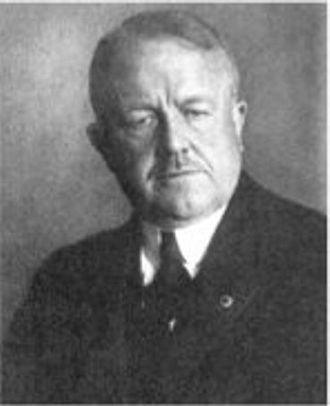
Name: Frank Bunker Gilbreth
Achievements: American motion study and scientific management expert who in the early 20th century developed the method of time-and-motion study.
Born: July 7, 1868; Fairfield, Maine
Died: June 14, 1924; Montclair, New Jersey. Aged 55
Field & Discipline: Business; Motion Studies
Language: English
Father: John Hiram Gilbreth
Mother: Martha Bunker
Siblings: Unknown
Spouse: Lillian Moller (m. 1914; 1878-1972)
Children: 12 children, 11 surviving infancy
Education: English High School, Boston (1879-85)
Major Work:
“Motion Study” (with Lillian Gilbreth; 1911)
Life & Times:
During his early years as a foreman, Gilbreth noticed that no two bricklayers used exactly the same method, or - when working fast - used even the same set of motions when laying bricks, and he therefore set about trying to find an improved method which he could then teach all his workers.
This eventually resulted in a standardized method of bricklaying which he taught to all his workers (however experienced) from this time onwards, and which he eventually claimed reduced the number of motions needed to lay bricks from 18 to 5, and increased a skilled man's output from 170 to 350 per hour.
By the early years of the 20th century, Gilbreth had made bricklaying into a small science, by studying every aspect of the process, developing numerous refinements, and introducing a number of mechanical innovations - such as cement mixers and an adjustable bricklaying scaffold.
His studies of the behaviour of his workers, inspired by his wife Lillian's interest in the psychology of work and the application of the social sciences to industrial management, also led him to develop efficient systematic management techniques for the entire construction business, which he detailed in his two early works, “Field System” (1908) and “Concrete System” (1908).
By the time these works were published, however, Gilbreth had been introduced to the founder of scientific management, [influenced by] Taylor*, in New York in 1907. Unsurprisingly, Gilbreth was immediately smitten by Taylor and his work, as his own method of studying a task - by teasing apart its individual motions and reconstituting it more efficiently - which he called "motion study,” was not fundamentally different from what Taylor had been doing since at least 1884.
However, their emphasis differed: Taylor's work was founded on timing labour with a stopwatch, while Gilbreth had never bothered to time a task, as for him the idea was to eliminate its nonessential motions - which was only a by-product of Taylor's time-studies, not the focus.
In 1907-08, Gilbreth made a number of visits to Taylor's home, and by March 1908 he was introducing the Taylor system on a construction job in Massachusetts.
In 1909 he was inspired to publish a detailed description of his motion study experiments as “Bricklaying System,” which was then followed by a discussion of the full potential of his system for industry, entitled “Motion Study” (1911), arguably the first published work to apply the social sciences to industrial management.
During the 1910s Gilbreth became one of Taylor's most zealous supporters and, having closed down his New York construction company in the wake of the 1911-12 building industry depression, he set himself up as a consulting engineer at Montclair, New Jersey, dedicating himself full-time to Taylorism and motion study in industry.
One of his first achievements to this end was to organize the Society for the Promotion of the Science of Management (later the Taylor Society) in 1911, while composing with his wife the “Primer of Scientific Management,” a manual on Taylorism written in question-and-answer form (published under Gilbreth's name in 1912).
This was followed by “Psychology of Management” (1914), in which the Gilbreth’s argued that Taylorism was the only management method consistent with the health and development of workers.
He also began inventing cinematographic motion study techniques that challenged the central position of Taylor's stopwatch time studies, and would eventually lead to a rift with Taylor and his more orthodox followers.
Gilbreth's most important innovation in this area came in 1912 with the invention of "micromotion study,” which involved filming several workers' operations against a cross-sectioned background while a chronometer recorded the time. The film was then examined through a magnifying glass, the time of each of the worker's motions determined to one-thousandth of a second, and their methods and working conditions compared, allowing Gilbreth to synthesize the best elements from each into a standardized method for every task.
Gilbreth further improved his motion study techniques in 1913-14, when he perfected the cyclegraph. This involved mounting a miniature electric light on a ring that could be worn on a worker's finger, with the light showing on the back of the hand.
While the worker continued with his task, the movement of the light created a bright line on a single time-exposed photograph, with twists and turns in the line revealing inefficient movement - i.e. wasted time.
After studying the photographs, Gilbreth would then alter and adapt the worker's tools, equipment, and motions until the shortest, smoothest line was developed. In 1914 Gilbreth then introduced the chronocyclegraph, which interrupted the flow of current to the light in order to obtain (in the resulting sequence of flashes) a record of the time and direction of the motions, and later the stereo-chronocyclegraph, which created a three-dimensional image of motion by using two slightly offset cameras.
By 1915, Gilbreth had also invented probably his most lasting achievement, based on the results from his micromotion and chronocyclegraph studies. During detailed laboratory studies with his wife of the basic elements involved in manual work, he established a set of sixteen standard work motions, which he named "therbligs" - search, find, select, grasp, position, transport loaded, assemble, use, disassemble, inspect, preposition (for next operation), release load, transport empty, wait (unavoidable delay), wait (avoidable delay), and rest (for overcoming fatigue).
By analyzing micromotion or chronocyclegraph film, Gilbreth was able to identify the therbligs and plot them on "simultaneous cycle motion" - or "simo" - charts, placing parts of the body (arms, legs, trunk, head) on the horizontal axis and elapsed time on the vertical one.
These charts could then reveal whether, for example, one arm was actively holding an object while the other was only passively holding it during the motion cycle, allowing him to redesign the operation to employ both arms simultaneously, while also shortening the times for movements by placing tools and parts closer to the worker.
Gilbreth was convinced that such inventions not only would make workers more efficient, increasing productivity and profits for the factory owners, but would also benefit the workers themselves by reducing fatigue and increasing earnings.
Gilbreth lectured at universities across the United States in order to promulgate his ideas, and with Lillian Gilbreth published a series of articles and books detailing the potential benefits offered to all aspects of industry by his system, including “Fatigue Study” (1916), “Applied Motion Study” (1917), and “Motion Study for the Handicapped” (1920).
In the early 1920s, Gilbreth was also the first to apply motion-picture photography to the study of surgical operations.
Extra Connections:
Perhaps best known as the father and central figure of Cheaper by the Dozen, both he and his wife Lillian Moller Gilbreth were industrial engineers and efficiency experts who contributed to the study of industrial engineering in fields such as motion study and human factors....Frank and Lillian Gilbreth often used their large family (and Frank himself) as guinea pigs in experiments. Their family exploits are lovingly detailed in the 1948 book Cheaper by the Dozen*, written by son Frank Jr. and daughter Ernestine (Ernestine Gilbreth Carey). The book inspired a film and the title inspired a second and third unrelated film of the same name. The first, in 1950, starred Clifton Webb and Myrna Loy.[14] The second, in 2003, starred comedians Steve Martin and Bonnie Hunt,[15] and bears no resemblance to the book, except that it features a family with twelve children, and the wife's maiden name is Gilbreth. The third, in 2022, also bears no relation to the book and starred Gabrielle Union and Zach Braff.
Assessment: Gilbreth's motion study techniques and therblig units of motion remain fundamental to the theory and practice of industrial engineering and management.
Oneliner: Frank Gilbreth, early time-and-motion expert
Bibliography:
- American National Biography.
- Encyclopedia Britannica.
- Yost, Edna, Frank and Lillian Gilbreth: Partners for Life, New Brunswick, N.J.: Rutgers University Press, 1949.
Frank Bunker Gilbreth - Wikipedia