Bartholin T
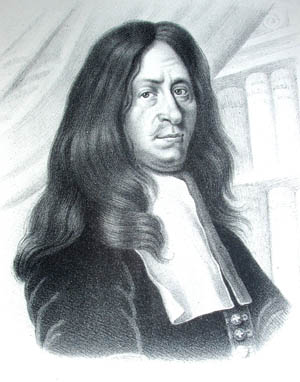
ACHIEVEMENTS: Discovered that the human lymphatic system is a completely separate system from the circulatory system. Edited one of the first medical journals in Europe.
DATE AND PLACE OF BIRTH: 20 October 1616, Copenhagen, Denmark;
DATE/PLACE OF DEATH/AGE AT DEATH: 4 December 1680, Copenhagen, Denmark. Aged 63
DISCIPLINE: Medicine
FIELD: Anatomy, physiology
LANGUAGE: Danish
PARENTS: Kaspar (or Caspar) Bartholin (1585-1629) and Anna Fincke Bartholin (daughter of Thomas Fincke)
SIBLINGS: Erasmus (or Rasmus) Bartholin (1625-1698) and 5 others (not named)
SPOUSE: Else Christoffersdatter
CHILDREN: Kaspar (or Caspra) Bartholin (secundus) (1655-1738); others not named; grandson Thomas Bartholin (son of Kaspar secundus) (n.d.)
EDUCATION: studied at Universities of: Copenhagen, Paris, Leyden, Basel, Montpellier and Padua; member of the Academia degli incogniti; degree of Doctor of Medicine issued at University of Basel; taught at University of Copenhagen
MAJOR WORK: Describing the human intestinal lymphatic system, especially the thoracic duct and its function of draining into the venous system.
LIFE AND TIMES:
Thomas Bartholin was the second son of Kaspar Bartholin and Anne Fincke Bartholin. His brother was Erasmus Bartholin*. His father, Kaspar, was a professor at the University of Copenhagen, and his mother was one of the daughters of Thomas Fincke, also a professor at the University of Copenhagen. Fincke’s other daughter married Ole Worm, another professor at the University of Copenhagen, who became Thomas’s guardian upon the death of his father, Kaspar, in 1629.
Thomas began his university education in 1634 by studying theology for three years in Copenhagen, prior to beginning nine years of study at other European universities, thanks to a generous scholarship from King Christian IV of Denmark.
It was while studying at the University of Leyden in 1637 that Thomas decided to pursue medicine as a vocation. His main area of study was the lymph system and Harvey*’s theory of circulation. In Leyden he also worked with Johannes de Wale (or de Waal, known as Walaeus) on one revision of his father’s anatomy textbook, and in Padua, Italy he worked with Johann Vesling on a second revision of the same work.
His interests extended to the examination of fossil shark’s teeth (glossopterae) which were thought to be of value in medicine. He also wrote a treatise on the use of unicorn horn in medicine (1645). His guardian, Ole Worm, advised Thomas to study anatomy, so he could become deputy to Thomas Fincke, his grandfather, who was a professor of medicine at the University of Copenhagen.
Thomas chose instead to go to Basel, Switzerland, where he became a Doctor of Medicine. In October of 1646, Thomas finally returned to Copenhagen, where he joined the faculty as a professor of philosophy, and he began teaching classes in philosophy, as well as mathematics and philology.
In 1649, Thomas celebrated two major events. He was chosen to become the third professor of medicine at the University, succeeding Simon Paulli, and he married Else Christoffersdatter. The most notable of Thomas and Else’s children, also named Caspar (or Kaspar), eventually followed in his family’s footsteps, becoming a physician and anatomist. Caspar (secundus) discovered the pair of glands in the vagina that are still known as Bartholin’s, and a sublingual salivary duct known as Bartholin’s Duct. Thomas was then made chair of anatomy at the University, and his work in anatomy led to his discovery of the major thoracic duct of the lymph system.
Also during this time, he began tutoring a student named Stensen* who went on to study anatomy in Amsterdam when Thomas retired from active teaching in 1656. Thomas wrote Stensen a letter of recommendation to a professor in Amsterdam in 1659, and remained in contact with Stensen over the next several years.
Thomas had suffered from ill health for a number of years, mainly renal stones (kidney stones), and after retiring from teaching, concentrated on public speaking, writing and publication of his various medical studies and a third revision of his father’s anatomical text, and the editing of the medical journal “Acta medica et philosophica hafniensa” which he published from 1675 until his death in 1680.
Thomas’ brother Erasmus’s daughter married Romer*. When she died, Roemer married a woman named Else Magdalene. When Roemer died, Elsa Magdalene married Thomas Bartholin (secundus), grandson of Thomas Bartholin.
From Thomas Fincke (1561-1656) to Thomas Bartholin (secundus), this scientific dynasty worked in Denmark and Europe for five generations, through nearly three centuries of progress. They contributed to the disciplines of medicine, anatomy, physics, astronomy, mathematics, and philosophy.
ASSESSMENT: Thomas Bartholin is credited as the discoverer of the human lymphatic system.
EXTRA CONNECTIONS: None
ONELINER: Thomas Bartholin, discoverer of the human lymphatic system
BIBLIOGRAPHY:
Whonamedit.com, online medical eponyms database, © 1994-2001, Ole Daniel Enersen
J.J. O’Connor and E.F. Robertson, online biography, © 1997 School of Mathematics and Statistics, University of St. Andrews, Scotland
Unknown, Columbia Encyclopedia Sixth Edition (online version), © 2001
Biography, ed. Richard S. Westfall, Dept. of History and Philosophy of Science, Indiana University, © 1995, Albert Van Helden
Galileo Project (online), © 2001, Rice University